The Hidden Engine War: Compression Ratios and Formula 1’s 2026 Controversy

Before the 2026 Formula 1 season has turned a competitive wheel, a technical controversy is already brewing in the paddock — one rooted in a principle of engineering that has existed since the dawn of the motor car. The subject is compression ratios, and the dispute centres on whether one manufacturer has found a way to exploit the gap between the letter of the regulations and the reality of a running engine.
What Is A Compression Ratio?
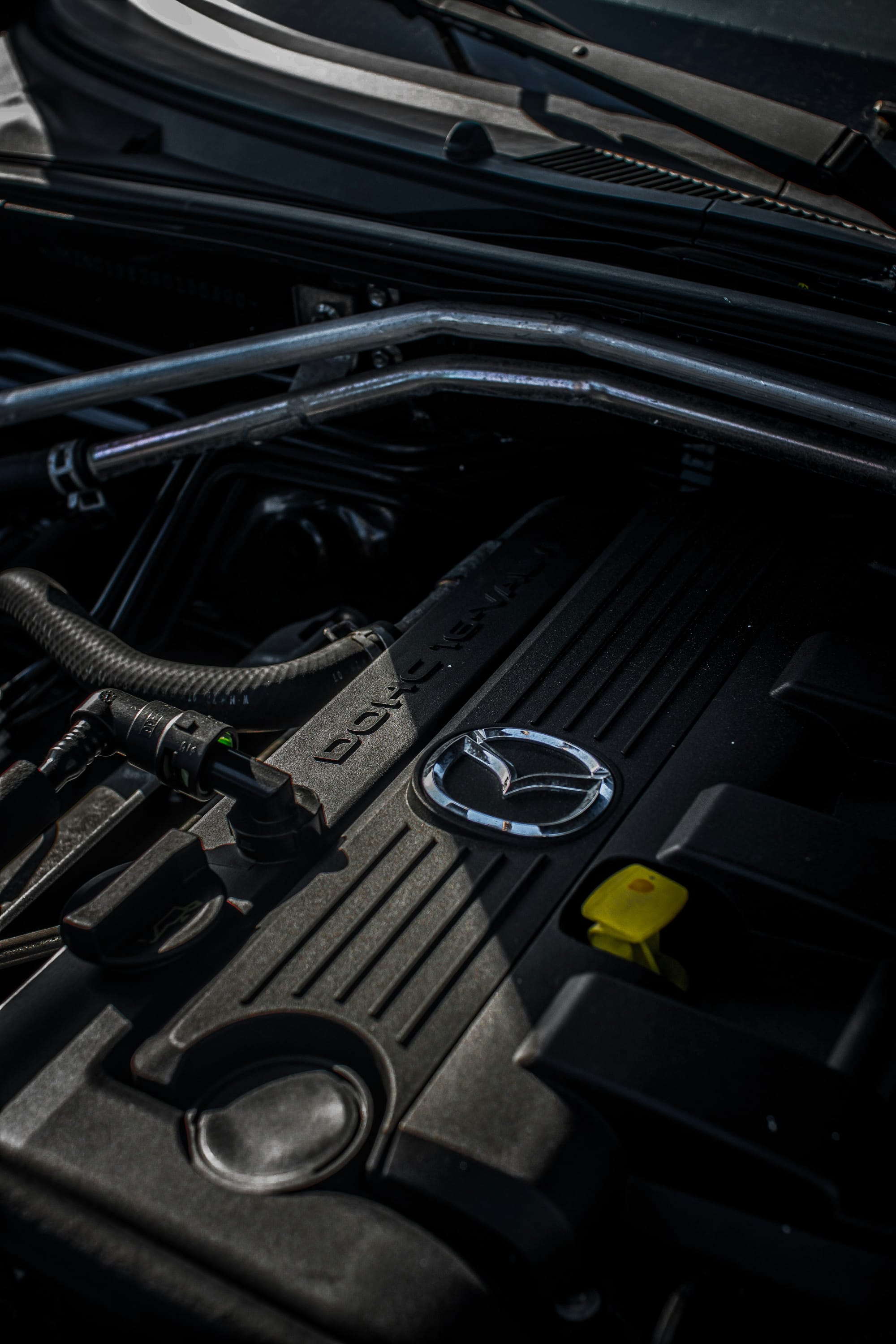
A compression ratio describes how much the air-fuel mixture inside an engine cylinder is squeezed before ignition. It is the ratio of the cylinder’s maximum volume — when the piston sits at the very bottom of its stroke — to its minimum volume at the top. A ratio of 10:1 means the mixture is compressed to one-tenth of its original volume before the spark plug fires. As GPFans explains, the higher the ratio, the more power can be extracted from each combustion cycle.
The physics is straightforward: the more tightly you compress a gas, the more energy you can extract when it ignites. A denser charge burns more completely and drives the piston down with greater force. More compression equals more power from the same amount of fuel — a proposition that is enormously appealing to any engineer hunting for performance.
There are, of course, limits. Compress a petrol-air mixture too aggressively and it will self-ignite before the spark plug fires — a destructive phenomenon known as knock or detonation. This is why standard road cars run compression ratios between 10:1 and 13:1. Fuel quality and combustion chemistry place a practical ceiling on how far the number can go.
Formula 1 And The 2026 Rules
F1 engines have always operated near the theoretical limits of what is physically possible. The naturally aspirated V10s and V8s of previous eras ran compression ratios as high as 14:1 or beyond, wringing every fraction of a horsepower from each combustion cycle. The turbo-hybrid era that began in 2014 introduced a different but related lever: boost pressure, which effectively multiplies the compression effect.
For 2026, Formula 1 introduces entirely new power unit regulations. Under Article C5.4.3 of the technical regulations, as reported by PlanetF1, the maximum permitted compression ratio is capped at 16:1 — reduced from 18:1 under the previous ruleset. The change was introduced, according to FIA single-seater director Nikolas Tombazis, partly to make the new power units more accessible for incoming manufacturers such as Audi.
The difference between 16:1 and 18:1 might sound small, but in a sport where hundredths of a second decide race outcomes it is anything but. According to Motor Sport Magazine, the performance gap is estimated at between 10 and 13 horsepower, worth approximately 0.2 to 0.3 seconds per lap. In F1 terms, that is the difference between the front row and the midfield.
The Measurement Problem
The regulations require compression ratio to be checked at ambient temperature — with the engine cold and stationary in the garage. As Motorsport.com reports, the regulation states that the procedure “must be executed at ambient temperature” and approved by the FIA’s technical department. It is a sensible protocol: reproducible, easy to administer, and practical across a large grid.
The problem lies in the gap between a static test and a running engine. Metal expands when it heats up. The precise geometry of an engine — the bore, the stroke, the clearances between components — changes as temperatures climb from ambient to the hundreds of degrees reached at full racing speed. Sky Sports F1 reports that Mercedes and Red Bull Powertrains are thought to have designed their power units to pass the cold check at 16:1 while achieving an effective ratio closer to 18:1 on track through thermal expansion of engine components.
FIA single-seater director Nikolas Tombazis acknowledged the situation plainly in a video published by the governing body, quoted by RaceFans: “As these engineers are very clever and always pushing for an advantage, some have found ways to potentially increase it when the engine is running hot, and that is the discussion we’re having now.” Tombazis added that the governing body intends to resolve the matter before the season begins, preferring to settle disputes through regulation rather than in the stewards’ room.
Paddock Reaction
Rival manufacturers have not hidden their concern. Mattia Binotto, heading the Audi F1 project, was measured but pointed: “If that’s true, it certainly makes a significant difference in terms of performance and lap time.” James Key, Audi’s technical director, framed it as a matter of fairness, telling Motorsport.com: “It’s new regs. You’ve got to have a level playing field. If someone came up with a clever diffuser and no one else can have it, but you can keep it for the rest of the year — it doesn’t make sense.”
At the Aston Martin launch, team principal Adrian Newey suggested that all manufacturers bar one were aligned on a resolution, telling Sky Sports: “Everybody is aligned bar one manufacturer.” Toto Wolff was characteristically combative in response, insisting Mercedes had been fully transparent with the FIA throughout development of the W17.
Why It Matters
The timing makes this dispute particularly loaded. The 2026 regulations were designed in part to bring new manufacturers into the sport on the promise of a level technical playing field. If one incumbent arrives at the opening race with a meaningful engine advantage embedded through a measurement loophole, it undermines the premise of the new era before it begins. As RACER notes, the FIA has since launched an official e-vote on whether to mandate testing at 130°C from August 2026 — a direct response to the controversy.
Formula 1 has a long history of technical ingenuity — the sliding skirts of the 1970s, the double diffuser of 2009, the blown exhausts of the early 2010s. All were closed down, but not before reshaping the competitive order. The compression ratio question is different: this is not an aerodynamic interpretation or a fluid dynamics loophole. It sits at the very heart of what an engine does. The FIA’s ability to regulate it accurately — not just in the cold garage, but under real racing conditions — is now squarely on the agenda, and how they respond will define the tone of Formula 1’s newest chapter.
Bibliography
Benson, A. (2026, February 9). FIA Wants to Solve F1’s Compression Ratio Controversy Prior to Australian GP. RACER.
Collantine, K. (2026, February 9). FIA Determined to “Solve” Compression Ratio Dispute Before Season Starts. RaceFans.
F1 Engine Compression Ratio – What Is It and Why Is It so Controversial? (2026, February 18). GPFans.
Formula 1: FIA Express Hope of Solving Engine Controversy Ahead of 2026 Season. (2026, February 10). Sky Sports F1.
Noble, J. & Mitchell, S. (2026, February 20). Explained: The Engine Compression Row That Risks Overshadowing F1’s New Era. Motor Sport Magazine.
Rencken, D. (2026, February 19). What Is the F1 2026 Compression Ratio Dispute and Why Mercedes Is Central. PlanetF1.
Somerfield, M. (2025, December 23). Mercedes, Red Bull and F1’s 2026 Engines: The Loophole Controversy Explained. Motorsport.com.
Toto Wolff’s Message to F1 Rivals Over Mercedes Engine Complaints. (2026, January). Motorsport.com.
Image credits: All photographs sourced from Unsplash under the free Unsplash License, which permits commercial and editorial use without attribution. Credits provided as a courtesy.