Why Do We Die?

If there are two things guaranteed in life, it is death and taxes. Or at least that’s what the quote is (Fun fact: it originated from Benjamin Franklin!)
But why is death guaranteed at all? Why are we not all biologically immortal?
Why do we die?
We now know there are two main ways ageing is caused: through extracellular and intracellular damage.
Intracellular damage happens because of everyday contact with chemicals, cell division, and physical stress. It is (as of today) unavoidable. You cannot stop drinking water or you’ll die; to stop being exposed to cosmic radiation from the sun you would have to lock yourself in a subterranean lair, which would still be bad for your health and even worse for your wallet.
Extracellular damage is the collapsing of the actual architecture of the body (the stuff surrounding cells). That’s all the non-cellular stuff. It’s present in every tissue and organ. That’s stuff like cartilage, proteins, polysaccharides and even water. This manifests itself in conditions such as arthritis.
But what are the specific mechanisms of this harm? Well, in a landmark 2023 paper on ageing, various scientists lay down three distinct categories of causes: primary, integrative and antagonistic. Integrative and antagonistic causes are all consequences of primary causes interacting with each other and producing unfortunate effects. The primary causes are, however, the main roots. Every other cause of ageing is downstream. They are; genomic instability; telomere attrition; epigenetic alterations; loss of proteostasis; disabled macroautophagy.
The Primary Causes: Explained
Genomic instability is the continuous damaging of DNA, and the accumulation of mutations. Faulty DNA can lead to faulty products, whether that be misfolded proteins or mutated cells. This can lead to cellular senescence, in which non-functional cells simply refuse to die, causing toxin release and inflammation in the nearby area. Normally these lesions can be amended rather easily, but as you age it becomes harder and harder to regulate. This is actually why old people are more at risk of cancer: older people are generally worse at amending those damages, and so genetic damage may go unfixed, which then can lead to cancer.
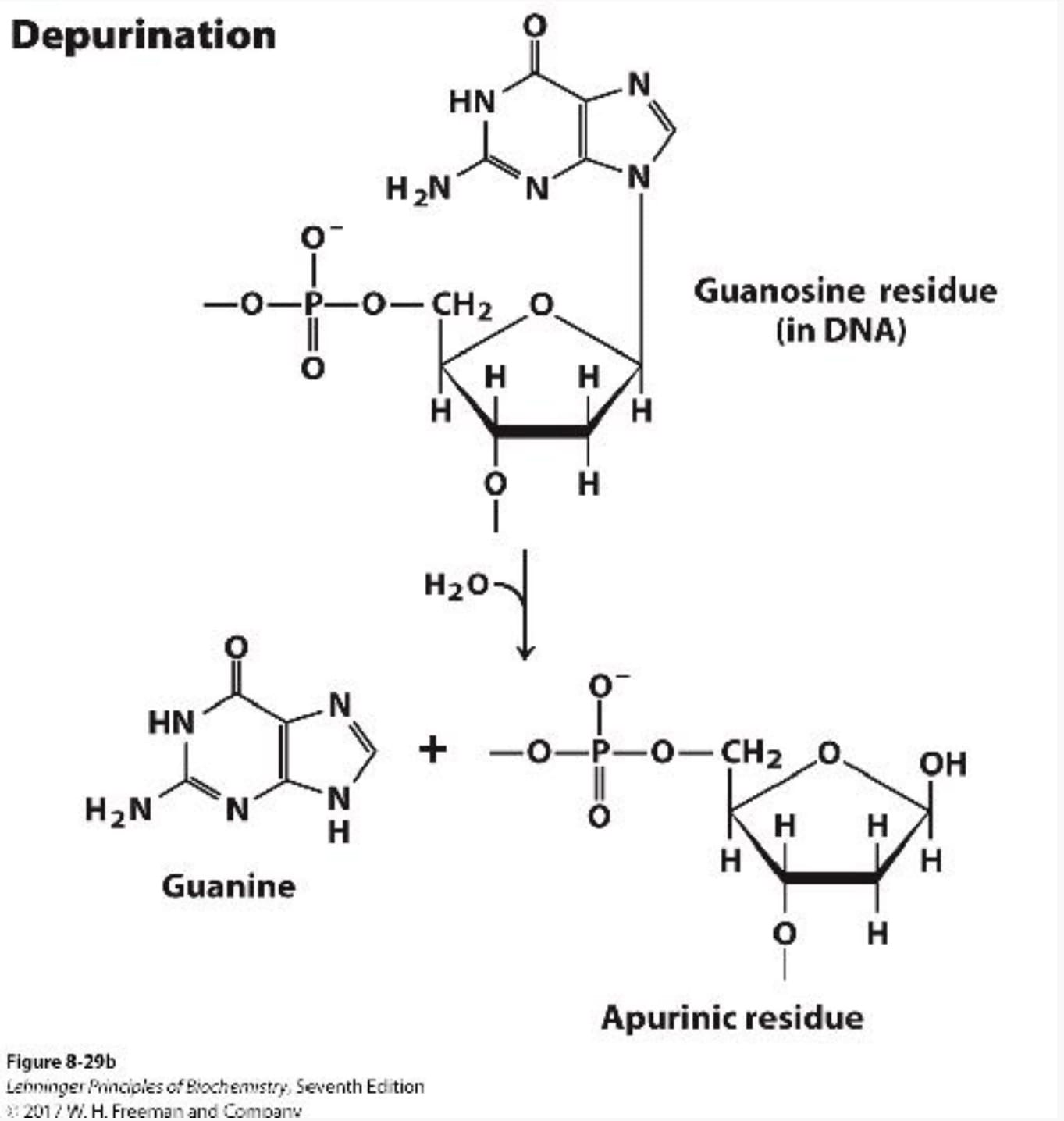
The above image depicts one of the many ways in which DNA can be damaged. Continuous exposure to water can cause hydrolysis in DNA. This hydrolysis is estimated to cause 10,000 lesions in DNA, per day, per cell.
Telomere attrition is the shortening of the telomeres. These telomeres protect chromosome ends and prevent the loss of genetic material during DNA replication.
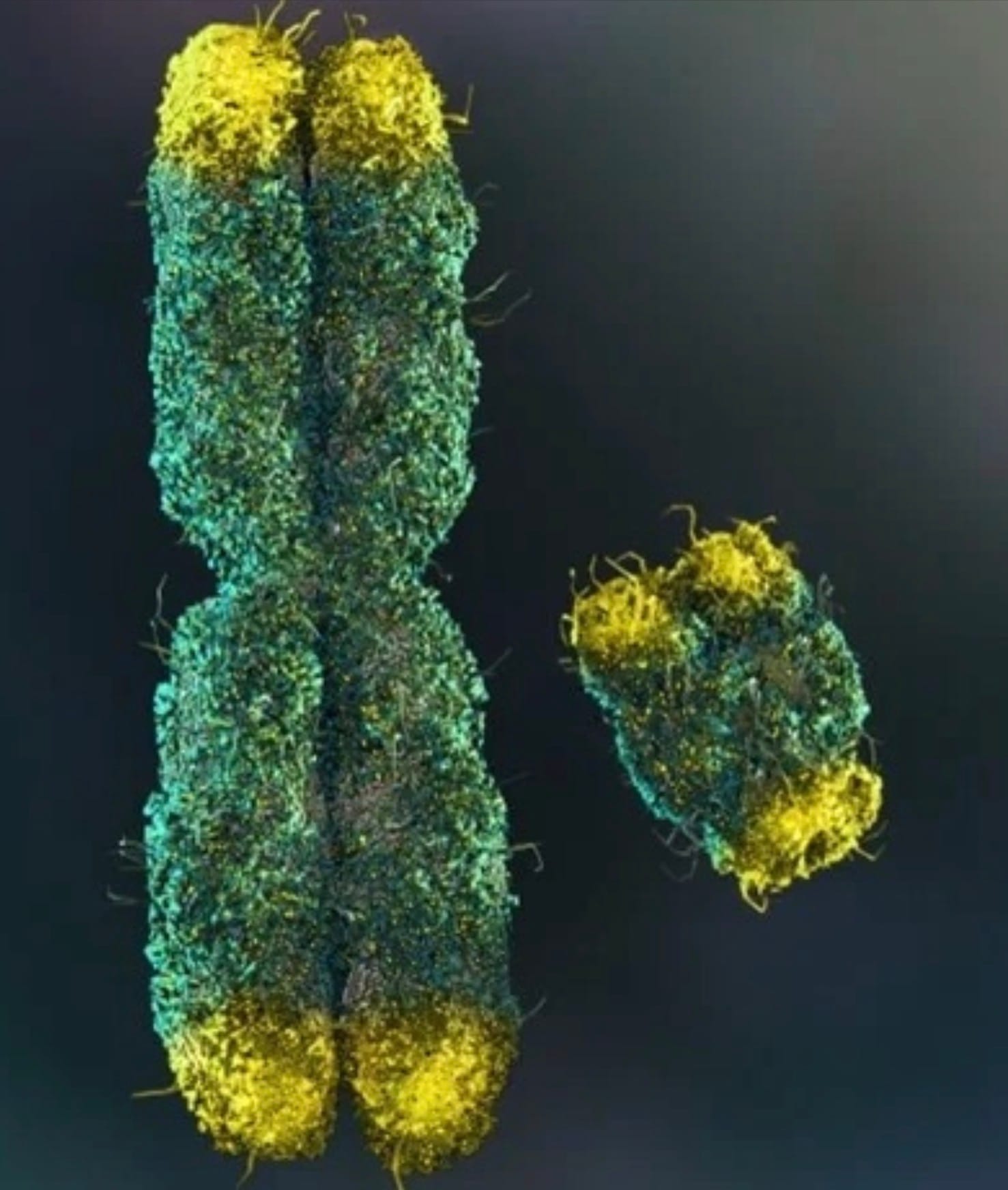
When telomeres become critically short, they are unable to maintain their “protective T-loop structure.” This essentially exposes chromosome ends, which the cell interprets as broken/damaged DNA, and these same cells will then seal the telomere entirely. This is actually extremely important: telomeres have to seal off, because unprotected chromosomes can cause plenty of issues: sometimes unprotected chromosomes even fuse together! However, over decades, the number of “retired” cells build up, and over time you not only have a constantly dwindling number of functional cells, but the senescent cells also release inflammatory chemicals. The harm is obvious: you have less cells to perform your actual bodily functions, and you also have a bunch of harmful chemicals in your body. Not great.
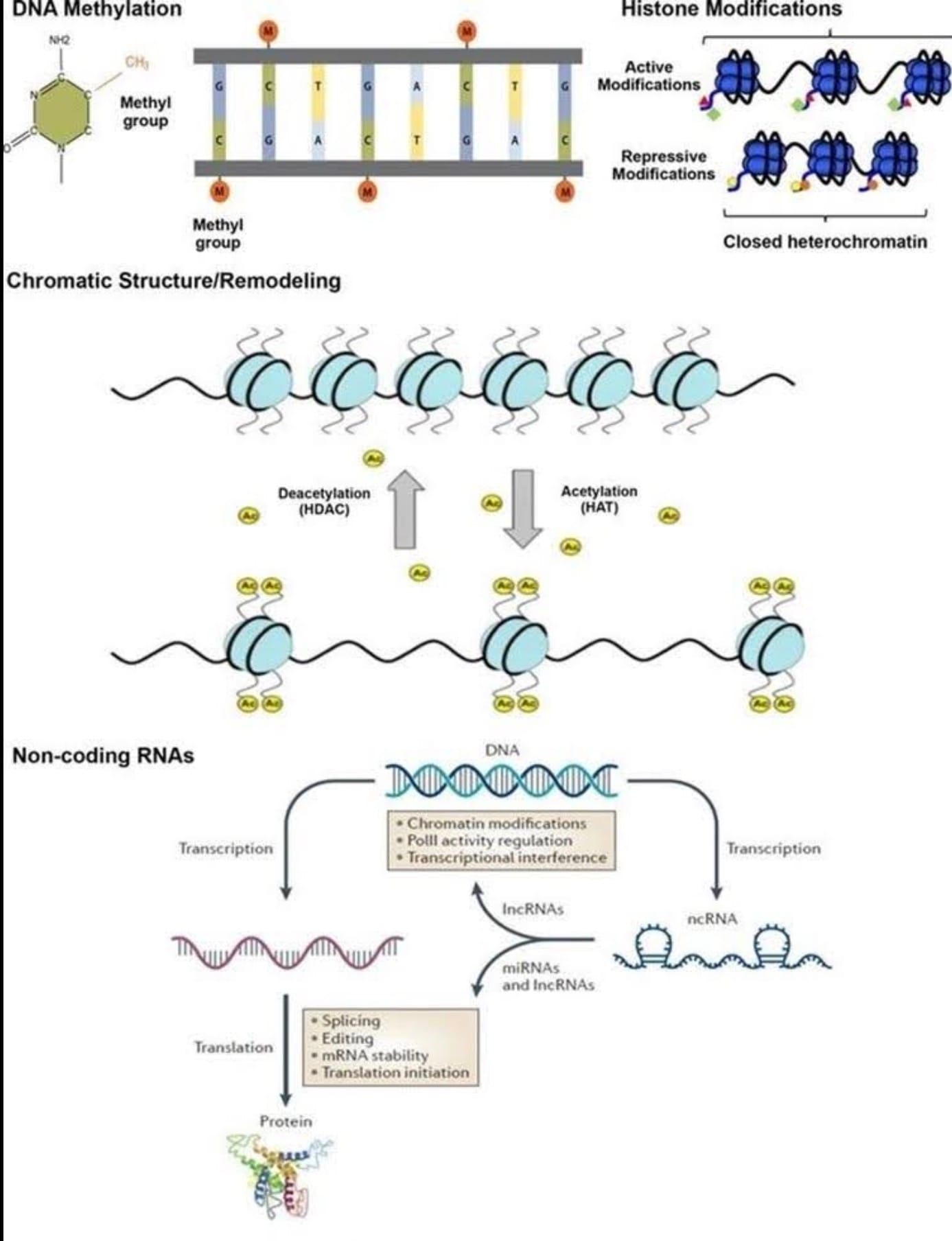
Epigenetic alterations are essentially caused by gradual dysfunction of “epigenetic machinery”, which is all the things inside a cell that work together to express the right genes at the right time and place. When this vital machinery breaks down, genes can be misused. The actual genes are still there; the body is just bad at interpreting them. To be more scientifically accurate: epigenetic modifications, which can be described as tags, alter DNA accessibility and chromatin structure. This then alters patterns of gene expression. For example, DNA methylation describes the addition of a methyl group to cytosine bases. Another example: histone modifications which alter histone proteins.
To cut through the scientific lingo, DNA methylation adds an extra “chemical” to the base of one of the foundational structures in DNA. This prevents the body’s machinery from reading that DNA. Histone alteration alters the proteins that DNA is wrapped around. The reading of DNA is heavily dependent on how it is wrapped around the histone, and so changing the histone proteins can change how DNA is read.
Loss of Proteostasis:
This describes the daily functions cells in your body perform involving properly folding, synthesising and managing proteins. Proteins are immensely important to your body, used in growth, cell repair and much more. Loss of proper management of this ability is therefore disastrous. This arises from many things. Here are two examples: genomic instability affecting the instructions for folding proteins; as cells age the actual folders of the proteins become less and less effective and so can misfold. On top of that the body’s autophagy (cellular recycling system), wears down over time, and becomes less able to clean out damaged proteins. Therefore, the damage accumulates, causing further damage.
Disabled Macroautophagy:
Autophagy is the system by which the cell clears out its waste. But why is the failure of this system so bad, and how does it happen? The reason it’s so bad is that accumulated waste disrupts a delicate operation. Such is the chemical balance of the cell. Waste disrupts that balance, and so as a result mitochondria can fail. Basic cellular operations become stickier. Cells decline.
Extracellular Damage:
So far, the primary causes we have talked about are all intracellular. However, the extracellular matrix (ECM) must be talked about too.
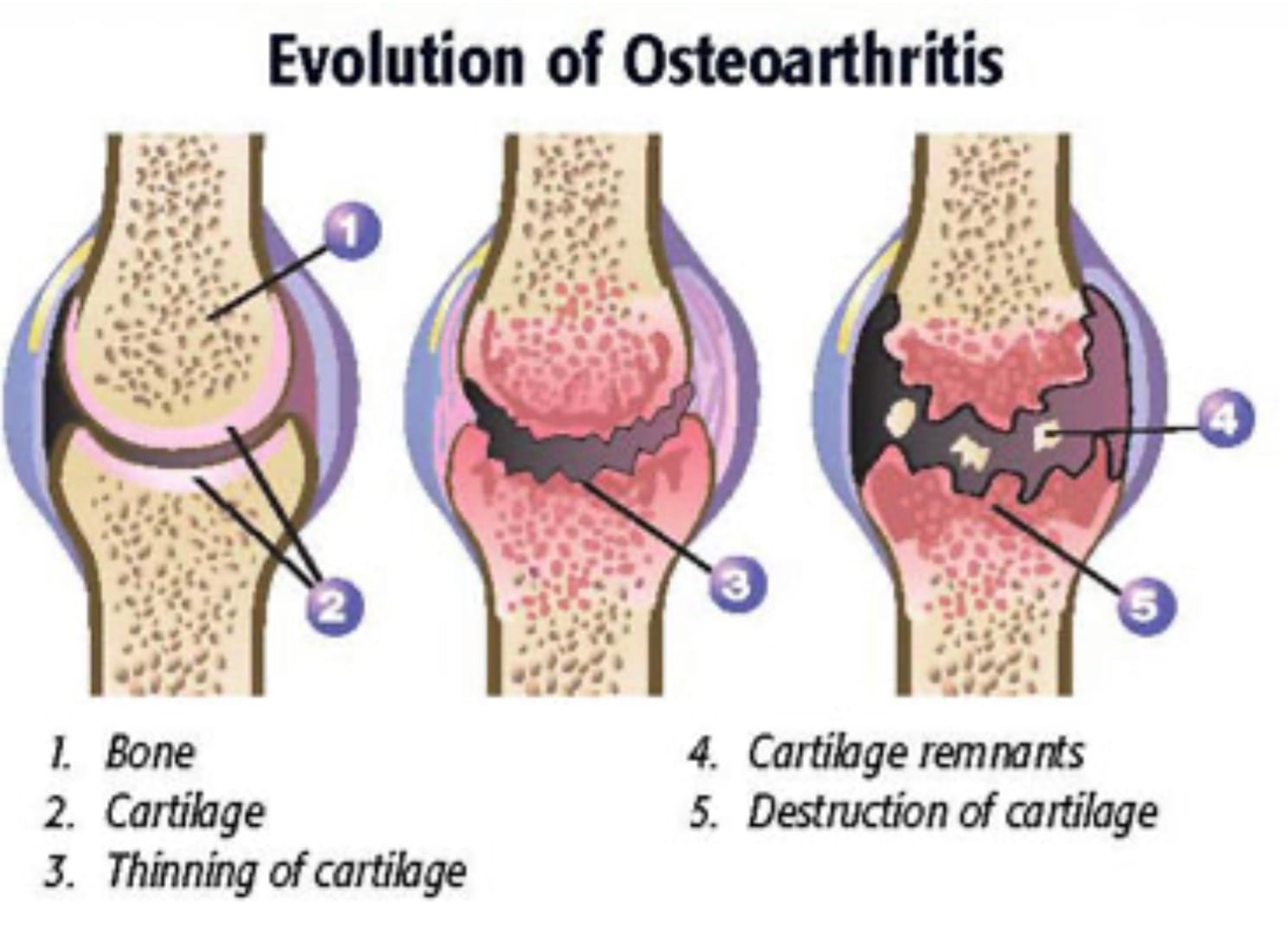
Even if your cells are perfect, and stay that way forever, ECM degradation can prove disastrous. The ECM is not only a primary support structure, it also helps for communication between cells. As you age, damage in these areas build up. Tissue can become deformed, and numerous issues spring forth. The reason is complicated, but to put it simply: your ECM is constantly being amended, whether that be bone remodelling or wound repair. This is regulated by ECM dynamics. However, under stress, these dynamics can become rather abnormal, leading to what the NIH puts as “deregulated cell proliferation and invasion, failure of cell death, and loss of cell differentiation.” Abnormal ECM dynamics can cause damage to itself: metalloproteinases, which are responsible for ECM degradation, are useful in some quantities (necessary for remodelling: to rebuild a building you have to knock it down first) however, under stress they can go haywire, causing unnecessary degradation.
Other Notable Causes
I have talked in depth about the primary causes of ageing but have not really mentioned the antagonistic and integrative causes. As they are less fundamental, and because your time is valuable, I have laid them out in short here:
Nutrient sensing:
One of the most important things for cells is that they can detect nutrients using “sensing pathways.” Unfortunately, over time these pathways become less and less reliable. This is antagonistic because it’s actually a protective response to stress and damage, which is caused by the primary hallmarks.
Mitochondrial dysfunction:
As mitochondria become less efficient, cells have less clean energy to work with. This mitochondrial dysfunction is actually partially due to disabled macroautophagy, which we touched on earlier.
Cellular senescence:
Damaged cells sometimes stop dividing but refuse to clear out, lingering and sending inflammatory signals to their neighbors. In small numbers this is fine, in fact it is protective; in large numbers it causes trouble. An antagonistic hallmark.
Stem cell exhaustion:
Stem cells are the body's repair-and-replacement pool. As that pool runs low, tissues heal and renew more slowly. An integrative hallmark.
Altered intercellular communication:
Cells constantly talk to each other with chemical signals. With age that conversation gets noisier and more inflammatory. An integrative hallmark.
Chronic inflammation:
Low-grade inflammation quietly builds in the background over years, a process nicknamed 'inflammageing.'
Dysbiosis:
The gut microbiome, the community of microbes living in your digestive tract, shifts in composition with age.
What Can Be Done About This All?
There have been many attempts at biological immortality throughout the ages, from the swallowing of mercury pills by ancient Chinese emperors to more sophisticated methods. Currently, while there is no scientific method to achieve biological immortality, we have methods to extend one’s life. Yamanaka factors, developed by Nobel Prize winner Shinya Yamanaka, can reverse epigenetic alterations. CRISPR, Base and Prime editors are radical new technologies that can repair genetic damage, although repairing massive genetic damage, the sort that occurs in old age, is currently beyond our reach. We also have plenty of other pharmaceuticals that can slow ageing! But we’re not even close to immortality. Those pharmaceuticals only slow ageing, pushing it back. That’s vastly different from stopping it. Stopping it means removing harm, much more difficult than slowing it; if we were to be biologically immortal, we would have to be able to instantly repair all genetic damage, clear senescent cells out at a rapid rate, have radical treatments for the ECM, the list goes on. And even then, we wouldn’t be truly immortal. Why? Because of the brain.
The Problem of the Brain
The brain is you. It defines you, and even if you were to perfectly preserve it you would still face a problem: you would simply run out of storage space. Over millions of years, you would build up significant amnesia. You wouldn’t really be immortal: you would completely forget who you were. Over time your personality, memory and thought process would be gradually and painfully replaced. Like Theseus’ ship. The brain is estimated to be able to store 1-2.5 petabytes of information. Even at the most conservative estimates, it can store the equivalent of the entire internet. But even that is nothing compared to millions of years of absorbing information. If you were to extend the brain’s memory limit, even if you were successful, that would also not be you!
It seems that Benjamin Franklin was right: death is inevitable.
To live for ever is to have died long ago.
Bibliography
Cellshe Blog. (n.d.). https://cellshe.com/blogs/journal/hallmarks-of-aging?srsltid=AU7gw4Xb-9ApOzswcKR7Wi1RVptJYoHadHG4ym8SWSm8fyRcwNACMf5T
What is Extracellular matrix? (n.d.). Making life better: Reagents and services for life science research. https://www.cellgs.com/blog/what-is-extracellular-matrix.html
The extracellular matrix at a glance. (n.d.). PMC Home. https://pmc.ncbi.nlm.nih.gov/articles/PMC2995612/
Extracellular matrix degradation and remodeling in development and disease. (n.d.). PMC Home. https://pmc.ncbi.nlm.nih.gov/articles/PMC3225943/
Extracellular matrix dynamics as an emerging yet understudied Hallmark of aging and longevity. (n.d.). PubMed. https://pubmed.ncbi.nlm.nih.gov/37191434/
Hallmarks of aging. (n.d.). https://agelessrx.com/hallmarks-of-aging-loss-of-proteostasis/?srsltid=AU7gw4Uc2gC88QaKw5JobH0AzdvaczuxDiVio2-cWYBavSE7bntbyVWG
Human brain capacity. (n.d.). https://www.science.org/content/article/human-brain-big-internet
Instability and decay of the primary structure of DNA. (1993, April 22). Nature. https://www.nature.com/articles/362709a0
NCI Dictionary of cancer terms. (n.d.). Comprehensive Cancer Information - NCI. https://www.cancer.gov/publications/dictionaries/cancer-terms/def/extracellular-matrix
Hallmarks of Aging: An Expanding Universe . (n.d.). | ScienceDirect. https://www.sciencedirect.com/science/article/pii/S0092867422013770
The relationship between telomere length and aging-related diseases. (n.d.). PMC Home. https://pmc.ncbi.nlm.nih.gov/articles/PMC11882723/
Rose, S. (2025, December 3). Disabled Macroautophagy. Lifespan Research Institute | Building a Future Free of Age-Related Disease. https://lifespan.io/topic/why-we-age-macroautophagy/