Can We Rewrite Blood? How Gene-edited Stem Cells Can Treat Sickle Cell disease
Introduction
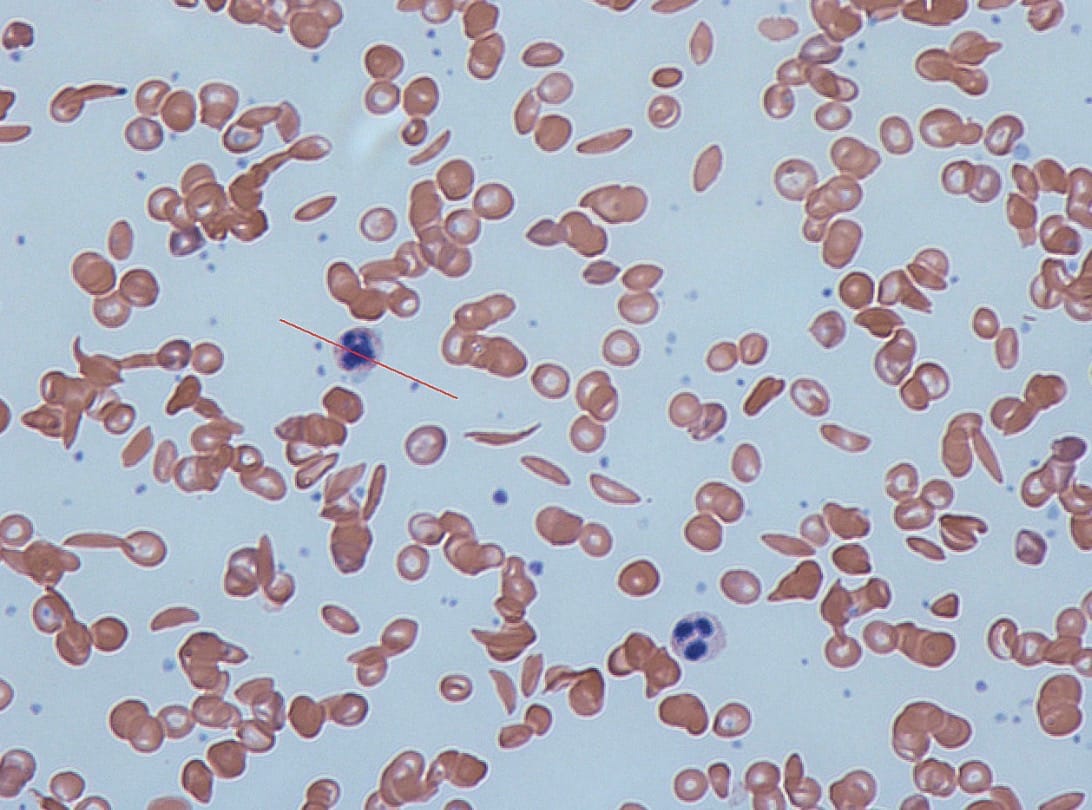
Sickle cell disease is the result of a change of a single gene, yet it can affect the whole body. It makes some red blood cells sticky and stiff, meaning they block smaller blood vessels; preventing blood circulation and can therefore cause severe pain since it prevents sufficient levels of oxygen to reach cells, damaging them and make cells release an inflammatory chemical that triggers a vaso-occlusive crisis. Other side effects include dizziness, fatigue and shortness of breath. While many current treatments can regulate most symptoms, they do not address the root cause of the disease and make a long-lasting cure. In some cases, a donor stem-cell transplantation can cure some patients, however finding a viable donor is rare and these options do not work for all patients. On the other hand, there is a new, upcoming treatment called Casgevy, which uses CRISPR-Cas9 to edit patients’ stem cells that form red blood cells. So, instead of calming the original mutation, it turns fetal haemoglobin back on, which is the form of haemoglobin is usually turned off after infancy. This provides a lasting cure that allows patients to live life as they would normally do so.
How Sickle Cell Disease Damages The Blood
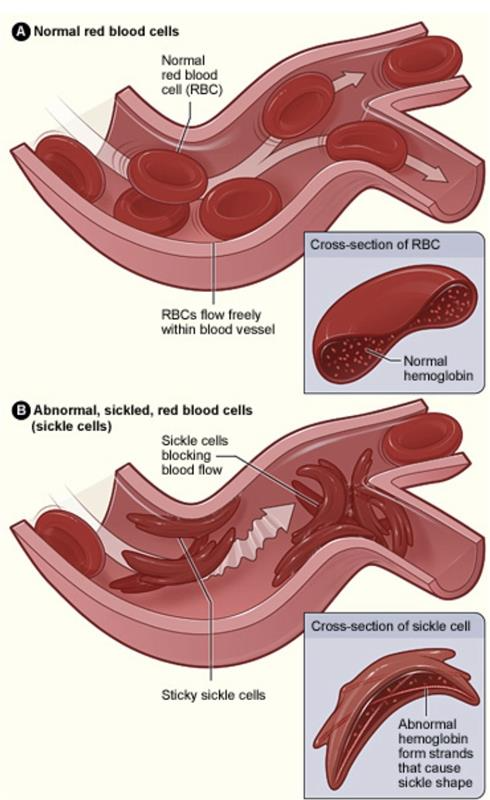
Sickle cell disease affects red blood cells’ haemoglobin, which is a protein that carries oxygen to all cells. In its most severe form, a patient inherits two mutated copies of the HBB gene. This gene transforms an amino acid in the beta-globin section of haemoglobin into a sickle haemoglobin (HbS). This is a major problem since when oxygen levels are low, sickle haemoglobin molecules clump together and form long fibres in a process called polymerisation. These fibres then press against the red blood cells’ cell membranes and make them no longer flexible, not allowing them to squeeze past the smallest of blood vessels, but into a stiff, sickle- shaped cell. This change between a biconcave shaped red blood cell that gives them a high surface area to volume ratio for rapid oxygen exchanges and rigid sickle cell blood cells that struggle to squeeze past small capillaries and tend to break down earlier, reduces the number of functional red blood cells and overall, it results in less oxygen reaching body cells. This results in haemolytic anaemia, which causes inflammation and it prevents blood circulation for the polymerisation of sickle haemoglobin molecules make them more prone to sticking to blood vessels; resulting on blockages and low oxygen levels. Once this happens, this cycle of blockages, caused by large and sticky sickle blood cells, becomes more susceptible, for vessels become smaller and tighter resulting in further blockages in this self-reinforcing, harmful feedback loop. In low oxygen areas, cells may perform anaerobic respiration, resulting in the production of lactic acid, which causes further inflammation.
How Sickle Cell Disease Is Treated Now
Most current treatments of Sickle cell disease try to mitigate the effects of the disease rather than actually addressing the cause of it. For example, use of pain killers such as paracetamol or ibuprofen, some stronger pain killers include morphine and influenza. Another current treatment is by blood transfusions, which adds a dose of healthy red blood cells that contain regular haemoglobin. This reduces the proportion of HbS haemoglobin and makes its effect less significant, but blood transfusions come with a downside since every red blood cell contains iron in its haemoglobin and when red blood cells eventually break down, the body has no effective way to dispose this iron. This may lead to accumulation of iron in a patient’s organs. Thus, this treatment is not sustainable or effective in the long term.
Another perhaps more promising treatment is the usage of hydroxycarbomide, which increases the production of fetal haemoglobin (HbF) and hinders the polymerisation of HbS haemoglobin and therefore results in fewer sickle shaped blood cells that cause blockages and severe burns. Furthermore, there has been some progress in addressing the root cause of the disease by attempting to perform a haematopoietic stem-cell transplant that replaces the patient’s malfunctioning blood – making stem cells with a donor’s stem cells that have been tested to create healthy red blood cells. While this may cure the disease, finding a viable donor can be difficult and take an impractical duration of time. Also, the patient’s immune system may identify the incoming healthy stem cells as foreign and attack them, which could result in graft-versus host disease.
Now, a new proposed method holds the better of both worlds by fixing the root cause of sickle-cell disease and by ensuring that graft-versus host disease is not a possibility. Experts plan to do this using autologous treatment. Autologous means that cells come from the same person who receives them, eliminating the possibility of the body’s immune system of inventorying the incoming cells as foreign. Firstly, scientists edit them and then put them back into the patient, but the only obstacle is that the treatment requires intense chemotherapy treatment to prepare the bone marrow by destroying faulty blood-making cells, allowing room for the edited stem cells.
Why Haematopoietic Stem Cells Are The Perfect Editing Tool
Newly proposed edited stem-cell treatment called Casgevy targets Haematopoietic stem cells using edited faulty blood-making cells from the patient to be transferred back into the patient. Experts targeted the haematopoietic stem cells instead of regular red blood cells because they have no nucleus, so there would be no genes to edit and they only are used for 120 days before they break down, making them not a permanent or viable method to pursue. However, HSPCs are a lot different as they can renew themselves and differentiate into more functional blood cells once edited. Most importantly, this effect is lasting for if placed in the bone marrow, they can keep producing healthy, functional red blood cells for years.
Reawakening Fetal Haemoglobin
The key to curing sickle cell disease comes from the fact that fetal haemoglobin uses gamma-globin instead of beta-globin, which does not contain the sickle mutation. Babies have high levels of HbF, but these levels fall as adult haemoglobin becomes more dominant. Reawakening fetal haemoglobin is important, for people who naturally produce more HbF have milder sickle disease because HbF makes it harder for HbS fibres to polymerise and block blood vessels.
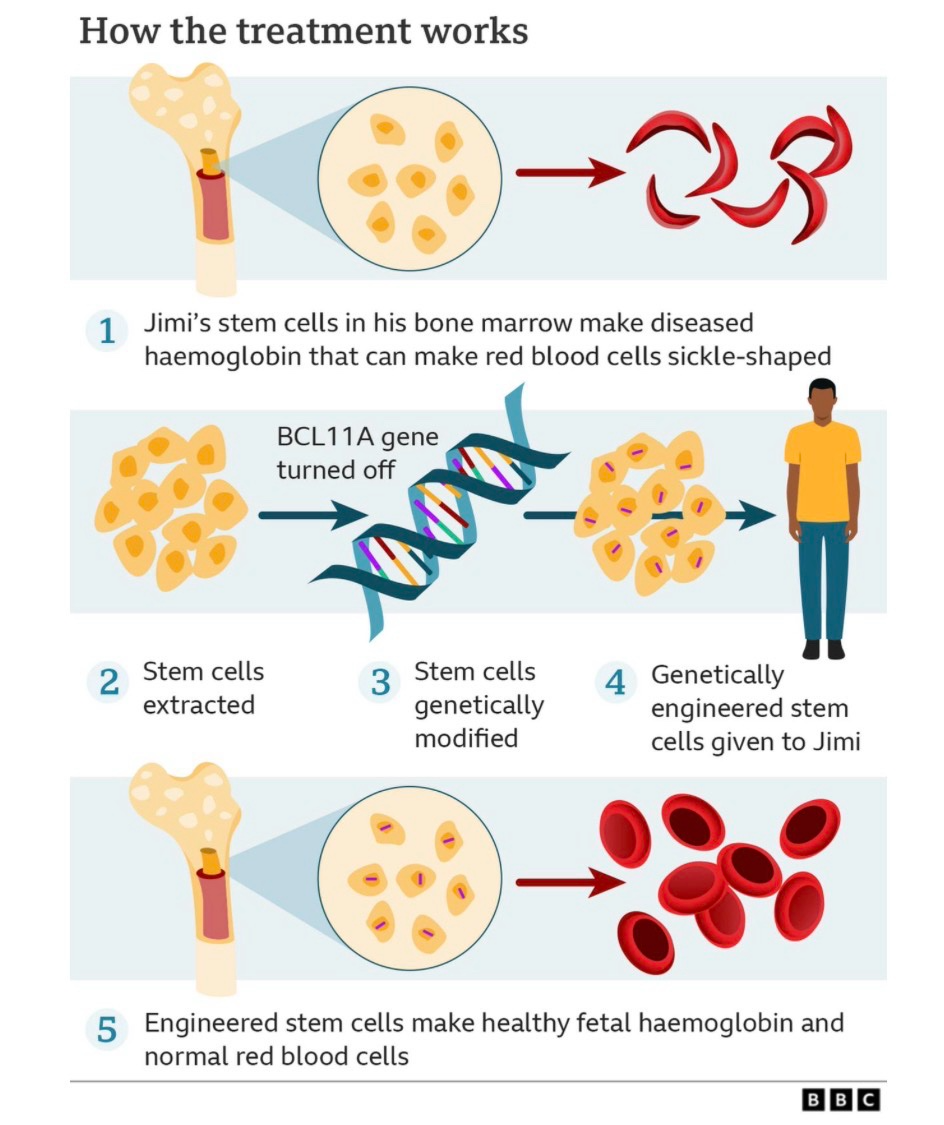
To do this, scientists remove a protein called BCL11a, which helps almost turn off the gamma-globin genes, so the body produces more HbF that does not contain the sickle mutation. However, switching off BCL11a completely is a problem because it has other roles in the body in maturity and helping B-cell development. Therefore, scientists aim to find a region of DNA that controls the production of BCL11a that solely is in control with the development of red blood cells. Luckily in October 2013 Daniel.E. Bauer identified this specific DNA region, which was the erythroid-specific enhancer. The scientists then identified the specific part that could be targeted for gene-editing by sampling 1263 DNA samples from 1178 individuals. From this they discovered that naturally fluctuating levels in the BCL11a enhancer usually correlated with unusually high levels of fetal haemoglobin (HbF), suggesting that these DNA fluctuations hindered BCL11a regulation in red blood cells.
As a result, they knew that the BCL11a enhancer was critical to HbF production and curing sickle-cell disease. However, they didn’t know which part of the enhancer was responsible for the mutation and should be targeted for gene-editing. So, they used CRISPR to disrupt many regions of the BCL11a enhancer and measured its effect on HbF production and BCL11a production. These tests demonstrated that the binding sites for 2 proteins, GATA1 and TAL1 specifically help switch on BCL11a in red blood cells, solving the issue of Turning off BCL11a production completely.
This discovery was critical because it permitted scientists to target these small regions using CRISPR, resulting in a reduction in BCL11a production. Overall curing sickle cell disease as BCL11a normally switches off gamma-globin- genes, which causes the production of less HbF after birth and this type of haemoglobin does not contain the sickle mutation. Without HbF there tends to be more HbS, which does contain the sickle mutation. Thus, new replaced red blood cells will not polymerise, form fibres that make red blood cells rigid and sickle-shaped; causing blockages and slow blood circulation. By disrupting the regions that are critical for BCL11a production, scientists are able to increase HbF levels which all do not have the sickle mutation and interfere with HbS fibre formation, decreasing the chance of red blood cells to undergo ‘sickling’.
How The Gene Editing Treatment Works
Casgevy is a ‘ex vivo’ treatment, meaning that the gene-editing actually happens outside the patient’s body. Firstly, scientists extract HSPCs, which are the blood-forming stem cells in the bone marrow that are capable of self- renewing and differentiating into more healthy red blood cells. They then use a guide RNA, which acts literally like a ‘guide’ for the CRISPR enzyme to the BCL11a enhancer. From there the enzyme cuts the DNA off and then the cell repairs the damage in such a way that it disrupts the BCL11a enhancer; reducing the amount of BCL11a in red blood cells and increasing the amount of HbF. This switches off gamma-globin genes, meaning more HbF is produced, which interferes with the small, reduced percentage of HbS polymerisation and finally results in fewer sickle-shaped red blood cells. However, before any of this treatment can occur, the patient undergoes busulfan chemotherapy, which removes cells and faulty HSPCs in the bone marrow to make space for the gene-edited stem cells. After the editing process is complete, the edited stem cells engraft, meaning they arrive and settle in the bone marrow after travelling through the blood.
Evidence of Treatment’s Success
Evidence of Casgevy’s success published in New England Journal of Medicine sampled 44 people aged 12 to 35 with severe levels of sickle-cell disease after Casgevy treatment. 29 out of the 44 had no Vado-occlusive crisis for at least 12 months and 30 of them needed no hospital treatment in the aftermath. However, this does not definitively prove Casgevy cures 97% of patients because the sample was too small and there was no control group who did not undergo Casgevy.
Conclusion
To conclude, Casgevy is a clear example of how gene-editing could transform the treatment of sickle-cell disease as it manages its underlying cause rather than eerily mitigating its effects. The potential is incredibly significant for patients all over the world because it it is a long-lasting treatment that does not require a genetically matched donor, but Casgevy is still an incredibly intricate treatment as well as expensive. Also, there is also the limitation that this treatment is very ex. pensive to patients and very expensive to expand into a profitable enterprise. Nevertheless, it represents a significant milestone that could change how inherited diseases are treated.
Bibliography
- Noguchi, C. T., A. N. Schechter, and G. P. Rodgers. "Sickle Cell Disease Pathophysiology." Baillière's Clinical Haematology 6, no. 1 (1993): 57-91
https://pubmed.ncbi.nlm.nih.gov/8353318/ - Your PubMed Central link points to the database homepage rather than an individual article, so it cannot yet be formatted as a research-paper reference.
https://pmc.ncbi.nlm.nih.gov/s - Centres for Disease Control and Prevention. "About Sickle Cell Disease." CDC.
https://www.cdc.gov/sickle-cell/about/index.html> - Canver, Matthew C., et al. "BCL11A Enhancer Dissection by Cas9-Mediated in Situ Saturating Mutagenesis." Nature 527(2015): 192-197.
https://www.nature.com/articles/nature15521 - emirci, Selami, et al. "CRISPR/Cas9 to Induce Fetal Hemoglobin for the Treatment of Sickle Cell Disease." ResearchGate (2021).
https://www.researchgate.net/publication/355007314_CRISPRCas9_to_induce_fetal_hemoglobin_for_the_treatment_of_sickle_cell_disease - World Health Organization. "Sickle-Cell Disease." WHO, August 6, 2025.
https://www.who.int/news-room/fact-sheets/detail/sickle-cell-disease