Vinyl vs CD vs Streaming: Who Wins In 2026?
In 2026, music consumers operate under a significant cultural illusion, believing that they have reached the apex of the listening experience through the technological innovations of streaming at the zenith of sound quality with frictionless convenience. Yet, many flock to the older and more tactile experiences of physical media through the vinyl disc and the CD. Why is this happening? Isn’t digital streaming the best we have? According to the IFPI (International Federation of the Phonographic Industry), digital streaming accounts to over 50% of global music industry revenue. However, this represents nothing more than digital corporate feudalism. Listeners pay monthly subscriptions to rent audio files that can be silently altered, regionally blocked, or permanently deleted due to licensing or other corporate issues without the consumer’s consent. Since 2007, the vinyl disc has experienced a heroic revival, which has received widespread attention and acclaim in mainstream media. Yet this search for physical ownership and that ‘warm vinyl crackle’ is merely a nostalgic exercise. It forces audiophiles to pay £30-40 for an album just for the listening experience to diminish each time due to physical degradation of the polyvinyl chloride grooves and the turntable’s costly diamond needle. Born in 1982, the CD solved the problems of audio playback in a more compact yet still physical format. Yet its success was short-lived as it was brushed aside only 20 years later with the arrival of digital streaming. To evaluate which format truly wins in 2026, we must analyse media through five categories: Sound quality, accessibility, cost, catalogue breadth, and tactile & visual experience.
Vinyl
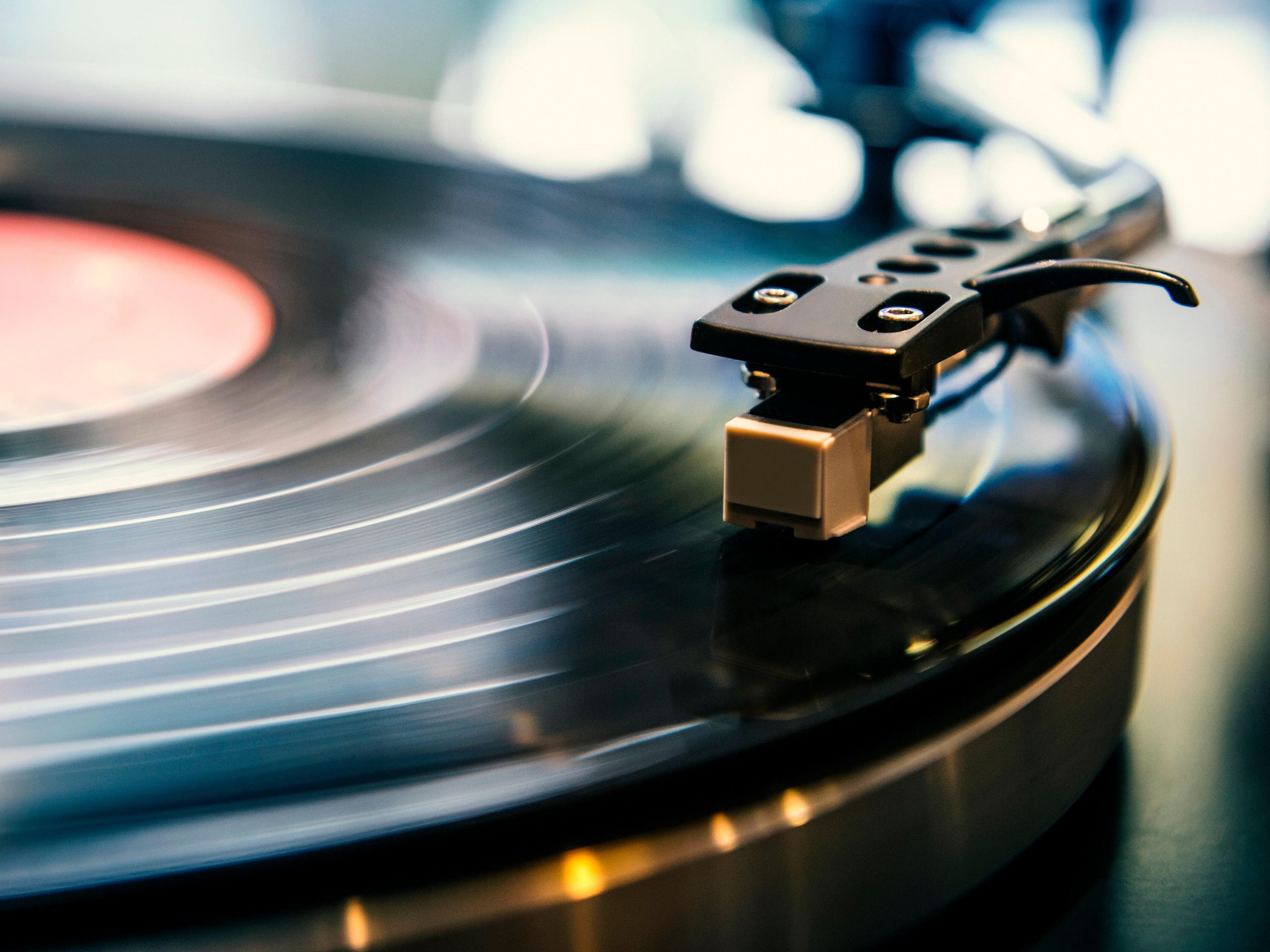
While flat discs exist since the late 19th century, it was only in 1948 that it was technologically enhanced to become the modern 33⅓ RPM polyvinyl chloride (PVC) disc with microgrooves that we all know today. The disc itself is one long groove whose physical contours are picked up by a diamond stylus as it rotates thanks to the turntable’s motor. Stereo vinyl records work by cutting the left and right channels into the opposite walls of one V-shaped groove. The kinetic vibrations generated by this friction are then amplified for them to be properly heard. This method has stood the test of time, lasted over 75 years, and remained technologically competent compared to its modern counterparts. Vinyl produces a rich and organic sound that is widely praised for its analogue warmth; however, it remains a mechanical method of listening so is inevitably inconsistent. For example, as the stylus approaches the centre of the disc there is inner groove distortion – distortion caused by the geometric form of the disc - and electrostatic pops and slight pitch variations which can affect playback. Physical wear also takes a small toll on the diamond stylus and the vinyl groove with every play. Despite these technical drawbacks, many listeners find vinyl’s warm, dynamic mastering offers a much more engaging listening experience than digital alternatives, making these minor flaws inconsistent and fuelling the format’s modern revival.

Another factor we must take into consideration when judging it is its limited accessibility and portability. Although discs are very thin and stackable, they are large and are hardly portable on the go. This goes without mention that an entire turntable plus speaker setup that requires space, making the vinyl only accessible in a confined place in one’s life. Although this is a valid option for home listening, music is a priceless feature to bring along in your life and must travel with you. In 2026, this experience has become a costly one, with most albums priced at over £20 and often stretching to forty. Moreover, one must buy their listening setup which not only costs upwards of £500 for a decent sound but requires careful research and some expertise - you cannot simply buy it off a supermarket shelf. While older songs and albums are widely – if not more – found in an analogue format, most artists, especially smaller ones, do not feel the need for their music to be pressed, preferring to reserve it to online platforms. The stock of records will also ultimately be permanently bottlenecked by global pressing plant capacities. However, where the vinyl especially attracts listeners is its tactile and visual experience, which many consider to be the ultimate physical music interaction. Its 12-inch disc format is definitive and is often customised to be pressed in different colours, while its cover acts as a canvas for album artworks, of which many have become iconic. Furthermore, its playback process is an immersive ritual: un-sleeving the disc, placing it on the platter, cueing the tonearm before finally pressing play. To summarise, the vinyl is more of a collector’s piece rather than the ultimate listening medium. While its sound quality is particularly good, its cost, portability and technical flaws render it as more of a nostalgic pursuit instead.
The Compact Disc
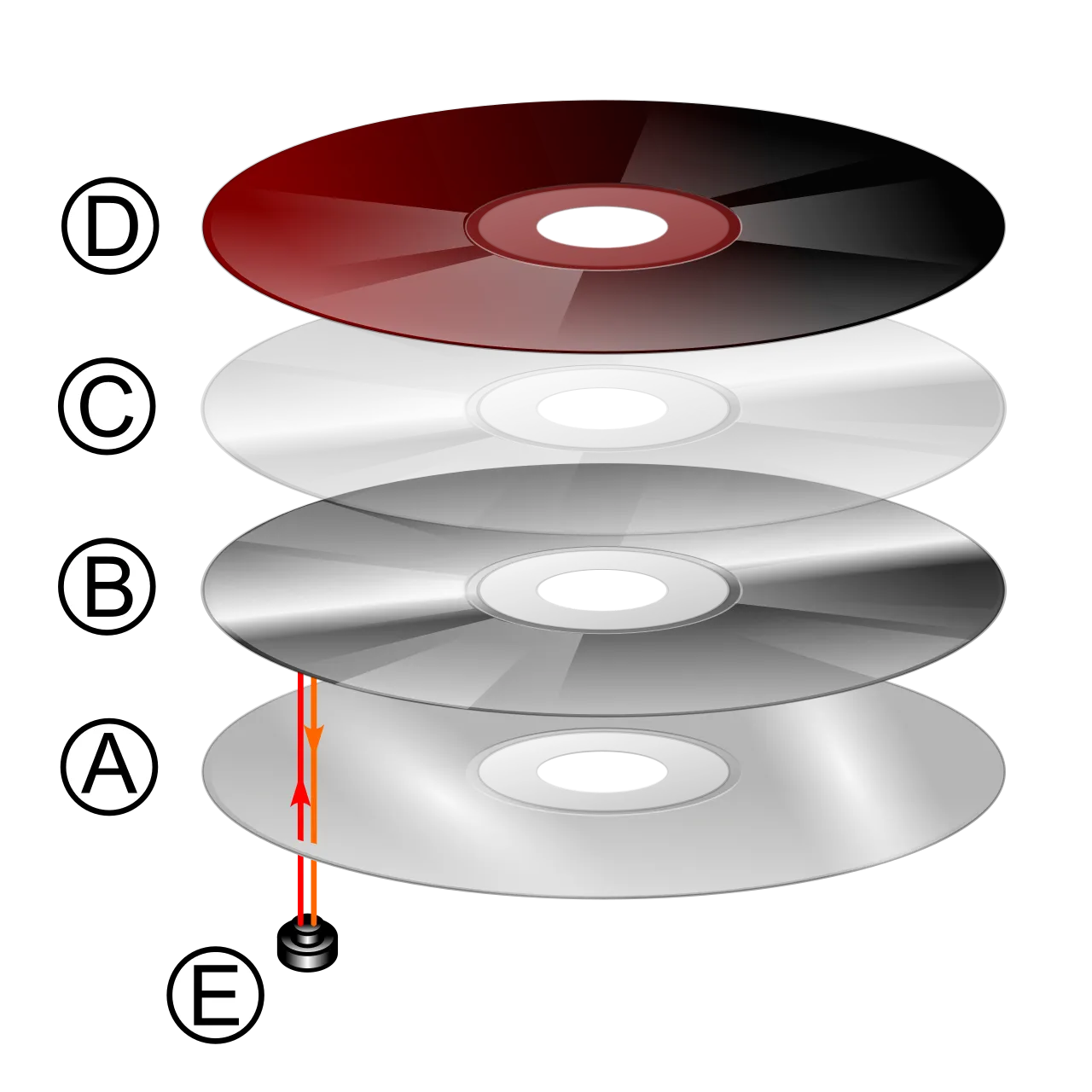
In 1982, Sony and Philips entered a new era of music consumption by introducing the Compact Disc (CD). They sought to fix many of the vinyl disc’s problems and technical inconsistencies, particularly the wear-and-tear caused by playback. To solve this, a brand-new technology was invented - non-contact optical laser reading. Instead of a stylus picking up grooves, an infrared laser fires onto optical pits stamped in a reflective disc layer. As the disc spins inside a CD unit, these pits are picked up by a light sensor which translates these responses int ones and zeros. These are then converted into sound through a converter chip. Using this innovative technology, a much clearer and natural sound is achieved with pristine quality, in the form of 16-bit, 44.1kHz uncompressed audio. Here, the frequency response is much more uniform, going from 20 Hz to 20,000 Hz – the limit of what is humanly audible – without changing.
The CD is highly adaptable and is much more portable. Not only is it a smaller five-by-five-inch disc, but it you can play it from anywhere. If it is not from your home Hi-Fi setup or from your car, it is often from a portable player, such as the Sony Discman which replaced the legendary Walkman cassette player. Moreover, you can also skip tracks and fast-forward instantaneously which is much more convenient. Relative to the vinyl, a CD is quite cheap to purchase, as far as physical media goes with new ones usually reaching under £10. However, the secondary market is saturated with decades of physical inventory, which makes used ones much cheaper. A player usually costs £300, however this second-hand market is also saturated, allowing for bargains to be made for much cheaper now. The listening catalogue of the CD is very extensive: Millions of albums – including master releases and regional indie releases to whom this is the only format. The playback experience remains satisfying and tactile, yet much faster and streamlined, only requiring you to place a disc into a motorised tray. Although the visual experience might not feel as attractive as its predecessor, its smaller covers remain a physical presence in your room that will always best a downloaded file. Although its lifetime was short, the CD is the evolution of the vinyl that everybody needed, matching the apex of sound quality with a more convenient and accessible format.
Digital Streaming
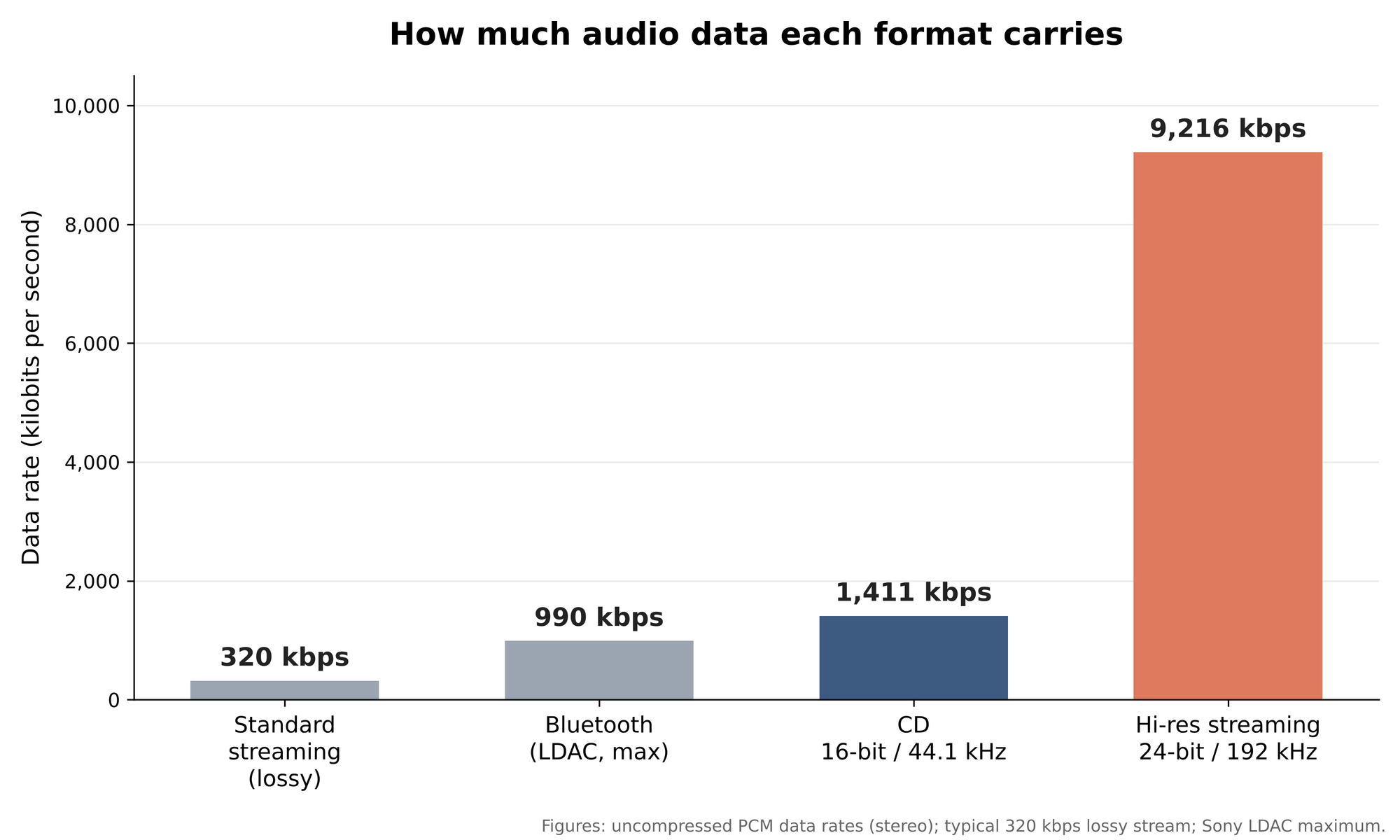
In the late 2000s, a new musical revolution shocked the world and changed it forever – digital streaming. By 2005, consumers were experiencing many problems, although this was still the dawn of digital music. Unlicensed file-sharing services like Napster and LimeWire led to significant financial losses, for creators as their music was being shared free of charge but also put users at risk of malware and damaged files. At the time, digital listening mediums such as the iPod had strict storage space which had to be managed locally, while the songs and albums themselves were quite expensive with albums priced around £8. Streaming has transformed music into an on-demand service. By moving storage from local devices to remote servers and providing unlimited access to a vast library for a low monthly fee, streaming has addressed storage limitations, reduced digital piracy, and allowed listeners to instantly access millions of songs from anywhere with an internet connection. Further coupled with the invention of the iPhone, some of the biggest platforms such as Spotify and SoundCloud reinvented the way music was listened to. Instead of having to manually pay for each album or song you wanted, you could listen to it all for a flat monthly fee. Although standard streaming audio quality is compressed and lossy, which is easily outmatched by vinyl or CD, modern hi-res lossless tiers offer bit-perfect streams up to 24-bit/192 kHz FLAC, which is generally considered the best consumerist audio quality available, beating other physical forms. However, the major caveat of this is that any Bluetooth connection renders this useless as it is recompressed. Instead, a wired connection is required to fully benefit of this.
Digital streaming is the unrivalled king of accessibility and convenience in the realm of music consumption. All you need is some form of internet connection to browse and listen to over 100 million songs at a very high quality. The music catalogues available are almost infinite, instantly connecting listeners with hyper-niche subgenres that once required expensive physical importing. However, catalogue longevity is ultimately dictated by corporate distribution rights and licensing agreements and songs can disappear from the platform with one click. Although these have a very competent online interface, allowing you to create playlists and browse easily, their listening experience only represents a few taps and scrolls on a digital user interface. While platforms seek to enrich the experience with dynamic looping video canvases, synchronised lyrics, and artist profiles, streaming lacks any physical thing to grasp, collect, or touch, and seems cold and distant compared to more physical formats such as vinyl and CD. In exchanging tangibility for unlimited accessibility, streaming turned music into an infinite utility—giving you an instant access to every song ever recorded, while sacrificing the physical soul of holding the art.
Conclusion
Ultimately, when looking at whether a single format prevails by the year 2026, there cannot be one clear victor since they all address entirely distinct human demands. Regarding convenience and discovery capabilities, streaming dominates this aspect clearly, providing unlimited possibilities for utilisation right at the palm of your hand. Meanwhile, vinyl emerges as the definitive counter-cultural statement, prioritising warmth, and tangible interactions with artworks instead. Nevertheless, although both have their advantages, the CD manages to strike the perfect balance of these two concepts. It offers reference-quality audio playback using uncompressed 16-bit technology while simultaneously providing physically owned products. This eliminates any necessity of subscribing monthly rental services through online providers whilst also avoiding any damage caused by repeated playback. Unlike the vinyl option, CDs offer reasonable prices compared to its superior quality of sound playback capability. Therefore, the best compromise solution lies in combining these two approaches together. Stream for exploratory purposes but purchase the actual physical medium of either CDs or vinyl records for the tracks you love wish to play repeatedly.
Bibliography
“Apple Launches iTunes Plus.” Apple Newsroom (United Kingdom), 30 May 2007, www.apple.com/uk/newsroom/2007/05/30Apple-Launches-iTunes-Plus/.
Everard, Andrew. “The CD Is 30 Years Old Today.” What Hi-Fi?, Future US, 1 Oct. 2012, www.whathifi.com/news/cd-30-years-old-today.
“Global Music Report 2026: Global Recorded Music Revenues Grow 6.4% as Record Companies Drive Innovation.” IFPI, 18 Mar. 2026, www.ifpi.org/global-music-report-2026-global-recorded-music-revenues-grow-6-4-as-record-companies-drive-innovation/.
Li, Ash. “Hi-Res Audio vs. MP3 vs. CD Quality: Can You Actually Hear the Difference?” Baseus, 29 Sept. 2025, www.baseus.com/blogs/content/hi-res-audio-vs-mp3-vs-cd-quality.
Rolling Stone. Penske Media, 9 Oct. 2026, www.rollingstone.com/.
“Vinyl Revival.” Wikipedia, the Free Encyclopedia, Wikimedia Foundation, 4 Oct. 2026, en.wikipedia.org/wiki/Vinyl_revival.
“What Is Inner Groove Distortion and How Do I Fix It?” Fluance Support Center, Fluance, support.fluance.com/s/article/what-is-inner-groove-distortion-and-how-do-i-fix-it. Accessed 20 Oct. 2026.