Petit Pli: How Curiosity Led to Clothes That Grow
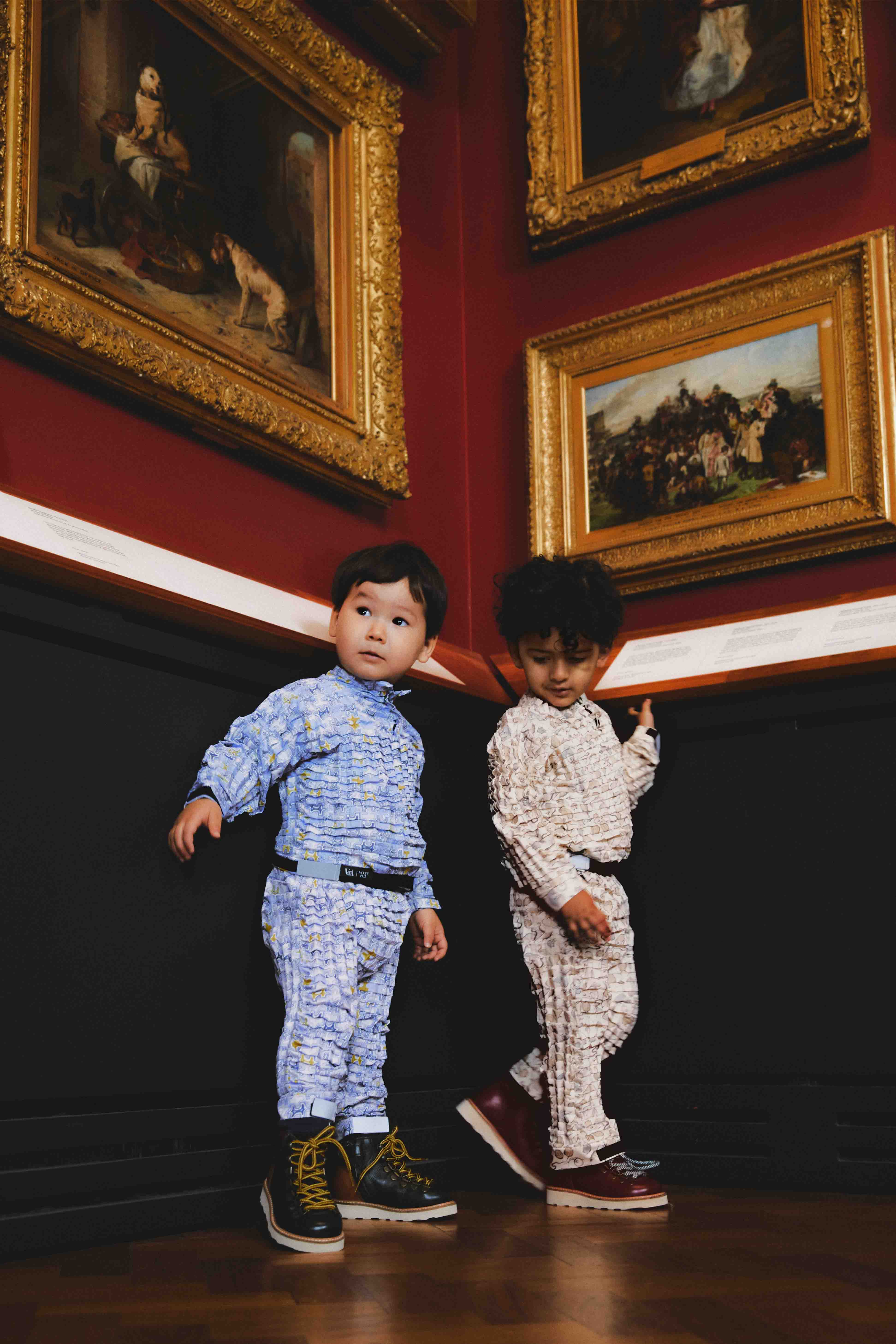
“How can we prolong children's clothes' lifespan?”
This, which sounds like an impossible ambition, was the question which led to creation of “clothes that grow”. Clothes, after all, are made in fixed sizes. You buy them, wear them, grow out of them and replace them. We are so used to this cycle that we rarely stop to question it. But sometimes, a life-changing product is born by questioning something everyone else has simply learned to accept. That is how the story of Petit Pli began.
A Small Problem and A Bigger Question
Petit Pli was founded by Ryan Mario Yasin, a London-based designer with a background in aeronautical engineering. The idea began with an extremely ordinary experience. In 2016, Ryan bought clothes for his newborn nephew, Viggo, who lived in Denmark. By the time the clothes reached him, Viggo had already grown out of them. Most of us would probably have been slightly annoyed, bought another size and forgotten about it.
But Ryan became curious.
“Why should a perfectly good piece of clothing become useless simply because a child has grown a few centimetres?”
And more importantly:
“Could the clothes grow too?”
His background in aeronautical engineering gave him an unusual way of approaching the problem. Ryan had studied deployable structures: structures that can be compact and then expand when needed, a principle also used in aerospace engineering, especially in the field of satellite solar panels. He began wondering whether similar thinking could be applied to fabric. Instead of looking at clothing purely as fashion, he started thinking about it as an engineer might think about a structure: something that could fold, expand and change its geometry.
Through many experiments with pleats, materials and structures, that curiosity eventually developed into Petit Pli’s Clothes That Grow. The garments use an engineered pleated structure that allows them to expand as a child grows. Instead of being designed around one fixed size, the garment adapts to changes in the child’s body.
Science Behind Clothes That Grow
The science behind Petit Pli combines structural geometry and materials science. Ordinary stretchy clothing relies largely on elastic fibres and the structure of knitted fabrics. Petit Pli takes a different approach. It uses specially engineered pleats that allow the fabric to expand as the folds open. Imagine folding a sheet of paper into an accordion. When compressed, it occupies very little space. But when pulled apart, the same sheet extends much further without the paper itself becoming longer.
Petit Pli uses a similar geometric principle. This connects to deployable structures, which are widely used in aerospace engineering. Satellites need large components, such as solar arrays, but these must fit inside a rocket during launch. Engineers therefore design structures that can fold into compact shapes and expand once deployed. Petit Pli applies related thinking to clothing. Instead of unfolding solar panels, the aim is to create garments that adapt to a growing body.
However, creating expandable clothes is more complicated than simply adding folds. The fabric must be comfortable, lightweight and durable.It must survive repeated stretching, washing and everyday movement without losing its shape. This involves understanding several important mechanical properties. One is elasticity, the ability of a material to return to its original shape after being stretched or deformed.Another is tensile strength, which describes how much pulling force a material can withstand before breaking. Engineers must also consider material fatigue, which occurs when repeated stress gradually damages a material. Even if a fabric survives being stretched once, it must remain functional after hundreds of movements. The challenge is therefore to balance flexibility, strength and durability.
Ryan and his team successfully solved this through negative Poisson ratio structure (auxetic properties), and using recycled fibre from PET plastic bottles to reduce waste, as well as giving the garment water resistance and high durability. Now, they expanded their technology into bags, as well as merino wool vests with incredible durability (called knot-tile technology).
Growing Children, Growing Waste
Behind that simple question lies a much larger environmental problem. The fashion industry creates significant waste and pollution. Producing clothes requires raw materials, energy, water, manufacturing and transportation. When garments have very short useful lives, all of those resources have gone into making something that may quickly be replaced. Children’s clothing makes this problem particularly obvious. Children grow quickly. A shirt, jacket or pair of trousers may still be in excellent condition when it becomes too small. It has not necessarily broken or worn out. Its owner has simply grown. A perfectly functional product becomes obsolete because its user has changed. Ryan’s original problem, therefore, was not only a family inconvenience. Multiply the same experience across millions of growing children and it becomes part of a much larger question about how we produce and consume clothing.
This is where Petit Pli connects with the United Nations Sustainable Development Goals (SDGs), particularly SDG 12: Responsible Consumption and Production. Sustainability is not simply about dealing with waste once we have created it. It is also about questioning why we create so much waste in the first place.
Instead of asking:
“How can we recycle this garment after a child grows out of it?”
Petit Pli asked an earlier question:
“How can we stop the garment from becoming obsolete so quickly?”
The difference is that recycling deals with a product towards the end of its useful life. Design can potentially intervene much earlier. If a garment can adapt to a child’s changing body and remain useful through several stages of growth, fewer replacement garments may be needed. In principle, that can mean fewer resources used to manufacture, package and transport new clothes, as well as fewer unwanted garments entering the waste stream.
The idea also connects more broadly with SDG 13: Climate Action, because the environmental impact of fashion exists throughout a garment’s lifecycle — from producing fibres and manufacturing textiles to transportation, use and eventual disposal. Of course, one expanding garment cannot solve the environmental problems of the global fashion industry. But perhaps that misses the point. Petit Pli demonstrates a different way of thinking about sustainability: Instead of designing products for replacement, can we design them for longevity and change?
From Aerospace Engineering to Young V&A
Petit Pli’s clothing has also been displayed at Young V&A, part of London’s Victoria and Albert Museum. The museum’s permanent Design Gallery explores how creativity, science and problem-solving can lead to new inventions. Petit Pli fits naturally into this theme because it combines aerospace-inspired engineering with an everyday problem.
What began with a baby growing out of his clothes eventually became a new way of thinking about textile design. If you have time in London, Young V&A is worth visiting to see how designers and engineers approach ordinary problems in unexpected ways. Petit Pli reminds us that engineering is not only about rockets, machines or computers.Sometimes, it can be about something as familiar as a pair of trousers. And sometimes, a simple question can lead to a completely different way of designing the world around us.
Post Script: Connection with the Author
One of the reasons which led the author to write this article is to show deep gratitude to Ryan Mario Yasin and his team. The author’s family met Ryan in 2023, when the author started studying in the UK. Ryan has supported the author greatly and generously. He is one of the figures who opened up a fantastic world of design to the author. In the Eton Action fair, he donated some of Petit Pli’s products which ultimately led to his house (JDM) raising the most amount of money. Visit the website https://shop.petitpli.com/ to find out more.
Bibliography
Ellen MacArthur Foundation
United Nations Sustainable Development Goals
Victoria and Albert Museum(V&A)
Petit Pli official website
Personal conversation with Ryan Mario Yasin