Quantum Computing - The Future or Not?

Quantum computing could be the next big innovation that could help companies through the toughest of scenarios. Unlike normal computers that would run regular day to day activities such as playing a game of Minecraft; these computers do not do the average. These quantum computers can rapidly solve complex equations that are almost impossible for modern supercomputers.
Schrodinger's cat is a thought experiment where it is imagined that there is a cat in a box with a bottle of poison, and a geiger counter, which then triggers a hammer to fall on the bottle via the geiger counter detecting radiation, therefore releasing the poison and killing the cat. However, while the cat is still inside the box, Schrödinger’s thought experiment describes it as being in a superposition of both alive and dead states. This idea is often used as an analogy for how quantum computers work: a qubit can exist in a combination of two possible states, 0 and 1, at the same time. This superposition is maintained until the qubit is measured. Once it is measured, however, the qubit can only be observed as either 0 or 1. This highlights one of the challenges of quantum computing: although a qubit can hold a superposition of states before measurement, measuring it produces only a single result, meaning the information contained in the superposition must be carefully used before the measurement takes place.

How Do They Work?
Computers work with bits. Bits are the smallest unit of information in a computer, which have a value of 1 or 0, the more bits you have the more things you can do, since you have more states to work with. These new computers work with qubits, which are a special type of bit that can be both 1 and 0 at the same time. For a classical computer, X amount of bits will give it X states, for quantum computers, they can take X amount of bits and give them up to 2^X amount of states. So for example 10 bits would give you 10 states, but 10 qubits would give you 1024 possible states, allowing much heavier multitasking.
In order to make this work, the computer would have to be isolated from the earth's magnetic field, and the temperature has to be close to absolute zero. This requires special equipment called the dilution refrigerator, anything close to the qubits will ruin any chance of calculation, since it knocks the qubit off its quantum state. This is known as decoherence, the process by which the qubit is knocked off its quantum state and is now just a regular bit. Coherence is a state in which the qubit is in its superposition, and it can only last a few microseconds. The clock keeps ticking.
The Challenges
The main problem that quantum computers have is stability. Due to the way that they work, error correction has to be used to try and keep their state. This involves creating several physical qubits that act as one - a logical qubit - which leads to a big problem. Each physical qu
bit has a high chance of losing its quantum state due to errors and environmental interference. Because of this, many physical qubits are needed to create a single, more reliable logical qubit. This is one of the main reasons modern quantum computers are considered to be in the NISQ (Noisy Intermediate-Scale Quantum) era. In this era, quantum computers have enough qubits to perform useful calculations, but they still experience a significant number of errors.
Another big thing to note is entanglement, which Einstein famously called "spooky action at a distance", if you entangle two qubits, their state becomes connected, and if you look at one, you know the state of the other. This is the main way that quantum computers can work, since you can connect qubits together and create exponentially bigger processing power. Einstein did not like this and spent a lot of time studying quantum physics since it breaks one of his laws, that the speed of light is absolute and nothing can go faster than it. If you entangle two objects and put them on opposite ends of the universe, if one changes, the other will change too, even though they are many light-years apart.

Quantum Supremacy
A term that has been tossed around in the media is quantum supremacy, which is when a quantum computer can do something that a classical computer cannot. In 2019, Google announced that they achieved quantum supremacy with their 53 qubit sycamore processor. It performed a calculation in about 200 seconds that Google estimates would have taken the world's fastest super computer about 10,000 years. To take the gas from the fire however, IBM has some problems with this claim, since they say that a classical computer could perform the same task in about 2.5 days, so quantum supremacy is a sliding scale that moves as technology advances.
Applications
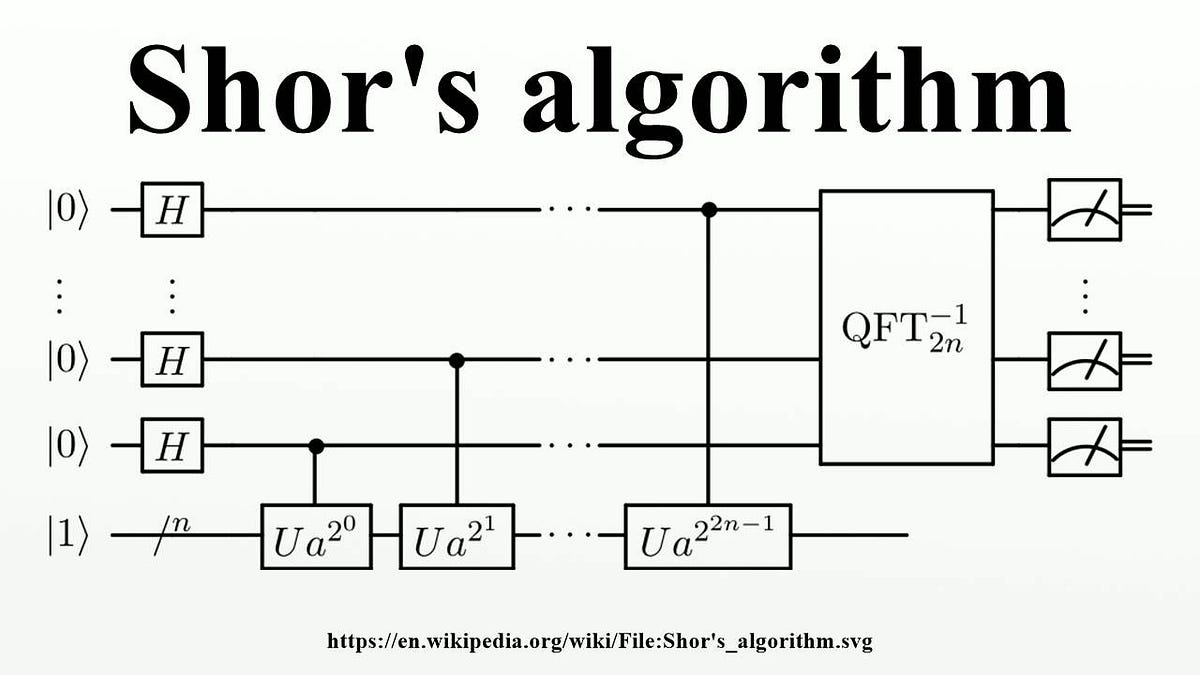
If all of the problems are solved, then the applications are huge, since Peter Shor's algorithm (a method to find prime factors which are important numbers concerning encryption) can break encryption that protects online banks and many other things. If you have a powerful enough quantum computer, you could decrypt private messages and steal people’s money with ease which is another challenge to be overcome - this time for the banks!
On the bright side, quantum computers can simulate the interactions of chemicals, which could help lead to huge technological breakthroughs. It could also assist with optimisation, which is a mathematical problem where you have to find the best way to do it while handling immeasurable possibilities. This could help with traffic lights and save traffic congestion, and many other problems.
Conclusion - The Future or Not?
Quantum computers are not the future of everyday personal devices, but it's a specialist tool, and for some specific tasks, it can be the fastest thing available. In a way, quantum computers could be overhyped, since until now, none of them have been able to achieve anything that could not be accomplished by a classical computer. However, with billions of dollars poured into this research, and error correction rates dropping every year, it would be a huge mistake to write this off as another dead end as they did with classical computers in the 1950s.
The cat, for now, remains both alive and dead — but I'd bet on it coming to life.
Bibliography
- NIST (2025). Quantum Computing Explained. Available at: https://www.nist.gov/quantum-information-science/quantum-computing-explained
- IBM (2025). What Is Quantum Computing? Available at: https://www.ibm.com/think/topics/quantum-computing
- IBM (2024). What Is a Qubit? Available at: https://www.ibm.com/think/topics/qubit
- Google Research. Quantum Supremacy Using a Programmable Superconducting Processor. Available at: https://research.google/blog/quantum-supremacy-using-a-programmable-superconducting-processor/
- Science News (2019). Google claimed quantum supremacy in 2019 — and sparked controversy. Available at: https://www.sciencenews.org/article/google-quantum-supremacy-claim-controversy-top-science-stories-2019-yir
- The Quantum Insider (2026). Quantum Computing Challenges Holding Back Practical Quantum Computers. Available at: https://thequantuminsider.com/2026/09/04/main-challenges-facing-quantum-computing/
- BlueQubit (2026). 14 Quantum Computing Use Cases Reshaping the Future. Available at: https://www.bluequbit.io/blog/quantum-computing-use-cases