Earth Without The Moon: A World Transformed
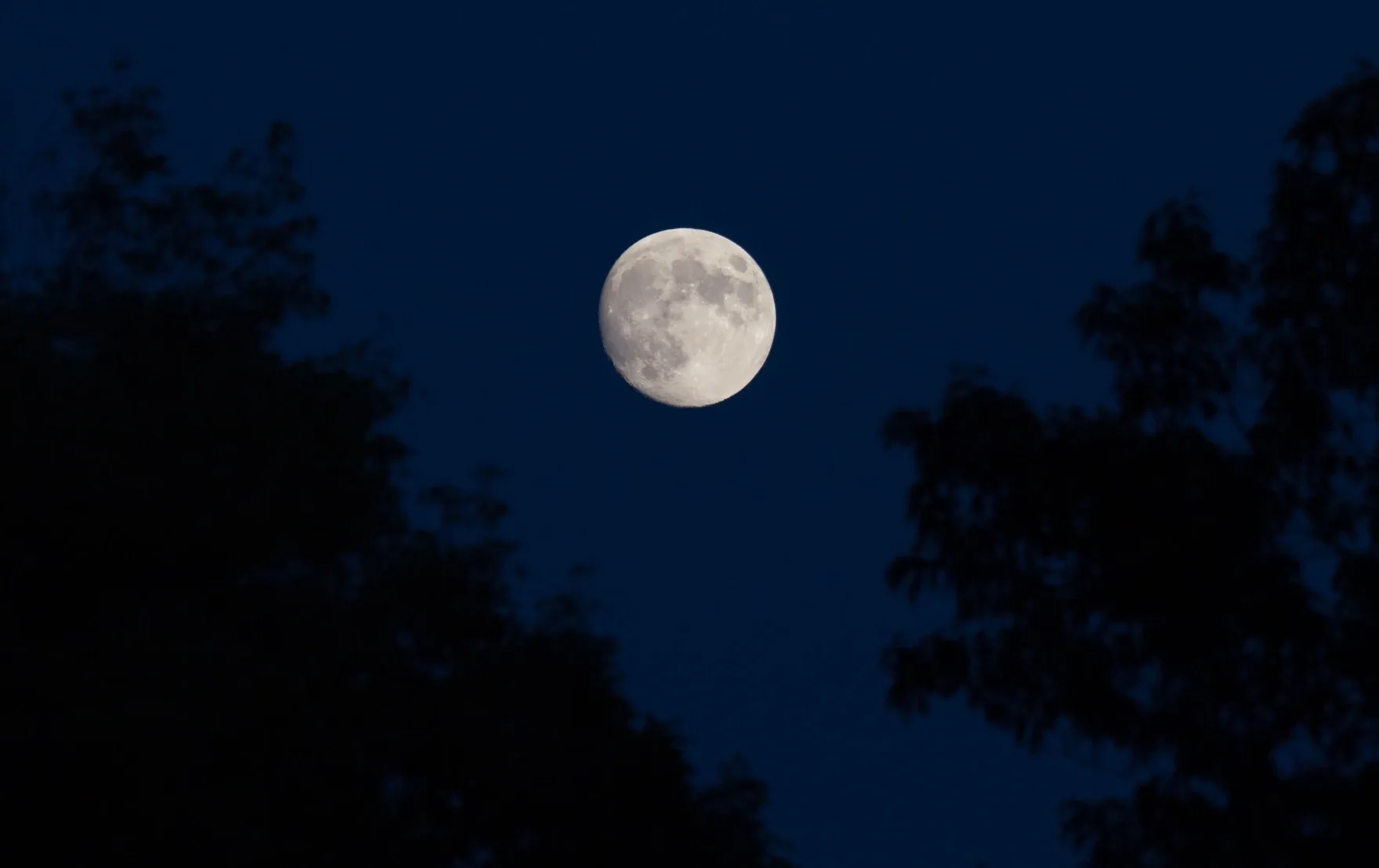
For billions of years, the moon has accompanied Earth on its journey. To us, it appears as a glowing sphere in the night sky, gradually changing position and moving through its familiar phases. But it has a much bigger and more important purpose than that. Humanity has long regarded the moon with fascination, yet the real scientific importance and relevance to survival is often overlooked. The theoretical disappearance of the Moon shines a light on the delicate nature of Earth and the fine balance and conditions Earth has to be under in order to sustain life. Although the Moon's disappearance would not immediately be a threat to human life, its consequences would extend across astronomical, ecological and climatic systems.
The most immediate consequence of the Moon's disappearance would be the sudden transformation of Earth's night sky. Without its reflective surface, the Moon would no longer illuminate the night sky, making stars and other faint celestial objects more visible while removing a familiar source of natural light. Furthermore, lunar phases and eclipses would become phenomena of the past, marking the loss of some of the most remarkable astronomical events observable from Earth. However, despite the dramatic nature of this change, the planet would not immediately descend into chaos. Earth would continue to rotate on its axis and orbit the Sun, receiving approximately the same amount of solar energy as before. This distinction highlights an important scientific principle: the disappearance of a celestial body does not necessarily result in the immediate destruction of its surroundings, but can instead initiate a series of gradual and far-reaching consequences.
The most immediate significant consequence would be the disruption of Earth's tidal systems. Although solar tides would persist, the overall tidal range would generally decrease without the Moon. This reduction could significantly affect coastal ecosystems, including mangrove forests, salt marshes and tidal flats, which depend on regular tidal cycles. Estuaries, salt marshes and tidal flats provide essential habitats for numerous species, illustrating how a change in a celestial body's gravitational strength could affect life on Earth. This demonstrates that the consequences of the Moon's disappearance would not just be astronomical but would also disrupt the fragile systems by which the Earth runs.
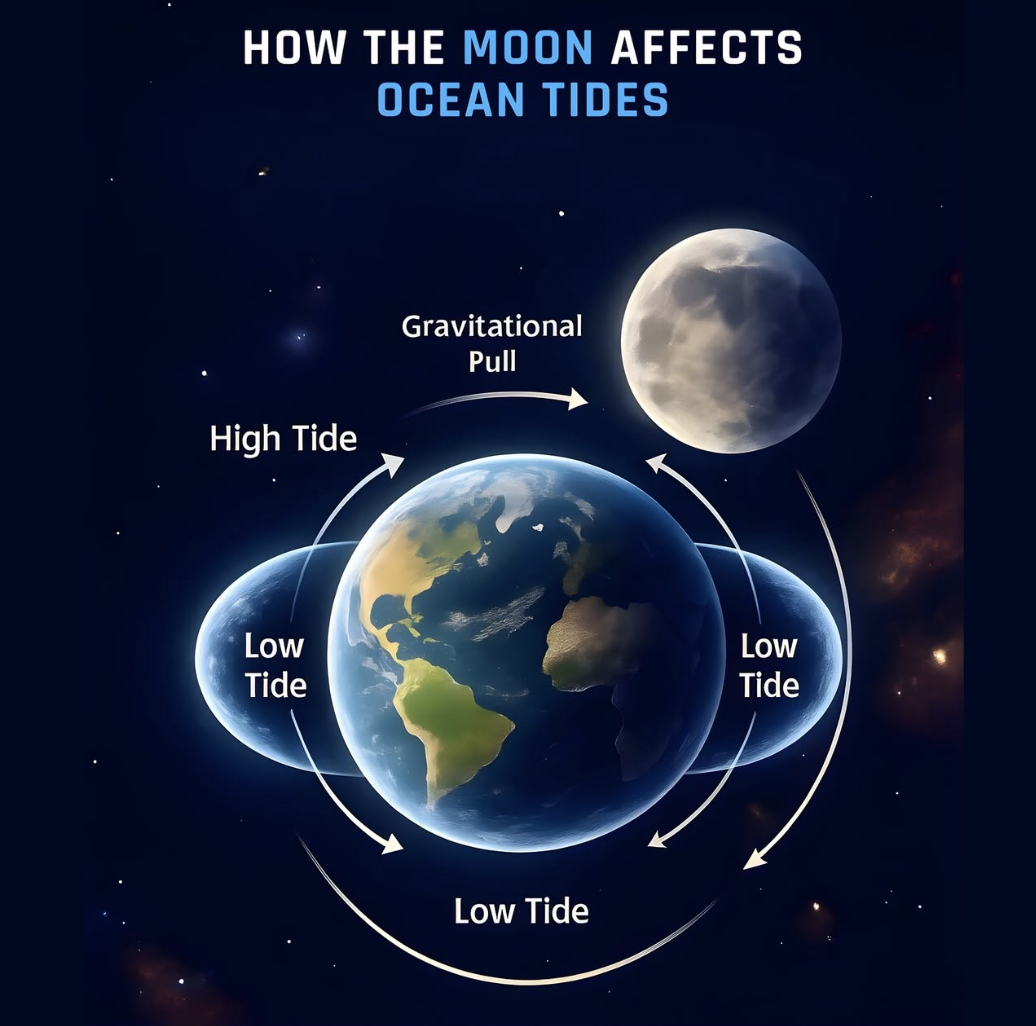
Another important consequence of the Moon's disappearance would be its effect on Earth's rotation. Over billions of years, the Moon's gravitational influence has gradually slowed Earth's rotation through tidal friction, contributing to the lengthening of our days. Without the Moon, this process would change significantly, as the Sun would become the main remaining source of astronomical tidal friction. However, the length of a day would not suddenly change if the Moon disappeared, as Earth's rotation would continue at almost its existing rate. Over much longer periods, the rate at which Earth's rotation slows would be different, potentially affecting the planet's long-term rotational evolution. This highlights that the Moon has influenced not only Earth's oceans and ecosystems, but also the gradual evolution of the planet itself.
Perhaps one of the most significant long-term consequences of the Moon disappearing would be its effect on Earth's climate. The Moon plays an important role in stabilising the tilt of Earth's axis, which currently sits at approximately 23.4 degrees and is responsible for the changing seasons. Without the Moon's gravitational influence, this tilt could fluctuate more significantly over millions of years, potentially causing dramatic changes in global temperatures and weather patterns. Some regions might experience more extreme summers and winters, making it difficult for plants, animals and even humans to adapt. Although Earth would not suddenly become uninhabitable, these gradual changes could threaten ecosystems and disrupt agriculture. This highlights just how much the stability of our environment depends on forces that are often invisible and rarely considered in everyday life.
The Moon's disappearance would extend beyond geographical consequences; it would significantly affect the behaviours and biological rhythms of animals. Many species of marine animals cycle their reproductive cycle with lunar phases and tidal patterns. The disappearance of these aids would significantly throw off these patterns and severely change the way animals behave. The removal of lunar light would also severely change predator-prey relationships of nocturnal animals. Over time, these changes could affect entire food chains, showing how the loss of one celestial body could have consequences for countless living organisms. Humans would also experience a cultural loss, as the Moon has inspired art, literature, mythology, and religious traditions for thousands of years. Its disappearance would therefore affect not only the physical world, but also humanity's relationship with the natural universe.
Ultimately, the disappearance of the Moon would prove just how interconnected Earth is with the wider universe. Although the planet would not be destroyed overnight, the consequences of losing the Moon would gradually reshape its oceans, climate, and ecosystems. What is a distant, silent object is an important part of the delicate balance that allows life to flourish on Earth. The most striking aspect of this thought experiment is how easily something so familiar can be taken for granted until its absence forces us to recognise its true significance. The Moon's disappearance would serve as a reminder that Earth does not exist in isolation but depends on a complex relationship between celestial bodies and the forces that govern them.
Bibliography:
Abby | NRAO. "What Would Happen to Earth if the Moon Disappeared?" National Radio Astronomy Observatory, 18 Aug. 2026, public.nrao.edu/ask/what-would-happen-to-earth-if-the-moon-disappeared/. Accessed 21 Oct. 2026.
Royal Museums Greenwich. "What Would Happen if the Moon Disappeared?" Royal Museums Greenwich, www.rmg.co.uk/stories/space-astronomy/what-would-happen-if-moon-disappeared. Accessed 21 Oct. 2026.