Why Monoclonal Antibodies (mAbs) are so revolutionary
What are antibodies and what is the difference between polyclonal and monoclonal antibodies?
In a colloquial sense, antibodies are your personal army to fight against any pathogens or unrecognised intruders that enter your body. They are Y shaped proteins produced by your immune system that can recognise antigens (the foreign substances that enter your body) due to the differently shaped molecules that antigens display on their surface. These antibodies go to any site in your body that might have recently been wounded, like a cut, to serve as proactive protection against possible bacteria that might have gone in or they work in general to destroy pathogens when you could have a cold. Given their general nature of defence these are called polyclonal antibodies. Monoclonal antibodies are synthetically produced in a lab and are many copies of a single antibody that target a single antigen or even a specific part on an antigen (an epitope). This therefore means they are incredibly targeted in their purpose rather than being all purpose like polyclonal antibodies. This specificity is what allows them to be such a revolutionary treatment for so many previously incurable or untreatable conditions.
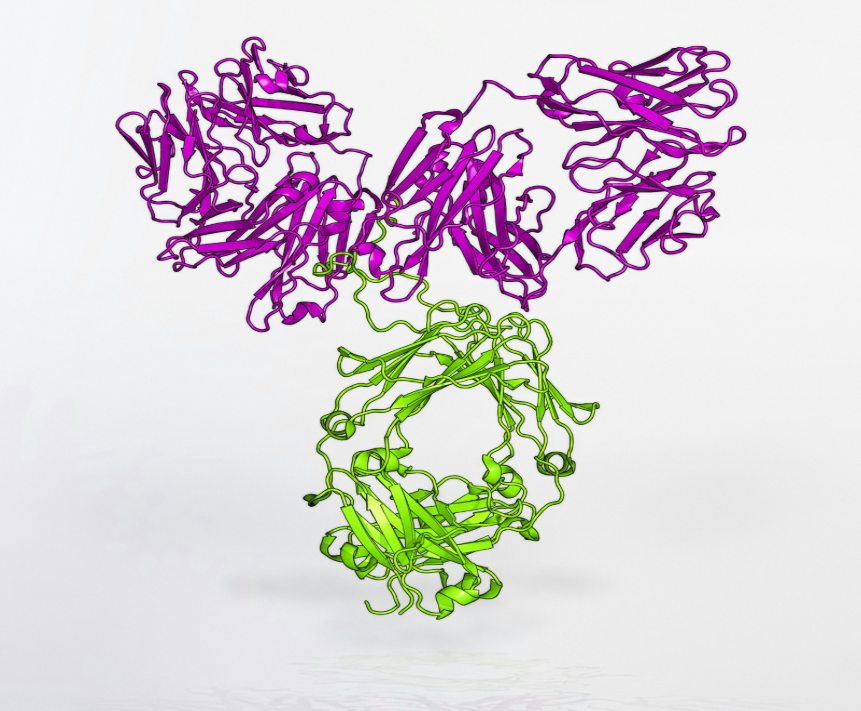
What are monoclonal antibodies made of and what is an example of what conditions they are used for?
There are four types of monoclonal antibodies, often treating conditions like cancer or chronic inflammatory disorders like IBD, determined by what proteins are used to make them and where those proteins come from. These types are:
· Murine: Made from only mouse proteins, with drug names in –omab. This was first monoclonal antibody made that was synthesised in 1975 and approved for use in 1986. It was historically used for treating organ transplant rejection as something like muronomab-CD3 targeted the specific CD3 part of mature t-cells meaning that these t-cells could not function normally and so could not attack the transplanted organ. Ironically the fact that it was murine and so made of entirely mouse protein meant it had a high likelihood of being rejected by the body, with the body releasing cytokines to remove it, so it was phased out of use.
· Chimeric: A combination of mouse (around 1/3) and human proteins (around 2/3), with drug names ending in –ximab. A good example to understand Chimeric monoclonal antibodies is Rituximab for treating cancers like non-Hodgkin lymphoma that develop from B-cells. It targets CD-20 on the mature B-cells, healthy and cancerous, and marks them to be destroyed. The trade-off of destroying the healthy cells is clearly worth it as it simultaneously attempts to remove the cancer. Due to there being mainly human proteins in the Chimeric antibodies, it meant that the drug can still retain the utility of the mouse protein in targeting very specific parts of cells, whilst also having a considerably lower chance of the body rejecting the drug due to the majority human proteins.
· Humanized: Made from small parts of mouse proteins attached to human proteins, with drug names ending in –zumab. An easy-to-understand example is Trastuzumab that targets the HER2 proteins that cancer cells, often in the breasts, have a huge amount of displayed on their surface which signals for the cancer cells to multiply and form a tumour. By disrupting their function through attaching to the HER2 protein on the cells, they can stop the promotion of growth in cancer cells whilst also signalling for the immune system to come attack these cells. Because it is nearly entirely human proteins, it can be used repeatedly, which is a crucial part of cancer treatments. Although, it still nearly a tiny section of mouse protein that means that the abnormal amounts of HER2 can be targeted on the cancer cells.
· Human: Fully human proteins, with drug names ending in –umab. As it is fully human, it cannot target a specific part on an abnormal cell as it doesn't have the mouse protein, so it is instead used for inflammatory disorders like crohns or rheumatoid arthritis. An example of a drug is adalimumab that binds to TNF-a (tumour necrosis factor alpha,) a cytokine that usually helps coordinate immune response but causes inflammation of the joints when in excess. By binding to TNF-a, the adalimumab blocks inflammation signalling meaning the inflammation is reduced. This can therefore leave users of the drug slightly immuno-compromised as the body is less effective in coordinating immune response to pathogens or viruses. However, as it is fully human it can be used repeatedly for long periods of time, which is necessary for the treatment of chronic inflammatory conditions.
So why are they so revolutionary?
Hopefully through my explanation of the specific uses of the different types of mAbs, it is now clearer what separates these antibodies from any other drugs on the market. The mouse protein's ability to recognise target epitopes on proteins in cells means these drugs can be hyper specific in their effect, meaning less unnecessary inflammation and secondary problems caused by drugs that target a wider area and healthy cells. This has opened a world of possibilities in making progress on treating cancers by helping one's own immune system fight it. It has allowed researchers to understand that the immune system has natural brakes on how aggressive t- cells can be, with these brakes being able to be affected by cancer as the cancer can effectively make itself immune to attacks from the immune system by interacting with PD-1 “brake” proteins. It has opened the world of biomarker testing meaning cancer treatment has gone from asking what cancer one must what specific molecular features does this person's cancer have and how can we effectively target these features. It has made a grand shift from general treatments for a general condition to understanding the specific complexities of one's condition and what drug is best suited for these specificities. Having been treated by one of these monoclonal antibodies for a few years, I can say that the revolutionary effect these drugs have had on the medical world is far from finished and I cannot wait to see what conditions they will soon be able to treat.
Works Cited
"Antibodies: Definition, Types & Function." Cleveland Clinic, 23 Aug. 2023, my.clevelandclinic.org/health/body/22971-antibodies.
"Antibody Immunosuppressive Therapy in Solid-organ Transplant." PMC Home, pmc.ncbi.nlm.nih.gov/articles/PMC2840233/?.
"Biopharmaceutics review of Humira." www.accessdata.fda.gov/drugsatfda_docs/nda/2002/BLA_125057_S000_HUMIRA_BIOPHARMR.PDF?.
"Discovery – Development of Rituximab." Comprehensive Cancer Information - NCI, www.cancer.gov/research/progress/discovery/blood-cancer?.
"HER2 Genetic Link to Breast Cancer." Comprehensive Cancer Information - NCI, 11 Apr. 2018, www.cancer.gov/research/progress/discovery/her2?.
"Immune Checkpoint Inhibitors." Comprehensive Cancer Information - NCI, www.cancer.gov/about-cancer/treatment/types/immunotherapy/checkpoint-inhibitors?.
"Monoclonal Antibodies and Their Side Effects." End Cancer As We Know It | American Cancer Society, www.cancer.org/cancer/treatment-types/immunotherapy/monoclonal-antibodies.html.
"Monoclonal Antibodies in MS: Mechanisms of Action." PMC Home, pmc.ncbi.nlm.nih.gov/articles/PMC11335136/?.
"Monoclonal Antibodies: Definition & How Treatment Works." Cleveland Clinic, 10 Jan. 2022, my.clevelandclinic.org/health/treatments/22246-monoclonal-antibodies.