Pain: A Sensation or a Construction of the Brain

Introduction
Pain is a universal human experience, yet its nature is more complex than a simple alarm signal triggered by tissue damage. Modern research shows that pain is not just transmitted from the body to the brain. Instead, pain reflects how the nervous system detects, modifies, and interprets signals. Understanding the neurobiology of pain requires studying both how sensory information enters the nervous system and how central processing shapes the experience of pain. This approach explains why pain can become chronic, why it can occur without injury, and why emotional and cognitive factors influence how pain is felt.
Pathways of Pain Signalling
The nervous system contains specialised sensory receptors known as nociceptors that respond to harmful stimuli such as extreme temperature, intense pressure, or chemical irritants. When activated, these receptors produce electrical impulses that are carried along sensory nerve fibres to the spinal cord and brain. Two main types of nerve fibres are involved in pain signalling. Delta fibres are myelinated and conduct signals rapidly, producing the sensation of sharp, immediate pain. C fibres are unmyelinated and transmit slower, duller pain sensations. These pain signals ascend the spinal cord through pathways such as the spinothalamic tract toward brain regions responsible for processing sensory information and generating conscious experience.
While nociceptors detect harmful stimuli, the transmission of pain signals is not linear or fixed. Research by Ronald Melzack and Patrick Wall introduced the idea that the spinal cord has mechanisms that can increase or decrease the strength of pain signals before they reach the brain. According to this concept, interactions between different types of nerve fibres at the spinal level can modulate incoming information so that the overall signal sent to the brain varies depending on the balance of excitatory and inhibitory influences. This modulation helps explain phenomena such as why rubbing an injured area can reduce the intensity of pain; signals from touch receptors can suppress pain signals in the spinal cord.
Brain Processing of Pain
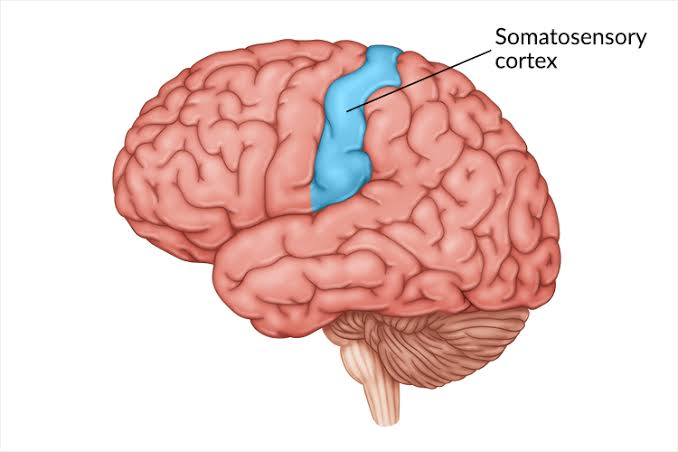
Once pain signals reach the brain, they are processed by multiple regions that contribute to different aspects of the pain experience. The somatosensory cortex is involved in identifying the location and intensity of pain. Other brain structures, such as the insular cortex and anterior cingulate cortex, contribute to how unpleasant or distressing pain feels. These regions integrate sensory information with emotional and cognitive evaluations, linking the physical sensation of pain to its emotional impact. Additional areas, including the amygdala, are involved in associating pain with memory and fear responses. Together, these interconnected regions demonstrate that pain is not a single sensation but a multi‑dimensional experience that combines sensory, emotional, and cognitive processing.
Chronic Pain and Central Nervous System Changes
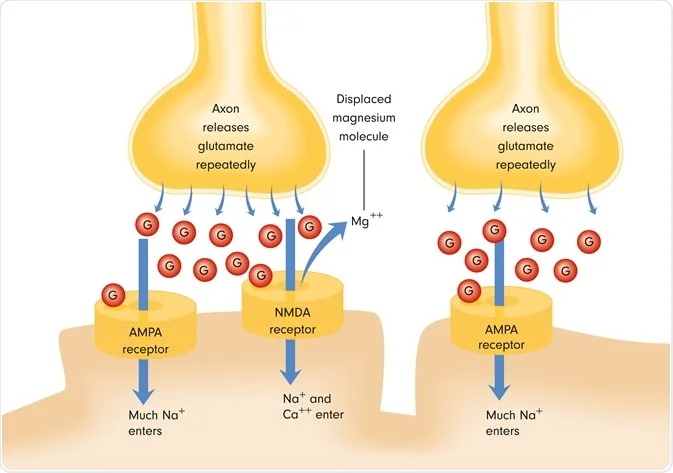
In many cases, pain persists long after an injury has healed. Chronic pain is a major clinical challenge and affects a significant portion of the population. One mechanism underlying chronic pain is central sensitisation, a process in which neurons in the spinal cord and brain become increasingly excitable after repeated stimulation. Central sensitisation results in increased responsiveness to painful stimuli and can reduce the threshold at which stimuli are perceived as painful. Neurotransmitters such as glutamate and receptors such as the N‑methyl‑D‑aspartate (NMDA) receptor play key roles in this process, contributing to increased excitatory activity within neural circuits that process pain.
In central sensitisation, inhibitory mechanisms that normally reduce pain signals become less effective, while excitatory pathways become more pronounced. This imbalance can cause pain to become uncoupled from the original tissue injury. In some chronic pain disorders, such as fibromyalgia and neuropathic pain, individuals experience intense pain even when there is little or no detectable physical damage. Because central sensitisation involves changes in the nervous system itself rather than ongoing damage, it helps explain why imaging studies often fail to show structural abnormalities in people with chronic pain.
Pain Without Physical Injury
Some clinical conditions illustrate that pain can occur independently of direct tissue damage. Phantom limb pain is a striking example. People who have had a limb amputated may continue to experience pain sensations in the part of the limb that no longer exists. This phenomenon arises because the brain maintains a representation of the body in the somatosensory cortex, often described as a map in which different regions of the body correspond to specific areas of the cortex. When sensory input from a limb is lost due to amputation, neighbouring areas of the sensory map can become reorganised. Spontaneous neural activity in the region corresponding to the missing limb can be interpreted by the brain as pain originating from that limb. This finding provides clear evidence that the experience of pain can be generated by the brain itself rather than being solely driven by input from damaged tissues.
Emotional and Cognitive Modulation of Pain
Pain does not occur in isolation from emotional and cognitive influences. Psychological factors such as mood, attention, expectation, and previous experience can significantly alter how pain is perceived. For instance, people who are anxious or depressed tend to report higher pain intensity than those who are not experiencing such emotional states. Attention can also change pain perception; focusing on a non‑painful task can reduce the subjective intensity of pain, while focusing on the painful area can increase it. Negative thought patterns, such as magnifying the significance of pain, are associated with greater pain sensitivity.
These effects arise because brain regions involved in emotion and cognition interact with pain processing networks. The anterior cingulate cortex and insular cortex, which contribute to the affective and evaluative aspects of pain, help integrate sensory information with emotional responses and beliefs. This integration means that pain is best understood not only as a biological event but also as an experience shaped by psychological context.
Clinical Implications
Understanding pain as a neurobiological construct rather than a direct readout of tissue damage has important clinical implications. It explains why structural imaging often fails to reveal abnormalities in chronic pain conditions and why treatments that target the nervous system (including psychological therapies and medications that affect neural signalling) can be effective. Cognitive strategies that change how individuals interpret pain, such as cognitive behavioural therapy, can reduce perceived pain by altering the way the brain processes and responds to pain signals. Similarly, drugs that modulate neurotransmitter systems involved in pain transmission and modulation can help reduce chronic pain by correcting imbalances in neural activity.
Recognising the multi‑dimensional nature of pain also fosters a more empathetic approach to patient care. When clinicians understand that pain is constructed by the nervous system, they are more likely to consider both biological and psychological components in assessment and treatment.
Conclusion
Pain is not simply a direct signal generated by damaged tissue and transmitted to the brain. Instead, it results from a dynamic interplay between sensory input, modulation at the spinal level, and processing by multiple brain regions that integrate sensory information with emotional and cognitive factors. Pain can persist without ongoing injury, as seen in chronic pain conditions and phantom limb pain, and can be influenced by mood, attention, and belief. Viewing pain as a neurobiological construct opens pathways to more effective clinical treatment and a deeper scientific understanding of why pain affects people differently.