HyaPak: A Plastic Alternative
Killing two birds with one stone
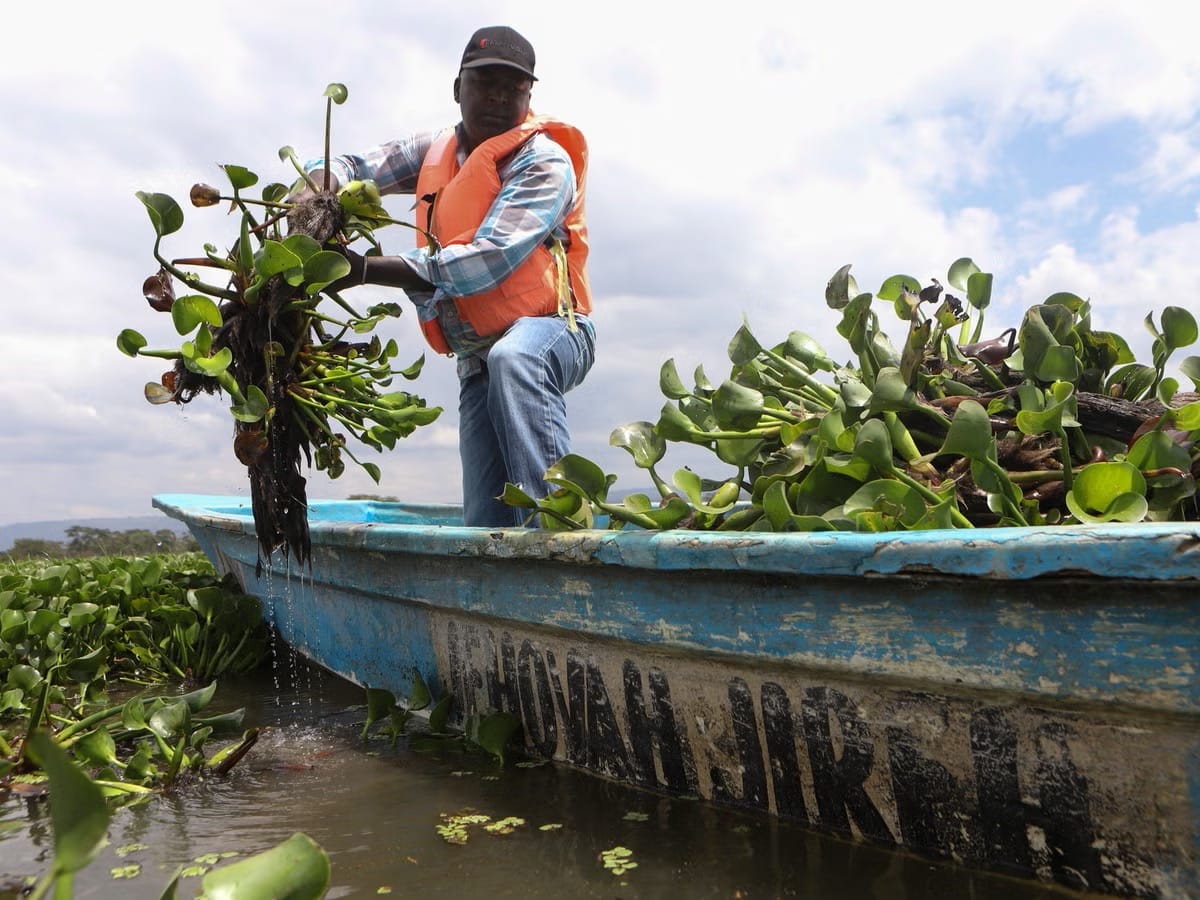
HyaPak started, quite literally, by getting stuck. A group of Egerton University engineering students spent five hours trapped in a boat in a dense mat of water hyacinth on Lake Naivasha in Kenya in 2021. That afternoon left the students with a question that still guides the company: could one problem help solve the other, with the weed clogging the lake becoming the answer to the plastic waste piling up on its shore? As a result the start-up HyaPak was founded in 2022 by a team of Egerton University engineers, now led by Joseph Nguthiru and manufacturing in Nairobi.
Plastic pollution and invasive plants are usually treated as separate problems, each with their own campaigns and cleanup crews. HyaPak treats them as one, using one problem to solve the other - water hyacinth, an invasive aquatic weed, is converted into biodegradable materials as an alternative to single-use plastics. Water hyacinths are native to parts of South America, but were introduced as an exotic ornamental to many other countries. They’ve since invaded freshwater environments and are labelled an invasive species on every other continent aside from Antarctica.
Why Is Water Hyacinth Such A Problem?
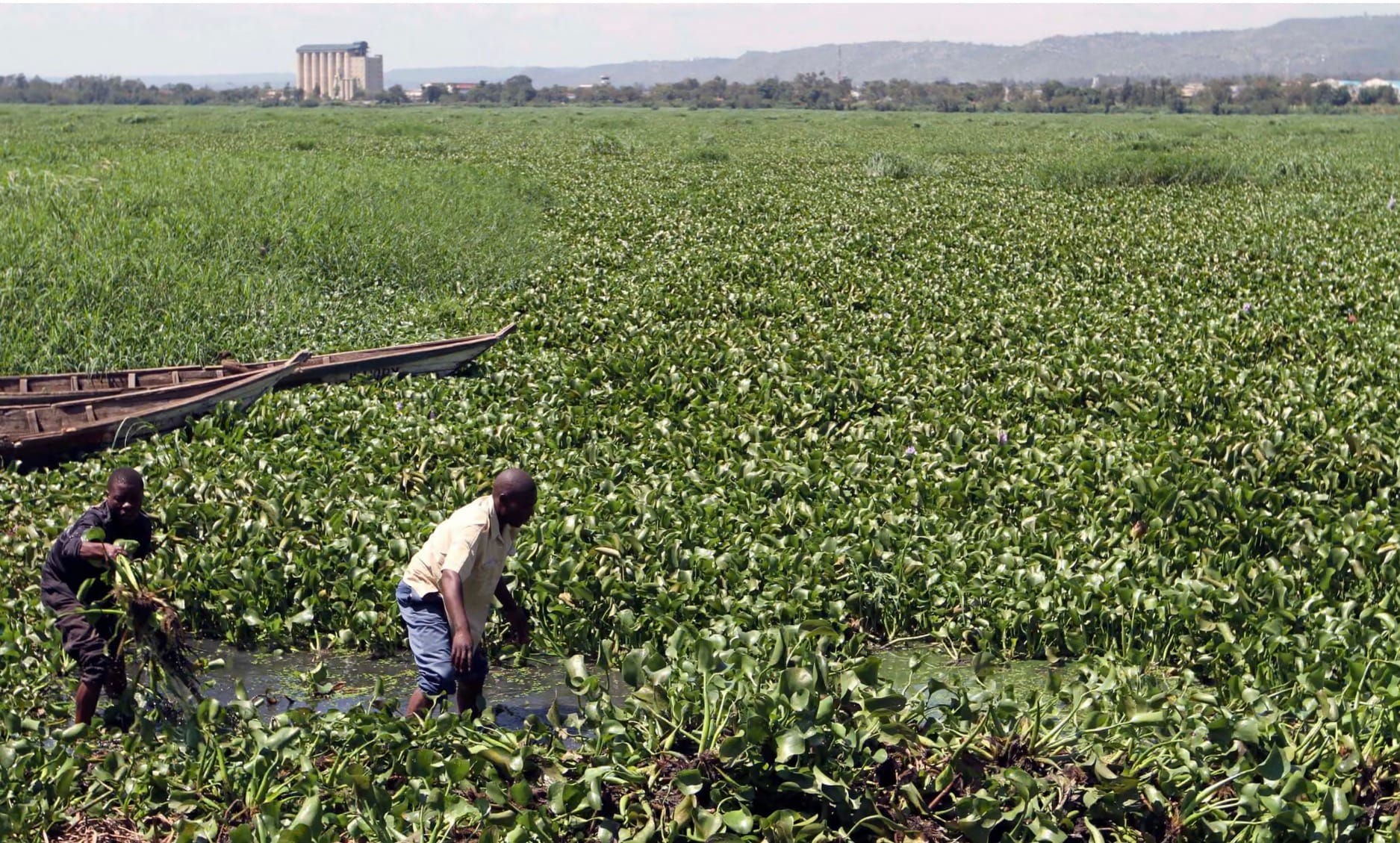
What’s happening in Lake Naivasha is a story repeated all over the world. Dense Water hyacinth floating mats block sunlight and deplete oxygen, killing local aquatic life, while also blocking boat travel and water systems. What is more, it creates breeding grounds for mosquitoes, which cause 4.1 million cases of malaria annually in Kenya, as indicated by the 2025 WHO World Malaria report, and an estimated 12,000 deaths annually. Researchers estimate that the invasive aquatic plant problem now costs the global economy more than $700 million a year. The problem is particularly acute in Africa where the plant is exponentially expanding, according to a 2024 report by IPBES, because of land use changes and climate change.
Hyapak’s Mission
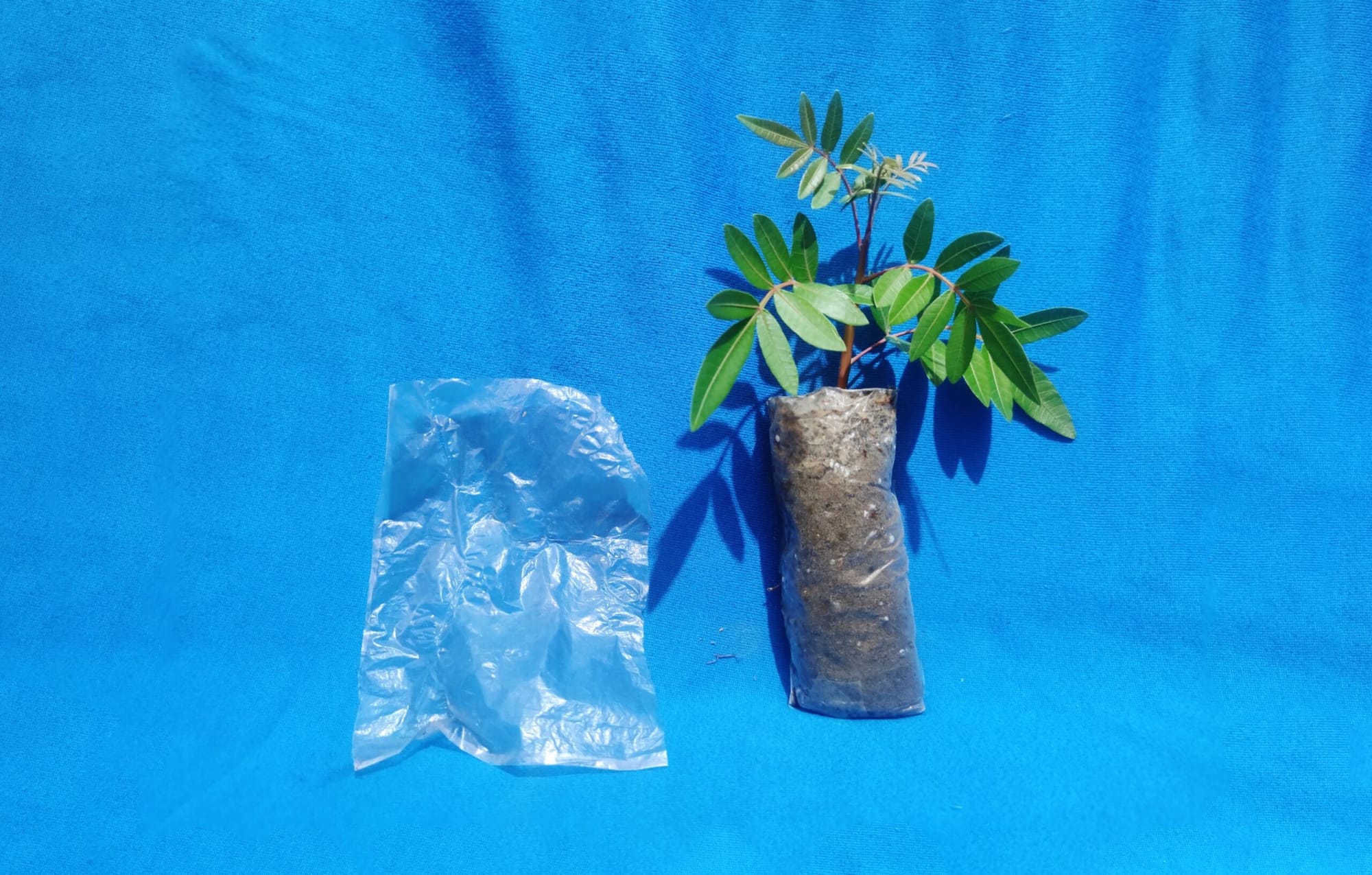
So what is HyaPak’s mission? In short, it produces a plant-based material designed to look, feel and perform like plastic packaging, but to return to the soil when it is no longer needed. To put this in context, Kenya banned the manufacture, sale, import, and use of all single-use plastic carrier bags and commercial/household packaging bags in 2017. However, one unwanted result of this new law was that plastic bags have been smuggled into Kenya, as the government was not producing any alternatives. Nguthiru’s product is “killing two birds with one stone,” he believes. The product range includes seedling bags (which fertilise the plant when they biodegrade), bags, carton liners, floral wrap and custom moulds, each offered as a drop-in alternative to single-use plastic at close to plastic prices. The company’s materials can be tuned to biodegrade between 3 and 12 months, depending on the product and customer needs.
One particularly noteworthy project that helped HyaPak grow was its partnership with the Kenyan government to use seedling bags as part of a flagship reforestation scheme. Kenya lost 14% of its tree cover between 2001 and 2023 and so Kenya’s forestry land restoration acceleration program committed to planting 15 billion seedlings by 2032 on degraded forest ground. The aim was to bring the country’s tree coverage to over 30%. HyaPak’s biodegradable seedling bags were very much part of the plan, as they eliminated plastic bags which would have needed conventional disposing. As mentioned above, HyaPak’s biodegradable bags release nutrients including nitrogen as they biodegrade, and in the seedlings’ first month the bioplastic slows water seeping into the surrounding soil reducing the amount of watering required, which in turn eliminates transplant shock.
How is Hyapak’s Bioplastic Made?
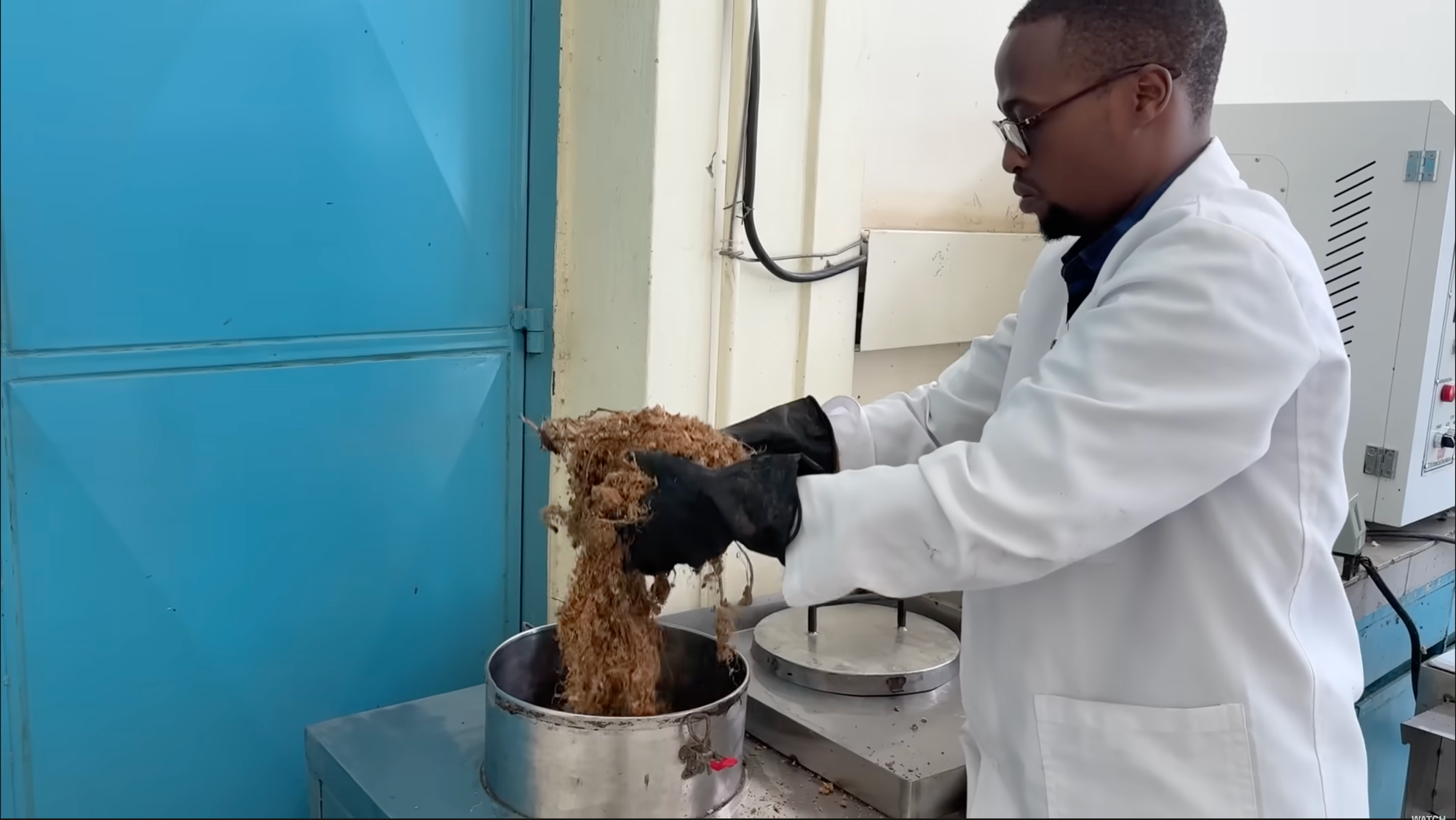
How is it made? Nguthiru’s bioplastic is made from dried water hyacinth combined with binders and additives, which is then mixed and shaped. The production process follows four broad stages, though most of the technical detail is a closely guarded secret. First, water hyacinth is harvested by local fishing communities on Lake Naivasha and Lake Victoria. Fresh biomass is typically more than 90% water, so the second step is to sun-dry the plant to reduce its moisture content and check against quality standards before production. This uses minimal energy and is low-cost. The process also preserves the plant’s fibrous structure, which ensures mechanical strength. Next, it is crushed and milled, and cellulose is extracted from the fibre and blended with proprietary plant-based binders and additives. Published studies typically isolate cellulose from water hyacinth by dewaxing, bleaching and alkaline hydrolysis, and the plant’s low lignin content, about 4.1%, as shown in one study, makes this easier than with woody feedstocks. Lastly, it is moulded into a new shape.
HyaPak has not named its reagents or binders, so what follows is an informed estimate. Extraction probably uses alkaline treatment with sodium hydroxide (NaOH) to solubilise hemicellulose and residual lignin. Bleaching with hydrogen peroxide or sodium hypochlorite would then leave an α-cellulose-rich pulp. The binder system plausibly includes starch plasticised with glycerol or sorbitol to form a thermoplastic starch matrix. It may also include polyvinyl alcohol, chitosan, or natural waxes for water resistance. Formulations would be tuned by product. A seedling bag needs wet strength but must degrade at a controlled rate so roots can break through, while a flexible mailer needs more plasticiser for elongation.
Overall, in contrast to a plethora of other approaches trying to overcome the ecological and economic challenges posed by Water Hyacinths - such as weaving them into baskets and furniture in Vietnam, turning them into biogas and compost in India and Ethiopia, and feeding them to cows elsewhere - the beauty of HyaPak’s solution is that it tackles a multitude of problems at the same time: by turning an environmental problem into a resource, HyaPak is restoring ecosystems, reducing plastic waste, creating green jobs and benefiting local communities. It is little wonder that Joseph Nguthiru has, among other awards, won the Youth category at the East Africa Climate Action Awards, a prize at UNESCO’s World Engineering Day and at the COP28 climate conference. If Nguthiru’s vision of spreading HyaPak beyond Kenya succeeds, the plant once called the world’s worst aquatic weed may yet become very useful.
Bibliography
"Development of Biodegradable Plant Pots from Thermoplastic Starch/ Water Hyacinth/Peanut Hulls Polymer Composites | Recent Science and Technology." li01.tci-thaijo.org/index.php/rmutsvrj/article/view/262954.
"How Smuggling Threatens to Undermine Kenya’s Plastic Bag Ban." UNEP, 18 Jan. 2024, www.unep.org/news-and-stories/story/how-smuggling-threatens-undermine-kenyas-plastic-bag-ban.
"HyaPak Website." HyaPak, 3 June 2026, hyapak.com/.
"IPBES Invasive Alien Species Assessment: Full Report." Zenodo, zenodo.org/records/11629357.
"Just a Moment..." Just a Moment.., pubs.acs.org/ascecg/article-abstract/7/23/18884/1384391/Water-Hyacinth-A-Sustainable-Lignin-Poor-Cellulose?redirectedFrom=fulltext.
Makedo, Rafael. "The economic costs of invasive aquatic plants: A global perspective on ecology and management gaps." Page Restricted | ScienceDirect, 2023, www.sciencedirect.com/science/article/abs/pii/S0048969723068444.
State University, Mississippi. "Water Hyacinth." Mississippi State University Extension Service, extension.msstate.edu/sites/default/files/publications/P3735-45_WaterHyacinth.pdf.
Vizzuality. "Kenya Deforestation Rates & Statistics | GNW." Forest Monitoring, Land Use & Deforestation Trends | Global Nature Watch, globalnaturewatch.org/dashboards/country/KEN/?category=forest-change&location=WyJjb3VudHJ5IiwiS0VOIl0%3D.
WHO. World Health Organization (2025) World Malaria Report 2025. Geneva: World Health Organization. WHO, 2025.
"Reports." World Health Organization (WHO), WHO, www.who.int/teams/global-malaria-programme/reports.
Wood, Betty. "Pontederia Crassipes." Lucid Apps, apps.lucidcentral.org/plants_se_nsw/text/entities/pontederia_crassipes.htm.
Wood, Betty. "Pontederia Crassipes." Lucid Apps, apps.lucidcentral.org/plants_se_nsw/text/entities/pontederia_crassipes.htm.