Finding Calculus in Algebraic Cryptography - Designing the Dual Number S-Box

Standard symmetric cryptographic primitives rely heavily on lookup tables and bitwise permutations over binary Galois fields. Serving as an accessible overview of a broader research paper I have written on a novel cryptographic architecture, this article explores an alternative S-box design by bridging abstract algebra and differential calculus. By extending finite prime fields 𝔽p into a dual-number quotient ring R, polynomial evaluation naturally creates the derivative f′(a) in the dual component: f(a+bε) = f(a) + bf′(a)ε. We prove the precise bijectivity conditions required for ring reversibility and evaluate the cipher’s resistance to cryptanalysis, establishing the technique as a viable engine for non-linear cryptographic confusion.
Introduction
In modern cryptography, the Substitution-box (S-box) serves as the primary method of confusion, the property defined by Claude Shannon to obscure the relationship between the secret key and the cipher-text. Standard industrial algorithms such as the Advanced Encryption Standard (AES) implement S-boxes operating over binary extension fields such as GF(28). While these bitwise structures map efficiently onto modern computer hardware, they rely on rigid algebraic constructions or pre-computed lookup tables that operate independently of continuous mathematical properties.
This article explores a fundamentally different topic, which is exploring the nature of differential calculus to derive a new cryptographic substitution.
To bridge these two domains, we turn to the algebra of dual numbers. Originally developed in the 19th century and widely utilised today in automatic differentiation, dual numbers extend a base system by introducing a nilpotent element ε where ε ≠ 0 and ε2 = 0. When polynomials are evaluated over a dual number ring, binomial expansions collapse after the first-order term and produce the function's derivative alongside its primary output.
By constructing a dual-number quotient ring over an odd prime field 𝔽p, I will explore how dual-numbers exactly reveal calculus and the derivative in themselves, as well as presenting a framework for calculus-coupled (terms come together in calculus) S-box. Throughout this article, we establish the ring arithmetic, derive necessary and sufficient conditions for bijectivity and evaluate the S-box against standard cryptographic benchmarks, such as the Difference Distribution Table (DDT) and the Strict Avalanche Criterion (SAC).
Preliminaries
In order to understand this article in its entirety, one must be familiar with group, ring and field theory. One should be familiar with the following: groups (gps), cosets, rings, ideals, quotient rings, polynomial rings, fields and the beginnings of Galois theory. It is understood that this may be ambitious, thus, in each section, summaries have been added near the bottom for general intuition of what the mathematics above has done.
For the cryptographic side of this article, the reader will be made familiar with what an S-box is:
Definition 2.1 (S-box). An S-box is a non-linear mathematical function S: X → Y that maps an input value x to a substituted output value y, designed specifically to disrupt linear patterns and shield data against cryptographic attacks.
An alternative view of understanding this is viewing an S-box as a lookup table used to swap information. It takes a small chunk of incoming secret data (an input), looks it up in a fixed table and replaces it with a completely different chunk of data (an output). For instance, a simple 3-bit S-box might map inputs to outputs as such:
- If the input is
001, change it to110. - If the input is
010, change it to000.
Now, we may start the article as in the introduction.
Dual-number Finite Ring
First, we will define our algebraic space. We start with a finite base field 𝔽p, where p is an odd prime. Within this field, we introduce a new formal element, ε, defined as a non-zero nilpotent element whose square is zero:

Now, we may define a finite dual number, the numbers which we wish to work with.
Definition 3.1 (Finite Dual Number). A finite dual number over 𝔽p is an expression of the form:

where a, b ∈ 𝔽ₚ. We call a the base component/part and b the dual component/part.
We can define arithmetic on the dual numbers, and in particular, we can structure them into a ring. As it is built on the finite base field, the entire system contains exactly p² elements, making it a finite ring. We may impose the ideal ⟨ε² = 0⟩, hence ensuring that dual numbers can combine predictably. We proceed to define the finite dual number ring.
Definition 3.2 (Finite Dual Number Ring): The finite dual number ring is the quotient ring:
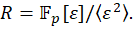
This forms a commutative ring with exactly p² elements, where every element is of the form a + bε.
Let us verify that R forms a proper ring. In order to do this, we define addition and multiplication:
Proposition 3.3 (Ring structure of R). The set R forms a commutative ring under the following operations:
- Addition

- Multiplication

Exercise. Prove that (R, +, ⋅) is a ring (has associativity, commutativity, distributivity and an identity per operation).
Proof. The operations inherit associativity, commutativity and distributivity directly from the axioms of 𝔽p. The identities are the additive identity 0 = 0 + 0ε and the multiplicative identity 1 = 1 + 0ε. We can also show trivially that every element a + bε has a unique additive inverse -a-bε. Thus, all standard ring axioms are satisfied. ■
Summary. In this section, we have created an algebraic space (like a set of numbers to work with) of the dual-numbers (refer to Def 3.1). This is required so that we can actually construct our S-box, and also so that we may derive calculus (see next section).
Polynomial mappings over R
With the ring established, we can now show how polynomial mappings behave in our system (This will prove to be important later!).
To achieve this within the finite dual number ring, we define a polynomial f(x) ∈ 𝔽p[x], extended over R. By evaluating these polynomials, we find something very interesting in the dual component's behaviour.
To simplify things, let us consider a single monomial term ck(x)k evaluated at a dual number z = a + bε. We can use the binomial theorem to evaluate the term:

Now, recall our main property of ε: ε2 = 0. This property allows the expression to collapse elegantly:

Does this look familiar? If you have taken a calculus 1 course before, you may be able to spot a pattern (hint: Power Rule). If you have not, simply note that there exists the following notion:
Definition 4.1 (Derivative). The derivative is the instantaneous rate of change - essentially, the slope of a curve at a single, exact point. While an average slope measures change over a range, the derivative yields a new function that calculates the slope anywhere along the original curve. We write the derivative of f(x) as f'(x) (pronounced 'f-prime').
Now, by taking the derivative of the real component ckak, we may something very beautiful: kckak-1, which is exactly the dual component! But, does this beautiful identity persist throughout the entire polynomial?
Exercise. Show that all terms of f(x) maintain this identity.
In fact, it does! By extending this across the entire polynomial f(x), the real parts aggregate to form f (a), and the dual parts (with bε) factor out the derivative f' (a). This shows the desired identity for polynomial evaluation over R:

Looking ahead. What makes this identity so remarkably powerful is that it bridges abstract algebra and calculus in a single, elegant step. By defining ε2 = 0, evaluating a polynomial no longer just yields a transformed output, but simultaneously computes its rate of change right alongside it in the dual component. This dual-track behaviour is not merely a neat mathematical trick, but in fact it provides the exact foundation we need to construct complex, highly non-linear transformations for the S-box. In the next section, we will harness this exact property to build our main cryptographic component: a novel, dual-number S-box.
Constructing the S-box
With our encryption established, we must now prove that the function is reversible, so that it works as a valid method of encryption. For a mapping to be reversible, it must be a bijection (both a one-to-one and surjective function).
Theorem 5.1 (Reversibility condition). Let f (x) ∈ 𝔽p[x] such that f : R → R. The map f is a bijection on R if and only if:
- f (a) is a bijection on the base field 𝔽p, ∀ a ∈ 𝔽p
- f' (a) ≠ 0, ∀ a ∈ 𝔽p.
Proof. Let z1 = a1 + b1ε and z2 = a2 + b2ε. By definition, f is a bijection on R if and only if the equation f has a unique solution (a1, b1) for every choice of (a2, b2). Using the polynomial expansion, setting f (z1) = z2 gives:

Matching coefficients yields the system

For (1) to always have a unique solution, f (x) must be a bijection on the base field (Condition 1). In order for (2) to have a unique solution, the multiplier f' (a1) cannot be zero (Condition 2), as if f' (a1) = 0, (2) reduces to 0 ⋅ b1 = b2, which either has no solution (if b2 ≠ 0) or infinitely many solutions for b1 (if b2 = 0). Both cases violate the strict unique pre-image requirement of a bijection. Thus, both conditions are required. ■
We Have An S-Box! With these rigorous conditions met, a dual-number S-box has been constructed.
Now one might consider what exactly differentiates this from a standard cipher: a full cipher is an end-to-end encryption system that locks a whole message. An S-box (Substitution-box), on the other hand, is the 'engine room' within a cipher. It does not handle the whole message at once, rather it acts as a core atomic lookup component that takes small chunks of data and scrambles them into complete non-linearity, destroying any patterns attackers could latch onto. What makes our creation unique is that instead of relying on traditional lookup tables or random bit-twiddling, our S-box is powered entirely by the strange, calculus-driven mechanics of dual numbers. Now, we may test the S-box to see if it works well!
Summary. In this section, we have successfully shown that our functions ver our algebraic space of dual numbers are reversible, in that, if we encrypt data, we can decrypt it as well. Thus, the only thing left to do would be to test if our S-box is useful or not!
Testing the S-box
Verification of Bijectivity. Before we can analyse the S-box, polynomials f (x) must be shown to follow Theorem 5.1. This can be done rather simply in Python. The script will exhaustively compute f (a) (mod p) for all a in the field to verify bijectivity and compute the derivative to verify the second condition.
Difference Distribution Table (DDT). To measure resistance against differential cryptanalysis, we analyse the Difference Distribution Table peak behaviour, summarised below for an example p = 251:

The Max DDT Entry measures the highest number of times a specific input difference leads to a predictable output difference. A lower number means the cipher is much harder to crack because attackers have fewer patterns to exploit. A maximum entry of 2 is very low, so the S-box is strong against differential attacks.
Strict Avalanche Criterion (SAC). Beyond resisting differential patterns, a strong S-box must ensure diffusion - the property that a tiny change in the input causes a massive, unpredictable change in the output. This is measured using the Strict Avalanche Criterion.
If we flip a single bit in an input dual number, roughly 50% of the bits in the resulting output should flip. If changing one bit only alters a localised part of the output, patterns leak, so the encryption may be cracked. However, due to the nature of the derivative scaling, we can ensure that the S-box follows this criterion.
Discussion
To evaluate whether such novel cryptographic primitive like the dual number S-box could ever be used, one may compare it to industry standards, such as AES. Modern ciphers like AES are built for binary computers, as they operate on standard bytes (8-bit chunks) using finite fields such as GF (28), which map cleanly to the bitwise operations (ex. XOR, bit-shifts) that work very well in silicon chips. On the contrary, however, the dual number S-box operates over an odd prime field, requiring modular arithmetic rather than bits.
Whilst mainstream symmetric ciphers heavily favour binary fields for hardware optimisation, prime-field arithmetic has historically powered alternate designs, such as the IDEA cipher. Likewise, a dual number S-box demonstrates that prime rings can be extended into substitution primitives by calculus coupling. Although designed primarily as a mathematical exploration, this S-box highlights an alternative design space where abstract algebra and differential calculus can lead to cryptographic confusion.
This raises the question: if an engineer wanted to scale this dual-number system into a viable, real cipher, what parameters for p and the degree of f would they need to choose? The purpose of p is to control the number of possible input states. Standard S-boxes such as AES process 8-bit chunks, yielding 28 = 256 possible states. To build a comparable dual number ring, we want a prime p close to the square root of 256, as the number of elements is p2 (so 17). While a smaller prime offers a direct structural match to standard 8-bit blocks, scaling upwards to a larger prime, for instance p = 251, expands the space to over 63,000 elements, drastically increasing security against brute-force attacks. For the degree of f, anything below 3 would fail due to the derivative scaling, and for higher degrees, one would need to carefully select it to ensure algebraic attacks will not easily reverse-engineer the polynomial coefficients.
Conclusion
In this exploration, we have demonstrated that abstract algebra and differential calculus can be successfully bridged together through dual numbers, and that such unification can be used to construct a novel cryptographic substitution primitive.
Empirical testing confirms that this architecture satisfies critical cryptographic metrics, and in particular, achieves strong resistance against differential cryptanalysis via the DDT and maintaining robust local diffusion through Strict Avalanche criteria. While mainstream industrial standards such as AES remain optimised for binary microprocessors, this dual number framework highlights an exciting alternative design space.
Future Work
I believe that this idea for an S-box opens up a possible design space for cryptographic research. Leveraging the derivative property as a multiplier for substitution primitives is largely unexplored, so future investigation could focus on the following areas:
- Conducting extended security assessments against advanced algebraic attacks, such as Gröbner basis techniques, to establish suitable degree constraints for polynomials over R.
- Exploring rings with higher-order nilpotents, such as ε3 = 0 or εn = 0, which would introduce scaled multi-variable derivatives and potentially create even more complex ciphers.
- Evaluating the performance of prime-field modular arithmetic performs on specialised microcontrollers or lightweight cryptographic hardware compared to traditional binary bit-shifting architectures.
Thank you for reading my article! If you have any questions, please do contact me through email (solecki-servi.m25@etoncollege.org.uk)
Acknowledgements
I would like to express sincere gratitude to mentor Jianqi Liu at the University of Pennsylvania and the academic team at the Cambridge Centre of International Research for their valuable guidance, intellectual support, and encouragement during the conceptualisation and development of my research paper on which this article is based on. Special thanks are also extended to the editors of EtonSTEM for their feedback during the preparation of this manuscript, and editor Qichen Zhang KS for direct feedback as I wrote this article.
Bibliography
- Baydin, Atılım Güneş, et al. "Automatic Differentiation in Machine Learning: A Survey." Journal of Machine Learning Research, vol. 18, no. 153, 2018, pp. 1–43.
- Lidl, Rudolf, and Harald Niederreiter. Finite Fields. 2nd ed., Cambridge University Press, 1997.
- Biham, Eli, and Adi Shamir. Differential Cryptanalysis of the Data Encryption Standard. Springer-Verlag, 1993.
- Lai, Xuejia, and James L. Massey. "A Proposal for a New Block Encryption Standard." Advances in Cryptology—EUROCRYPT ’90, edited by Ivan Damgård, Lecture Notes in Computer Science, vol. 473, Springer, 1991, pp. 389–404.