Antibiotic Resistance: Are We Running Out Of Weapons Against Bacteria?
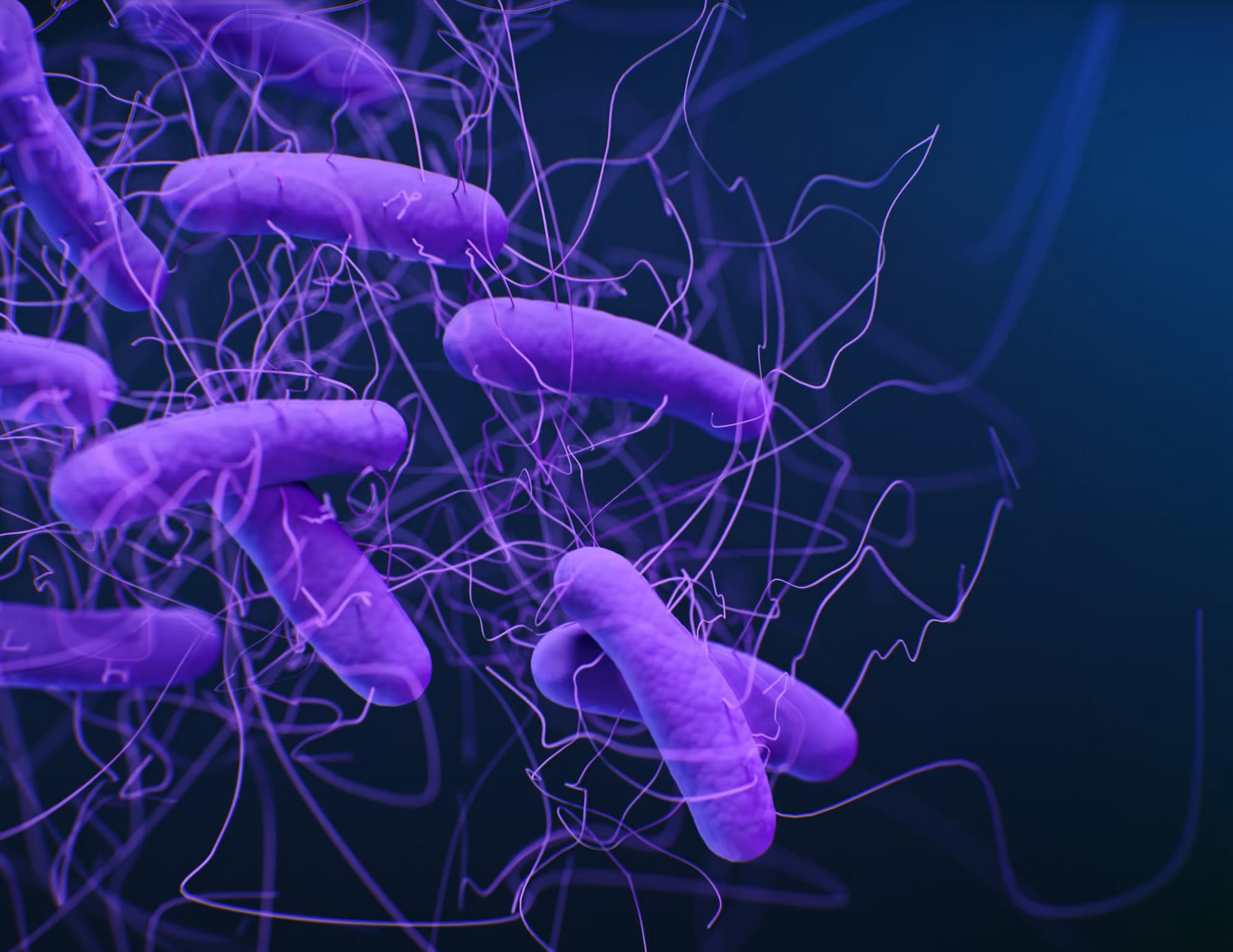
An overview of how antibiotic resistance (ABR) develops, its global health and economic impacts, and the novel therapies being developed to ensure we stay ahead of evolving pathogens.
Importance of Antibiotics
Antibiotics are among the most important medical discoveries in history. They have been established as the main way to treat bacterial infections and are vital to modern medical treatment. The first antibiotic developed, penicillin, is estimated to have now saved over 500 million lives. Before the discovery of antibiotics, now curable bacterial diseases such as tuberculosis were among the leading causes of death. But there is a possibility that antibiotics may stop being effective as increasingly more targeted bacteria are becoming antibiotic resistant (ABR).
First, it is important to understand how antibiotics work. They target bacteria in different ways to slow their growth or kill them. It can be done by stopping cell wall formation, interfering with bacteria reproduction, or blocking protein production. It is important to note that they do not affect viruses or fungal infection, since viruses are not living and do not have reproductive structures or cell walls that can be targeted. Antibiotics can also not, for instance, break down the cell walls of fungi since the substance they are made of, peptidoglycan, is too tough.
How Does ABR happen?
Bacteria may naturally develop ABR. Resistance first happens when antibiotics used on bacteria does not immediately kill it. They then build defences against further doses of the antibiotic. Bacteria also reproduce at a very high rate – for example Escherichia coli in the right conditions in a laboratory can divide every 20 minutes. In every new generation there can be mutations, and these mutations can enable the bacteria to grow when exposed to antibiotics. These new evolved bacteria then become the dominant population.
There are 4 main ways that the bacteria resists. Firstly, they can stop the antibiotic from entering the cell. Antibiotics may make their way into a bacterium through the cell wall or cell membrane. Bacteria can change these structures or their entry proteins to stop this. Secondly, the antibiotic can be expelled once it enters. Structures called efflux pumps can be adapted to be more effective at removing it from the cell. Thirdly, the target of the antibiotic can be altered. Antibiotics bind to bacteria in a ‘lock and key’ fit, and if the shape of the target is different, the antibiotic will not be able to fit on. Lastly, the bacteria may destroy the antibiotic. For example, bacteria developed resistance to penicillin by producing a protein which breaks it apart.
Today, ABR is Increasing
ABR has been around since soon after antibiotics were first used as treatment. However, recently the number of resistant bacteria has been increasing. Between 2018 and 2023, the World Health Organisation (WHO) recorded that ABR rose in over 40% of the pathogen-antibiotic combinations monitored with an average annual increase of 5–15%. Around 1 in 6 laboratory-confirmed bacterial infections worldwide were resistant to antibiotics in 2023. The effects have already been shown: 4.7 million deaths in 2021 have been estimated to be associated with ABR.
One of the main causes of increasing ABR is antibiotic misuse and overuse. This normally means taking antibiotics when they are not needed or taking the wrong type. Furthermore, ‘access’ antibiotics recommended as first choice treatment for most common infections accounted for just 53% of global human antibiotic use in 2022. These carry a lower risk of resistance than ‘watch’ antibiotics, which make about 45% of use. In one in three countries ‘watch’ antibiotics make up more than 70% of total use. Moreover, substandard or ‘counterfeit drugs’ cause ABR. Many low-quality antibiotics do not contain the correct dose or enough active substances. This leads to insufficient treatment and increased resistance. Lastly, inadequate sanitation and poor hygiene leads to the prevalence of infectious disease, followed by poor treatment and development of resistance, especially if low-quality antibiotics are used.
Effects of ABR
ABR has many potential consequences in the future, as well as ones already shown now. It can impact heavily on personal health and has been associated with higher mortality. It narrows treatment options for patients with infections and increases the cost of major operation such as surgery. Furthermore, ABR affects the healthcare system has a whole. It drives up healthcare costs, mainly due to increased hospital stay and more need for intensive care. Moreover, there are potential societal impacts: ABR erodes public confidence in medicine and reduces human productivity. In addition, drug-resistant infections impact the health of animals and plants, reducing productivity in farms, threatening food security. These consequences have financial implications, with the total cost to treat resistant bacterial diseases infections alone is predicted to reach $421bn annually up to 2035, with additional annual productivity losses of $443bn.
However, there are many steps could be taken to reduce prevalence of ABR. The NHS says that individually, the public should practice correct hygiene and make sure they are vaccinated as recommended. Only recommended antibiotics should be taken in the right dosage and duration. On a personal level, correct antibiotic use is a key way to prevent ABR. On a global scale increased collaboration between governments is needed, and there should be new networks to monitor antibiotic use and ABR. Continued research, and development of new drugs is also necessary.
This still leaves the question: could ABR render antibiotics ineffective in the future? The answer is probably not. ABR could have many consequences financially, affect food security and the burden the health care system. Furthermore, between now and 2050, ABR could directly lead to 39 million deaths. However, a doomsday scenario where there would be no treatment for common infections and where just a cut could kill you by infection is unlikely. If antibiotics become ineffective there are different emerging strategies for treatment. These include immuno-antibiotics, biochemical approaches to reducing resistance, or phage therapy. Even if antibiotics become ineffective new treatments being developed such as these could replace them, giving us new ways to fight bacteria.
Bibliography
"AMR Engagement Guide: Actions to Prevent Antimicrobial Resistance." GOV.UK, 3 Sept. 2026, www.gov.uk/government/publications/engagement-guide-for-infection-and-antimicrobial-resistance-amr/amr-engagement-guide-actions-to-prevent-antimicrobial-resistance.
"Antibiotic Resistance: The Challenges and Some Emerging Strategies for Tackling a Global Menace." PMC Home, pmc.ncbi.nlm.nih.gov/articles/PMC9459344/#jcla24655-sec-0010.
"Antimicrobial resistance: Impacts, challenges, and future prospects." ScienceDirect, www.sciencedirect.com/science/article/pii/S2949916X24000343.
"Antimicrobial Resistance." World Health Organization (WHO), 21 Nov. 2023, www.who.int/news-room/fact-sheets/detail/antimicrobial-resistance.
"Bacteriophages and Their Use in Combating Antimicrobial Resistance." World Health Organization (WHO), 17 Feb. 2025, www.who.int/europe/news-room/fact-sheets/item/bacteriophages-and-their-use-in-combating-antimicrobial-resistance.
"The Distribution of Bacterial Doubling Times in the Wild." PMC Home, pmc.ncbi.nlm.nih.gov/articles/PMC6015860/.
"GLG Report: Towards Specific Commitments and Action in the Response to Antimicrobial Resistance." Global Leaders Group, www.amrleaders.org/resources/m/item/glg-report.
"Global Antimicrobial Resistance and Use Surveillance System (GLASS) Report: Antibiotic Use Data for 2022." World Health Organization (WHO), 29 Apr. 2025, www.who.int/publications/i/item/9789240108127.
"Global burden of bacterial antimicrobial resistance in 2019: a systematic analysis." The Lancet, www.thelancet.com/journals/lancet/article/PIIS0140-6736(21)02724-0/fulltext.
"How Do Bacteria Actually Become Resistant to Antibiotics?" Institute for Molecular Bioscience - University of Queensland, 16 May 2024, imb.uq.edu.au/article/2023/11/how-do-bacteria-actually-become-resistant-antibiotics.
"Our History." Dunn School, 28 Mar. 2024, www.path.ox.ac.uk/centenary/our-history/.
"Penicillin: An arms race against bacteria begins." Broad Institute, www.broadinstitute.org/blog/penicillin-arms-race-against-bacteria-begins.
"Strategies to Combat Antimicrobial Resistance." PMC Home, pmc.ncbi.nlm.nih.gov/articles/PMC4149102/.