Ageing: What It Is, Why It Happens, and Whether Or Not We Can Stop It.

In a world where all animals around us grow old and die, we can only think about why things like eyesight worsening or hair going grey even happens at all. Humans are no exception to this fundamental rule of life, and so we must delve deeper into the science of genes, telomeres, and evolution, to see why these processes happen in the first place, and the steps scientists are making towards slowing down or even stopping ageing for humans entirely.
1. The Main Changes in Humans as They Age
I’m sure you see ageing all around you, whether it be of your parents or your friends at school after they’ve come back from the summer holidays. The human body undergoes 8 main stages of growth and development, according to the Psychological Consensus of Erik Erikson, that span our whole lives, starting even before birth. Firstly, there is the prenatal developments in the womb, where a single fertilised egg, driven by rapid mitosis, will transform into a multi-trillion cell baby, with our DNA acting as a precise blueprint. Then, the next two stages are infancy and early childhood, where the baby grows to around triple of its birth weight in only 2 years, and the brain grows to 75% of its adult volume within the same time, with the baby able to learn fine motor skills like drawing and tying shoes. This rapid brain development is caused by “synaptogenesis“, where the brain is rapidly forming millions of new neural connections, called synapses, every second, based on things the baby sees, hears, and touches. As well as this, motor skills also rapidly develop because of “myelination”, the process where a fatty sheath, called myelin, wraps around nerve fibres to make electrical signals travel much faster. All of this happens in only 2 years!
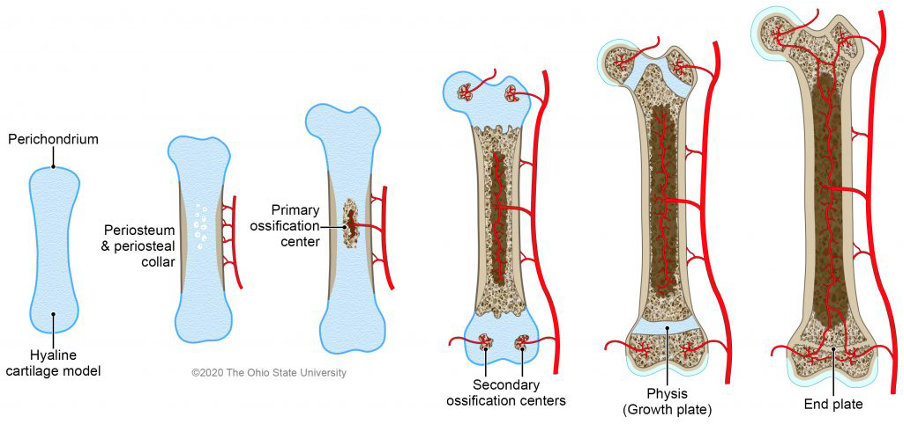
The next two stages are two that you will be all but too familiar with – middle childhood and adolescence, spanning the next 16 years of your life. The body now enters a stable metabolic phase for around 10 years, until the age of 12, and growth will remain steady, as hormones like testosterone in men and oestrogen and progesterone in women maintain constant levels and so do not promote much rapid growth in the child. Interestingly, the immune system finishes its baseline training by fighting off common childhood illnesses, making this one of the healthiest periods of life. As puberty starts, a massive growth spurt occurs, as the brain tells the pituitary gland to wake up the reproductive system. The hormones I mentioned above flood the body and completely remodel the skeleton and soft tissues as the person develops. Bones grow in a process called Endochondral Ossification, where long bones lengthen rapidly at the epiphyseal plates (growth plates). After which, growth is terminated by rising levels of oestrogen in both men and women which causes the epiphyseal growth plates to fuse and stop lengthening.
The final couple of stages are that of early, middle, and late adulthood. From ages 20 to 40, the body reaches an absolute peak for muscle strength, reaction time and cardiac output. This is mainly because cellular repair is operating at its maximum efficiency, so the body is able to easily balance the removal of old body cells with the replacement of new ones. From 40 to 65, hair begins to grey and thin, and wrinkles appear on the person’s face. This happens due to genetically programmed ageing and the body’s reduction in certain hormones. Wrinkles occur because of the body producing less collagen as we age, as well as our cells becoming damaged over time and inflaming other cells around them , resulting in less firm skin and wrinkles. Grey hair occurs because hair gets it’s colour from melanin, and over time, the stem cells that replenish the melanin are damaged and become less functional, thus causing hair to go grey, then white when little or no melanin is produced. After the age of 60, there is a sharp decline in bone density and the person will experience Sarcopenia, which is the progressive loss of skeletal muscle mass, which makes physical daily activities far more difficult for the elderly. Finally, the actual cells in the person begin to die off faster than new cells can replace them, so the person will have several bodily issues such as Alzheimer’s disease, where a person’s memory is severely affected due to damage to nerve cells, and slower wound healing.

2. Why We Physically Age – Cells, Telomeres and Genes
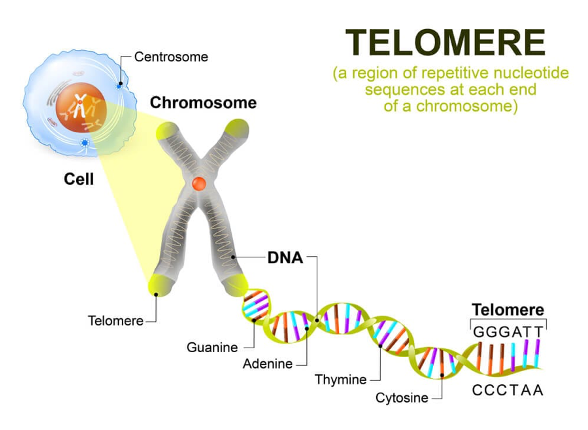
Firstly, I’m going to touch on Telomeres. Each time a cell divides to repair tissue, its chromosomes must replicate. Because of a quirk in how DNA copies itself, called the End-Replication problem, a tiny bit of genetic information is lost at the very ends of the chromosome during each cycle. Telomeres are essentially repetitive, non-coding DNA (which means they don’t code for a specific protein) at the tips of our chromosomes that act like the plastic tips on the end of your shoelaces, preventing the vital genetic code from fraying. Basically, when DNA replicates, the enzyme DNA polymerase cannot copy the very end of the lagging strand. This means a small amount of DNA at the chromosome’s end is lost during each cell division. As a result, these telomeres gradually shorten with repeated cell divisions. Eventually, after enough divisions, the telomeres become dangerously short, which triggers a permanent arrest called ‘Cellular Senescence’ – now the cell can no longer divide to regenerate tissues, effectively hitting a biological ceiling. These effectively dead cells build up in tissues and release chemicals that promote inflammation and damage nearby cells, which visibly show signs of ageing like thinner skin for example. I will talk about these cells a little later as well.
Secondly, I would like to touch on the Mitochondria which generates ATP (adenosine triphosphate) which cells use as a sort of rechargeable energy source. However, this engine isn’t perfectly clean, as ‘creating’ energy causes the production of volatile by-products called Reactive Oxygen Species (ROS), or free radicals.
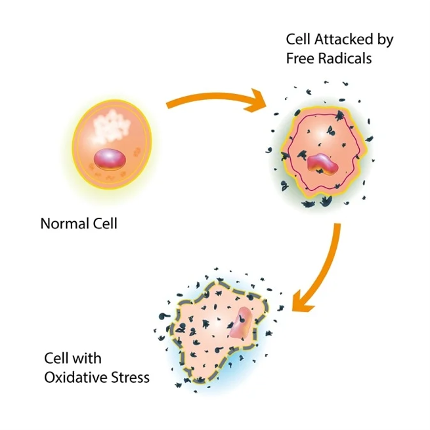
Over a lifetime, these radicals bounce around and damage the mitochondria’s own DNA and structures. It is a sort of biological paradox as the very thing that is keeping us alive and full of energy is also the thing killing us from the inside out. As damaged mitochondria accumulate, cells run out of power. This energy deficit causes the fatigue, slower tissue repair, and organ decline we associate with getting older.
Finally, I wanted to return to the idea of the cells themselves. The ‘zombie-like’ cells, that I discussed earlier, have a condition that turn them into ‘senescent cells’ – sluggish zombie cells that refuse to clear out. These zombie cells secrete a toxic chemical cocktail known as the Senescence-Associated Secretory Phenotype (SASP). This causes chronic, low-grade inflammation that damages other neighbouring cells. Younger bodies use a system called autophagy to digest and recycle broken cellular parts, but as we age, this system breaks down, leaving our cellular environment like a crowded junkyard.\
3. Evolutionary Explanation For Ageing
When people often think of evolution, they may think of this process which slowly removes all the problems to do with an organism through the long process of mutation, natural selection and reproduction. However, evolution does not necessarily favour living forever, as natural selection favours traits that help organisms survive and reproduce, rather than guaranteeing indefinite survival. There is this theory called The Disposable Soma Theory, which dictates that organisms have limited energy and resources, and as energy must be divided between reproduction, growth and maintaining/repairing the body, evolution therefore favours a balance between reproducing and long term cellular repair, rather than perfect maintainable of the body.
Another theory dictates that harmful genetic mutations that mainly affect organisms in old age are less strongly eliminated by natural selection. This theory is called the Mutation Accumulation Theory. This is because individuals often reproduce before these mutations begin to affect their survival or fertility. As a result, the mutations can be passed onto offspring and accumulate across generations, potentially contributing to ageing.
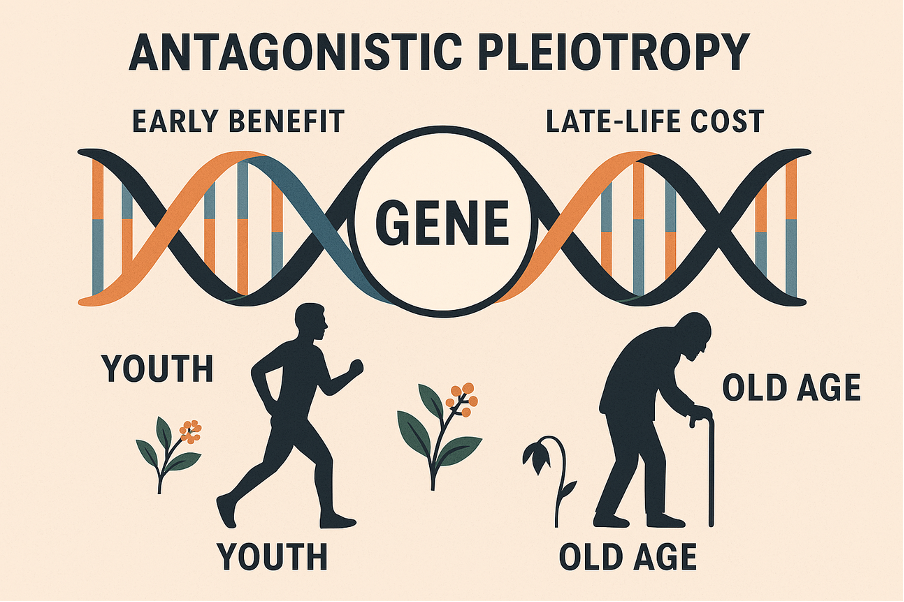
Finally, the last theory that tries to explain why evolution doesn’t evolve us out of ageing is the Antagonistic Pleiotropy Theory. Some genes may provide advantages earlier in life, such as faster growth, increased fertility, or improved reproductive success, but have harmful effect later in life. Natural selection may favour these genes because their early benefits increase the chances of survival and reproduction, even if they contribute to ageing in later years. For example, a gene that promotes rapid cell growth and tissue repair in youth may increase the risk of cancer or cellular damage in old age. Over generations, these genes can persist because their early-life advantages outweigh their later-life costs. As I will get onto now, different species have evolved different ways of balancing reproduction, survival and long-term maintenance of their bodies.
4. Which Animals Have the Longest Lifespans and Why?
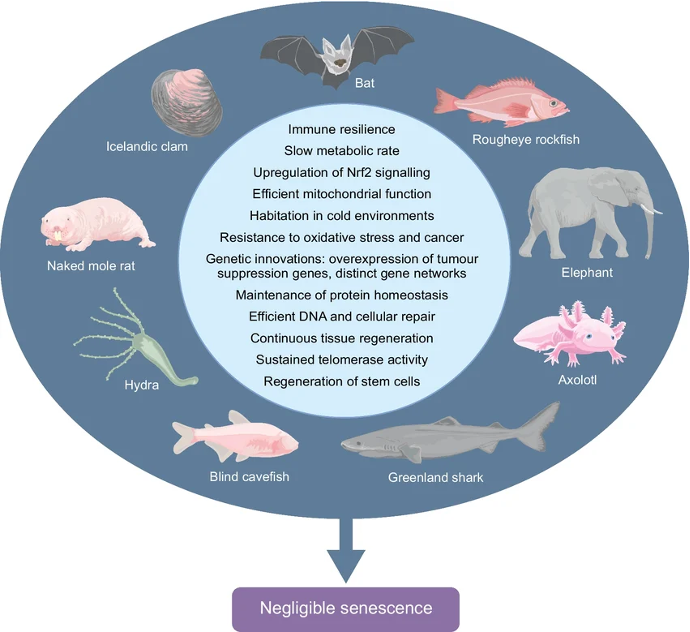
The naked mole-rat is a remarkable case of rodents living far longer then they should, having an average life expectancy of over 30 years, compared to the average lifespan of 2-4 years of a wild rodent. They show little increase in any risk of death as they grow older, a phenomenon called ‘negligible senescence’, which includes strong systems of protein stability and resistance to certain types of cellular damage. A recent breakthrough published in Science magazine revealed that naked mole-rats have an evolved version of an immune-monitoring protein called a cGAS, with four unique amino acid substitutions. Instead of hindering repair, as the cGAS does in humans, this flipped protein actively recruits repair factors to stitch the broken DNA strands back together perfectly. This allows the mole-rat to effectively escape the gradual breakdown of DNA and shortening of telomeres in their cells, hence living much longer. Naked mole-rats also have incredible protein maintenance and reduced age-related inflammation, as well as having cancer resistance from large molecules of Hyaluronic Acid, which stops their cells dividing when they are too crowded.
The naked mole-rat, and many other long living animals in the wild, show a trait called ‘Negligible Senescence’, which refers to a pattern of ageing in which an organism shows little to no measurable age-related increase in mortality, or decline in certain biological functions. Defining characteristics of this are that cells avoid permanent cell arrest by protecting the telomeres and DNA, as well as having a strong repair and protein cleanup system to remove damaged DNA and proteins.
There are also tiny freshwater animals called ‘Hydra’ that are effectively immortal. These hydra are tiny, tube-shaped polyp (related to jellyfish), and are bizarre in more ways than one. They are nicknamed the hydra as they share a biological likeness to the Hydra from Greek Mythology, where in the stories, if one of the Hydra’s heads were cut off by Hercules, two more would grow in their place. In the wild, if these Hydra are cut into many pieces, each piece will seamlessly regenerate into a completely new and whole organism within just a few days. It performs this strange procedure through the cells rearranging themselves due to varying levels of cellular adhesion (stickiness), and the scrambled cell slides over itself until all the right parts are touching. It also uses a technique called Morphallaxis, where unlike humans, who need new cell growth to heal, a Hydra remodels its already existing cells without waiting for them to even multiply, causing cells to shrink and stretch directly onto the missing body parts of the animal.
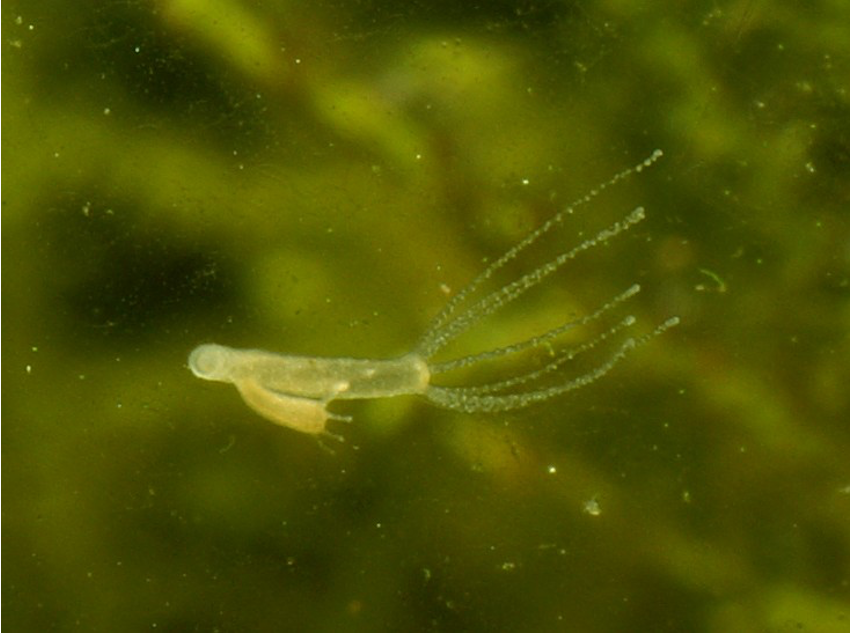
As well as this, it is also connected to Greek mythology in another way. Because its stem cells never run out or lose efficiency, the Hydra completely replaces all of its body cells roughly every 20 days. The animal effectively stays forever young as it is technically a new organism every month.
Finally, I will talk about the Turitopsis Dohrnii, which is often named the ‘Immortal Jellyfish’, a tiny jellyfish smaller than a pinky nail, and has the bizarre ability to reverse its entire life cycle. Standard jellyfish begin as larvae, and eventually grow into a free-swimming adult. However, when the Immortal jellyfish faces physical trauma or stress, it sinks to the bottom of the sear floor, retracts its tentacles, and morphs into a blob-like cyst. Over 36 hours, this cyst transforms back into a juvenile, starting its life completely over. This process is called Transdifferentiation, where instead of using stem cells to build new tissue, its fully mature, specialised stem cells alter their own internal programming and transform directly into entirely different types of juvenile cells. It is described as biologically immortal as it can be able to repeatedly reverse its life cycle, but can still die from predators, disease or environmental conditions.
5. The Future of Ageing For Humans and the Scientific Breakthroughs
There have been many breakthroughs over the past couple of years to do with the components of ageing in humans, such as late-life diseases or other problems in the body related to age. The first example is that of Epigenetic reprogramming.
Think of your DNA as a bit like a computer’s hardware, and your epigenome as the software. The epigenome is a system of chemical switches attached to your DNA that dictate which genes are turned on or off without altering the underlying genetic code. As we age, the software accumulates bugs and glitches, such as turning healthy genes off and bad ones on. Epigenetic reprogramming uses specialised proteins called Yamanaka factors to wipe away these errors, essentially hitting ‘system reset’ to force an old cell to behave like its newborn counterpart. In a landmark historical milestone for longevity science, the FDA granted Investigational New Drug (IND) clearance to a biotech pioneer called Life Biosciences. They effectively use partial Epigenetic Reprogramming via modified mRNA to reverse cell damage in places like the optic nerve in the back of the eye. The first patients have been dosed in a phase 1 human clinical trial, targeting vision loss from glaucoma. The most important thing is that these ideas aren’t theoretical anymore – these ‘ideas’ are in people’s eyes now, and many tech giants are pouring billions into startups to expand this software from the eye to the rest of the human body, meaning that hopefully soon, other damaged somatic cells like on our skin or even deeper, such as in our organs, will also be healed and reverted.
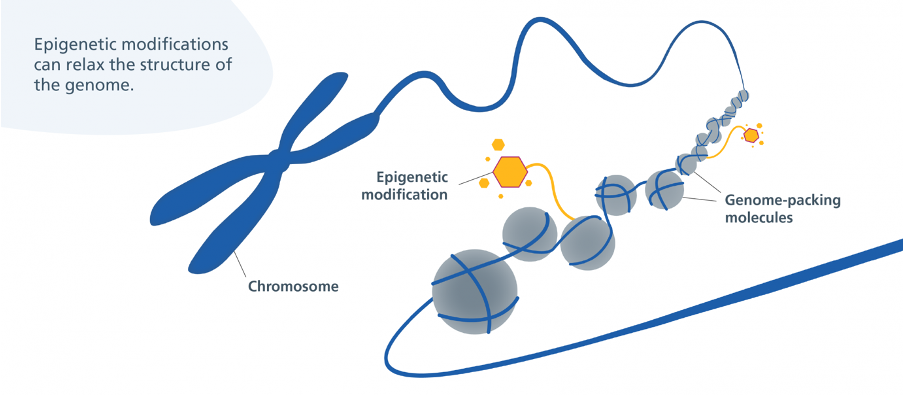
The ‘Information theory of Ageing’, led by Harvard geneticist Dr David Sinclair, compares our biology to that of a scratched music disk, where our DNA code is fully intact under the scratched surface, but the reader, in this case, our epigenome, cannot read the data properly because of built up damage. By treating the scratches instead of the whole disk, scientists are proving that biological ageing is entirely malleable and chemically reversible.
Sinclair’s lab found that all human cells naturally retain a sort of ‘backup copy’ of a younger Epigenetic profile. By delivering specific genetic instruction sets, or using advanced chemical cocktails, scientists can trigger the cell to access this backup, erasing decades of biological aging within weeks.
Importantly, in animal and human tissue models, partial reprogramming has successfully reset the biological age of cells by up to 75% with a built in safety cut-off being built. The cells rewind to a younger, healthier, adult state, but automatically stop before they can revert back into a blank embryonic stem cell, hence avoiding the historical risk of triggering cancer growth.
This evidence shows that it is indeed possible to revert our ageing and decaying cells to a previous, healthy state, but it requires a lot of work and testing to get to a stage where it can be used commercially. However, with the recent advancements in AI, I am sure that we will be able to find an answer to this age-old problem.
Bibliography:
"A Double-edged Sword: Reactive Oxygen Species and How They Are Detected." News-Medical, 26 July 2024, www.news-medical.net/whitepaper/20190603/A-double-edged-sword-reactive-oxygen-species-and-how-they-are-detected.aspx. Accessed 8 Oct. 2026.
Lockwood Estrin, Georgia F. "Synaptogenesis." Synaptogenesis | ScienceDirect, Science Direct, 1 Apr. 2020, www.sciencedirect.com/topics/biochemistry-genetics-and-molecular-biology/synaptogenesis. Accessed 1 Oct. 2026.
Nave, Klaus-Armin M. "Myelination of the Nervous System: Mechanisms and Functions." PubMed, 1 Apr. 2014, pubmed.ncbi.nlm.nih.gov/25288117/. Accessed 1 Oct. 2026.
NHS England. "What is Epigenetics?" Genomics Education Programme, 14 Oct. 2021, www.genomicseducation.hee.nhs.uk/education/core-concepts/what-is-epigenetics/. Accessed 8 Oct. 2026.
ResearchGate. "Negligible Senescence." ResearchGate - Temporarily Unavailable, 1 Apr. 2020, www.researchgate.net/figure/Long-lived-organisms-with-negligible-senescence-provide-valuable-insights-for_fig2_397800616. Accessed 8 Oct. 2026.
"Sarcopenia Guide." NHS Foundation Trust, 1 Oct. 2026, www.merseycare.nhs.uk/patient-leaflets/sarcopenia-guide#what-is-sarcopenia. Accessed 8 Oct. 2026.
Science Direct. "Mutation Accumulation." Mutation Accumultion | ScienceDirect, www.sciencedirect.com/topics/biochemistry-genetics-and-molecular-biology/mutation-accumulation. Accessed 8 Oct. 2026.
"The Senescence-associated Secretory Phenotype and Its Physiological and Pathological Implications." Nature, 23 Apr. 2024, www.nature.com/articles/s41580-024-00727-x. Accessed 8 Oct. 2026.
Society, Alzheimer’s. Alzheimer's Society, 1 Apr. 2023, www.alzheimers.org.uk/. Accessed 8 Oct. 2026.
"What Every Life Stage Actually Does to Who You Are." ReachLink, 30 July 2026, www.reachlink.com/advice/adolescence/what-every-life-stage-actually-does-to-who-you-are/. Accessed 1 Oct. 2026.
Wikipedia. "Disposable Soma Theory of Aging." Wikipedia, the Free Encyclopedia, Wikimedia Foundation, Inc, 26 Sept. 2026, en.wikipedia.org/wiki/Disposable_soma_theory_of_aging. Accessed 8 Oct. 2026.