Why The House Always Wins: The Mathematics of Gambling
Introduction
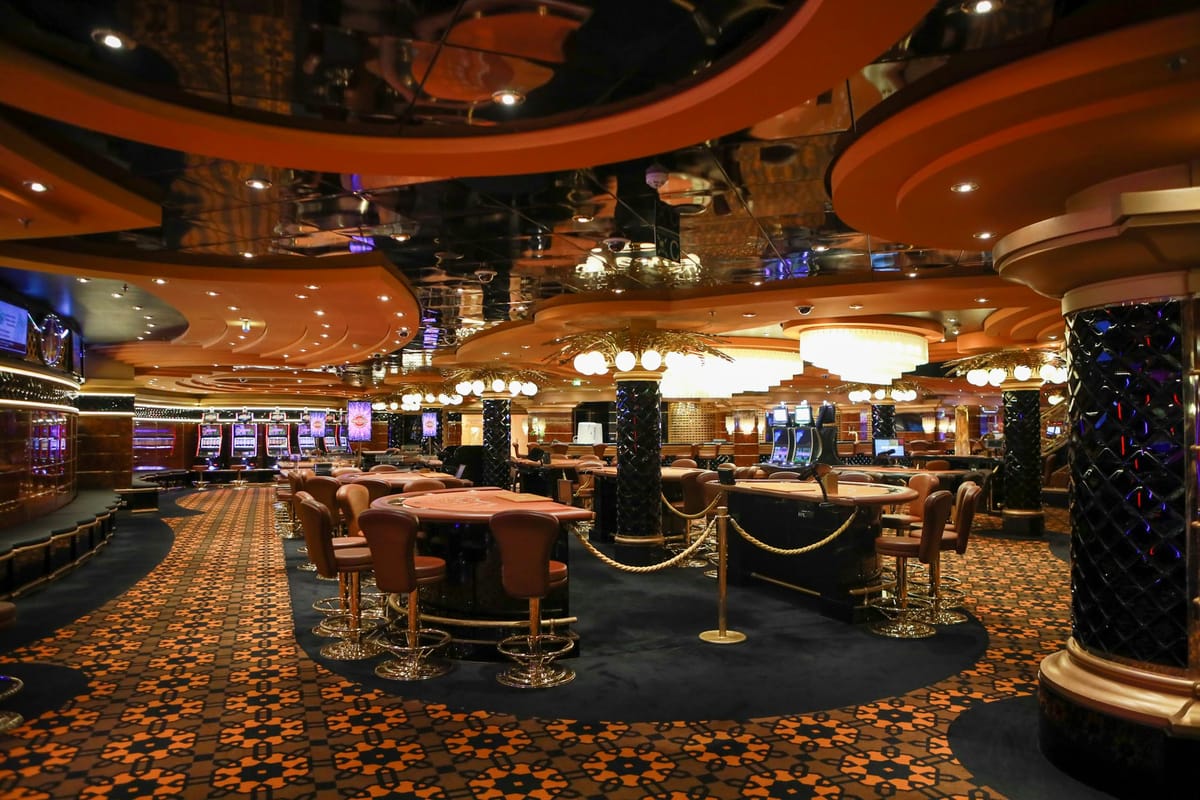
When you imagine casinos, you might immediately think about flashing lights, free drinks and someone who has hit the jackpot. So you may wonder how casinos manage to make so much money since it seems to be all up to luck. The answer is a complex mathematical idea that ensures that each game favours the casino. This small advantage, when repeated over and over again, means that the casino can confidently receive an eye-watering amount of money every year. This is why when you go to a casino, you may notice the lack of windows, clocks and the generous free drinks given to each gambler. All of this is a ploy to encourage you to stay longer because then, you slowly lose more and more money.
According to Priory, a staggering 48% of adults in the UK gamble and 3.3 million of these are in debt, owing £10,000 on average. Gambling is clearly a problem in the UK and in the rest of the world. But what most do not realise is that, by gambling more and trying to win back their losses, they are just digging themselves deeper and lose more money in the long run. In fact, in 2013, the Wall Street Journal conducted a study which concluded that only 13.5% of gamblers end up winning. In this article I will explain why this is.
Randomness vs Fairness
Many people assume that if casino games are random, they must also be fair. After all, the basis of casino games is simple dice, spinning wheels and cards. However, randomness does not assure fairness. A game can be random but still mathematically favour one party. If random meant fairness, then people would expect to break even whenever they gamble for a long enough period of time. This never happens in casinos. The apparent randomness generates excitement for the player, but the outcome is not down to luck — instead, it is shaped by the insightful world of statistics.
Expected Value
Casinos call it 'Return to Player' (RTP) or 'house edge', mathematicians talk about 'expected value' (EV), but they all allude to the same thing: the in-built disadvantage to the player. In this article, I will refer to it as 'EV'. The Cambridge Dictionary defines it as 'the probable value of something, calculated as the total of all possible values multiplied by the degree of possibility that each will happen'. Essentially, EV is the average outcome of a particular game over a large number of plays, not a single play — hence accounting for the lucky jackpot without giving it too much weight, since it is so improbable. It is measured in the same unit as the original data, for example, pounds per bet — for instance, -£0.02 per £1 bet. This means that per £1 bet, you would lose, on average, 2 pence. It could also be represented as a percentage: -2%. This is also 2% in house edge and 98% RTP. Casinos will tend to advertise the larger number — e.g. 98% RTP — making the 2% expected loss easier to overlook.
Imagine you pay £1 to play a game with 50 possible, equally likely outcomes. In 49 outcomes, you win £0. In 1 outcome you win £49. So, if you were to play 50 games, you would expect to win £49 once and to win £0 the other 49 times. The total winnings would be £49 and the money spent would be £50. Over 50 games you lose £1, which is £0.02 per £1 bet or -2%. The calculation above accounts for all the possible outcomes in conjunction with the probability of each outcome occurring. This idea is neatly wrapped up in the expected value formula:
X: A random variable
Xᵢ: Specific values of X — e.g. 'win £49'
P(Xᵢ): The probability of Xᵢ occurring
∑: Add everything together — the total is the expected value
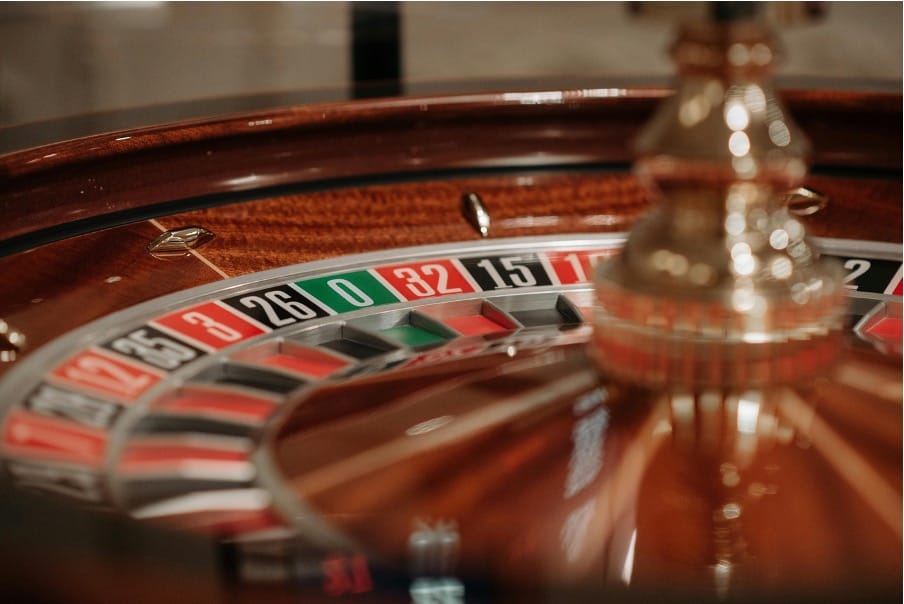
To demonstrate the formula in action, consider an American roulette wheel with 38 spaces (18 black, 18 red, 2 green). The player bets £1 on a number and, if it lands on that number, they will receive £35 (£36 minus the £1 bet). If it does not land on that number, they lose their £1. With 38 spaces, the probability of winning, P(Xᵢ), is 1/38 and Xᵢ is £35. The product of these is 35/38 ≈ 0.921. The probability of losing is the complement, 37/38, and Xᵢ is -£1. Multiplying these gives -37/38 ≈ -0.973. The sum is approximately -0.053. Therefore, the expected value is a loss of 5.3 pence per £1 bet. The key principle is that even if you win sometimes, the average outcome is a loss — and playing for longer only compounds those losses.
Not All Games Are The Same
The EV is different in different games. For example, it is only around -£0.005 per £1 bet in blackjack with perfect play. Serious players will have memorised something called basic strategy, which is the mathematically best way to play every possible hand. If a player were to utilise a technique known as card-counting, they would gain an advantage of +£0.02 per £1 bet, according to Slate. This is why casinos try to minimise card-counting, as it actually loses them money. Other games such as Keno can have an EV of as high as -£0.4 per £1. Slot machines are also notorious for their high EV, as is American Roulette, with an EV of -£0.0526 per £1.
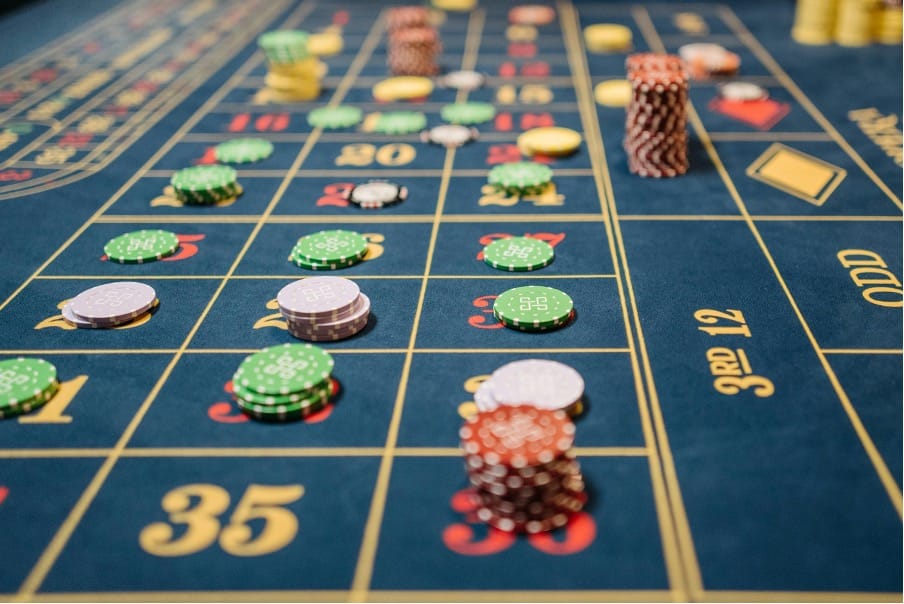
Roulette machines vary in different parts of the world, changing the EV. Each roulette wheel is numbered from 1 to 36, so it seems that the chance of winning is 1/36. However, they all have at least one zero, which changes the odds to 1/37. In the American layout, they have a double zero, which makes it 1/38 chance of winning. Therefore, the EV for European roulette is -£0.027 per £1 bet, almost half that of American roulette (-£0.053 per £1 bet).
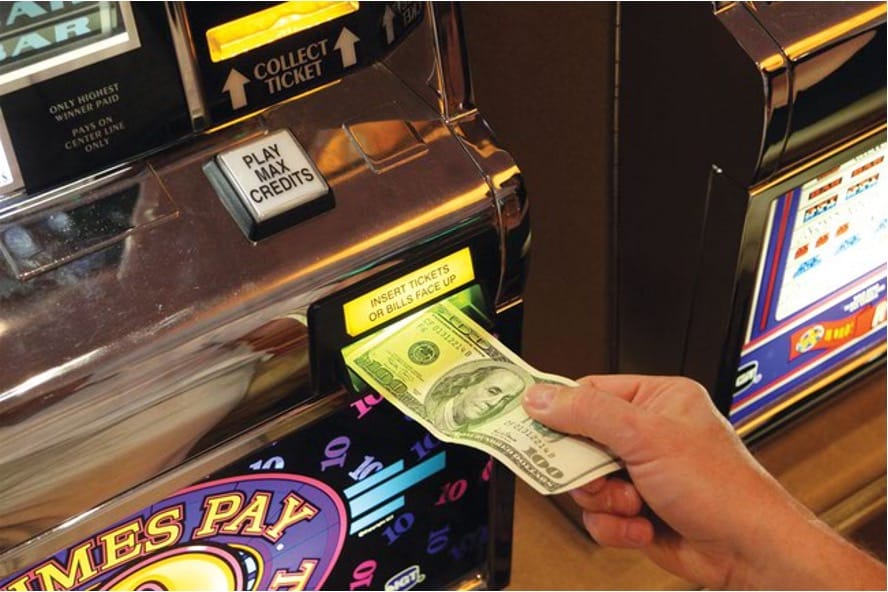
Slot machines are casino’s main source of revenue. They are usually programmed to pay out as winnings 0% to 99% of the player’s wager, known as the ‘theoretical payout percentage’. The legal minimum varies in different places, for example in Nevada it is 75%, whereas in Italy it is 90%. In a realistic slot machine, you might pay £1 per spin with a 1 in 10,000 chance of a winning a £100 jackpot, a 20 in 10,000 chance of a £10 win and a 1,000 in 10,000 chance of a £2 win. In the remaining 8979 scenarios you win nothing. The EV for this would be -£0.23 per £1 bet.
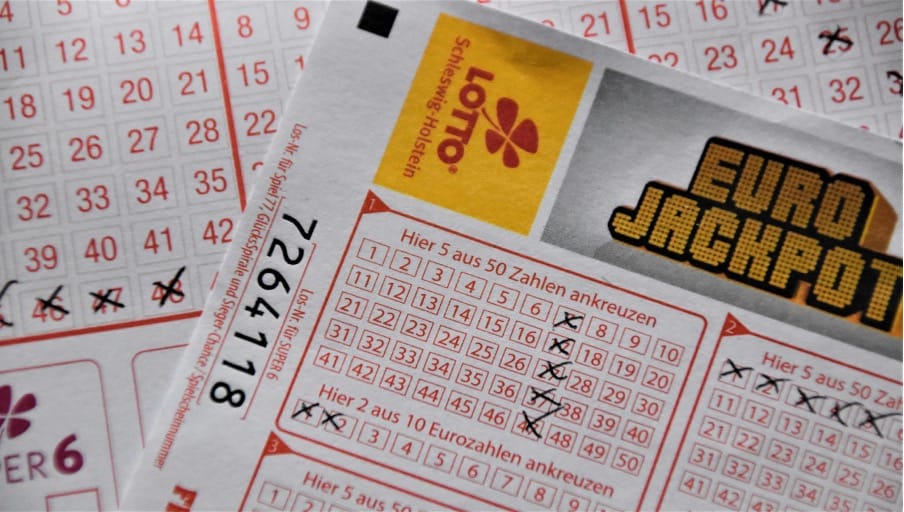
Competitions with huge jackpots tend to attract a huge number of entries, because everyone is craving that prize money. Psychologically, they think about how life-changing it would be. The harsh reality of it is that they just lose themselves money in pursuit of a near-impossible dream. To put this into perspective, a person is about 64 times more likely to get crushed by a meteor than to win the lottery.
Common Mistakes
One of the most common mistakes in gamblers is the ‘gambler’s fallacy’. This is the belief that past results affect the future ones. For example, if a roulette wheel lands on red 5 times in a row, they might think that a black is ‘due’. However, they fail to understand that each spin is ‘statistically independent’, so the probabilities reset each time. Hence the probability of red or black is not influenced by past results. In European roulette, the probability of getting red is 18/37, and even after 5 reds, it is still 18/37. People might increase their bet, thinking they are guaranteed to win, but instead they are just needlessly raising the stakes with the same odds. Another mistake is believing in ‘winning streaks’ or betting systems, such as the Martingale, where you double your bet after each loss. We are wired to find patterns for survival, but patterns such as winning or losing streaks tend to just lose you money as you play for longer and wager more after losses. This does not change the EV, although, the Martingale system results in occasional small wins which are still heavily outweighed by huge losses.
Why Casinos Need You To Win
Although it sounds like casinos only want to take all your money, they paradoxically actually need you to win to make money. If games were designed in a way that you lost every time, nobody would play. In fact, they are instead finely tuned so that you get regular small wins, occasional big wins and frequent losses. The excitement of these wins keeps people playing longer. This works out mathematically, since the EV is clearest over many plays, and hence this small in-built advantage quickly leads to large sums of money. For example, if a player wins £200 and keeps playing for a long time, the EV catches up to them and, with an EV of £0.03 per £1 bet, they will lose, on average, £40 in 1000 plays. The trend stays the same despite individual differences. Casinos are so successful because they carefully balance short-term excitement with long-term profits. With the randomness that hooks the players, they just leave it to EV to quietly guarantee their profit.
Can You Ever Beat The House?
Some have done it, but there is no way of getting round the fact that casino games are mathematically designed that you lose money on average. The harsh truth is that the maths is just too strong and means that gambling cannot be relied upon as a form of investment. It is simply paid entertainment and should be treated as such. This is why casinos can afford their lavish buildings, paid staff, and free drinks while maintaining consistent profits. The only exception is with precise technique in blackjack where one can gain a small edge over the casino. However, this is regulated and discouraged by casinos. Thus, while the flashing lights and spinning wheels generate excitement, in the end, the house always wins.
Bibliography
"Expected Value." Cambridge Dictionary.
"Gambling Statistics UK 2025: Facts, Figures & Trends." Priory.
"How Casinos Ensure Profit: Understanding the House Edge." Investopedia, 4 Nov. 2015.
"Things More Likely Than Winning the Lottery." Save the Student.
"Keno." Wikipedia, Wikimedia Foundation, 19 Jan. 2026.
"Martingale (Betting System)." Wikipedia, Wikimedia Foundation, 24 Jan. 2026.
"Study: Most Gamblers Lose." The Wall Street Journal.