Lactose Intolerance: Why More People Have It In Different Parts of the World
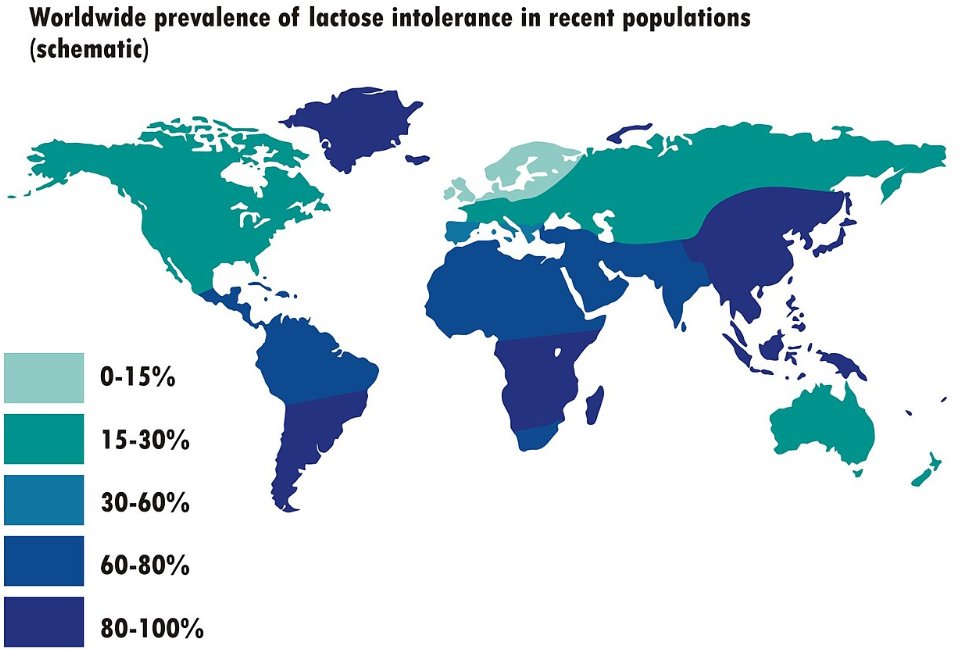
Being able to digest milk is due to a genetic mutation called lactase persistence. Your body’s normal setting– lactose intolerance- is the condition where your body is unable to digest lactose, and affects around 68% of people worldwide (The Lancet, 2017). Lactose intolerance is a condition in which the enzyme lactase cannot be produced in the small intestine. Without lactase in your body, lactose (the sugar found in dairy products) cannot be digested and travels to the large intestine, where bacteria ferment it, producing gas and drawing water into the colon.
This unfortunately leads to excessive gas, bloating and diarrhoea. Lactase persistence, on the other hand, occurs when genetic mutations keep the LCT gene active beyond childhood. All infants produce lactase because milk is their primary food source in the early stages of development. However, once breastfeeding ends, lactase production drops drastically in most humans, typically at ages 2-5.
Lactose intolerance is very common worldwide, and the prevalence varies significantly by region. In Northern Europe, lactase persistence can be found in over 90% of people, while in East Asia, lactose intolerance affects around 80-90% of adults. So why would a trait so biologically unusual become so common in some regions, but remain extremely rare in others?
Root Cause
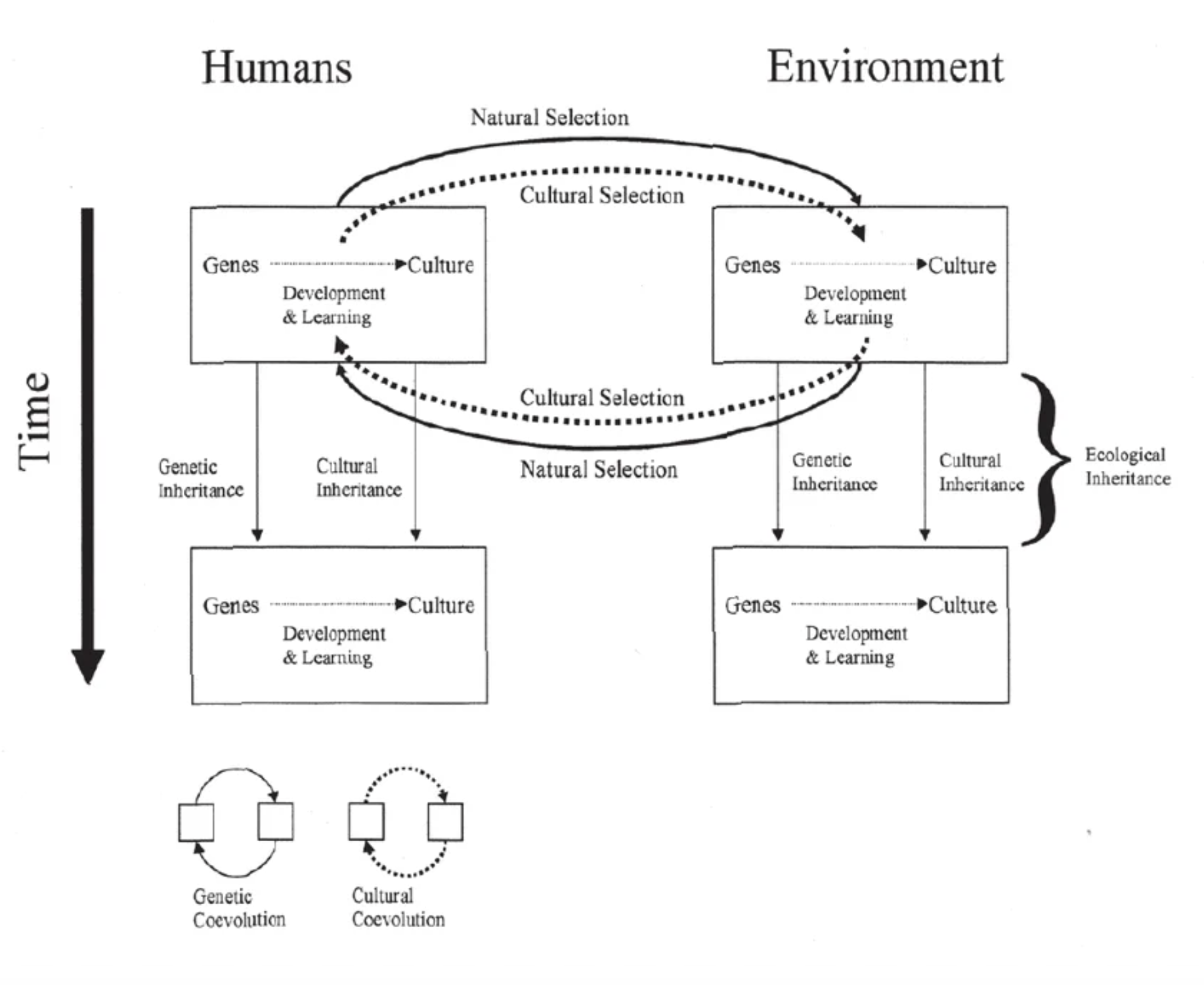
To understand this, we must go back 10,000 years to the Neolithic Revolution, where humans began to domesticate cattle, goats and sheep for milk production. Dairy became a huge part of people’s diets because it provided protein, calcium, fat, and hydration for those with lactase persistence, especially during times of famine and drought. Over generations, natural selection favoured individuals with mutations that allowed them to digest milk as it increased their chances of survival and reproduction, which is a process known as gene–culture co-evolution. Over several generations, it created populations in which the majority carried the favourable mutation for lactose digestion.
Furthermore, in places with limited sunlight, such as Northern Europe, vitamin D levels, which are essential for calcium absorption and bone health, were very low. Milk contains high levels of calcium, which would have helped reduce the risk of rickets and osteoporosis in individuals who could digest lactose. In contrast, regions like East Asia, where there was sufficient sunlight and whose diets did not rely heavily on dairy products, experienced little selective pressure on lactose intolerance, since agriculture was mainly based on crops such as rice rather than dairy farming.
The LCT gene is responsible for coding for the lactase enzyme. While the gene is usually down-regulated in adults after weaning, studies have shown that when many single nucleotide polymorphisms (SNPs) are found upstream of the LCT, paired with an enhancer in the MCM6 gene, lactase can continue to be produced. In Northern Europe, this variant is particularly common and causes lactase persistence in over 90% of adults.
When looking at African and Middle Eastern populations, we can also see cases of convergent evolution (different solutions that address the same problem: digesting dairy), where they also developed different SNPs that can maintain lactase production. This shows that natural selection in digesting milk only favoured places where milk acted as a source of calcium in areas with little sunlight for Vitamin D synthesis, or as a food providing calories and hydration, where crop agriculture was less reliable and scarce.
Modern Adaptation:
Despite the high prevalence of lactose intolerance in many regions, humans have developed cultural practices that allow them to still benefit from dairy products without the unwanted side effects. By using fermentation to turn milk into yoghurt and cheeses, the lactose content is much smaller, making it easier to digest even without lactase persistence. This practice explains why, even in regions such as Northern Europe, where lactose intolerance levels are especially low, people can still maintain adequate nutrition to survive times of drought and famine.
The variation in lactose intolerance around the world is due to genetic evolution, cultural practices and traditions. While lactase persistence enabled some societies to digest milk and gain a survival advantage in certain environmental conditions, others did not view it as a necessity and focused on other farming methods, which explains why the majority of adults lack the lactase enzyme. Together, these biological and cultural strategies show how humans have adapted to diets, environments, and nutritional challenges over thousands of years.
Bibliography
- Deng, Y., Misselwitz, B., Dai, N. and Fox, M., 2015. Lactose intolerance in adults: biological mechanism and dietary management. Nutrients, 7(9), pp.8020–8035. Available at: https://pmc.ncbi.nlm.nih.gov/articles/PMC4586575/
- MedlinePlus, 2024. Lactose intolerance. U.S. National Library of Medicine. Available at: https://medlineplus.gov/ency/article/000276.htm
- Misselwitz, B., Butter, M., Verbeke, K. and Fox, M.R., 2017. Update on lactose malabsorption and intolerance: pathogenesis, diagnosis and clinical management. The Lancet Gastroenterology & Hepatology, 2(10), pp.738–746. Available at: https://www.thelancet.com/journals/langas/article/PIIS2468-1253(17)30154-1/fulltext
- Zechmann-Khreis, M., 2024. Lactose intolerance: worldwide distribution. Nahrungsmittel-Intoleranz Portal. Available at: https://www.nahrungsmittel-intoleranz.com/en/lactose-intolerance-worldwide-distribution