Cryonics: Can Science Pause Death?
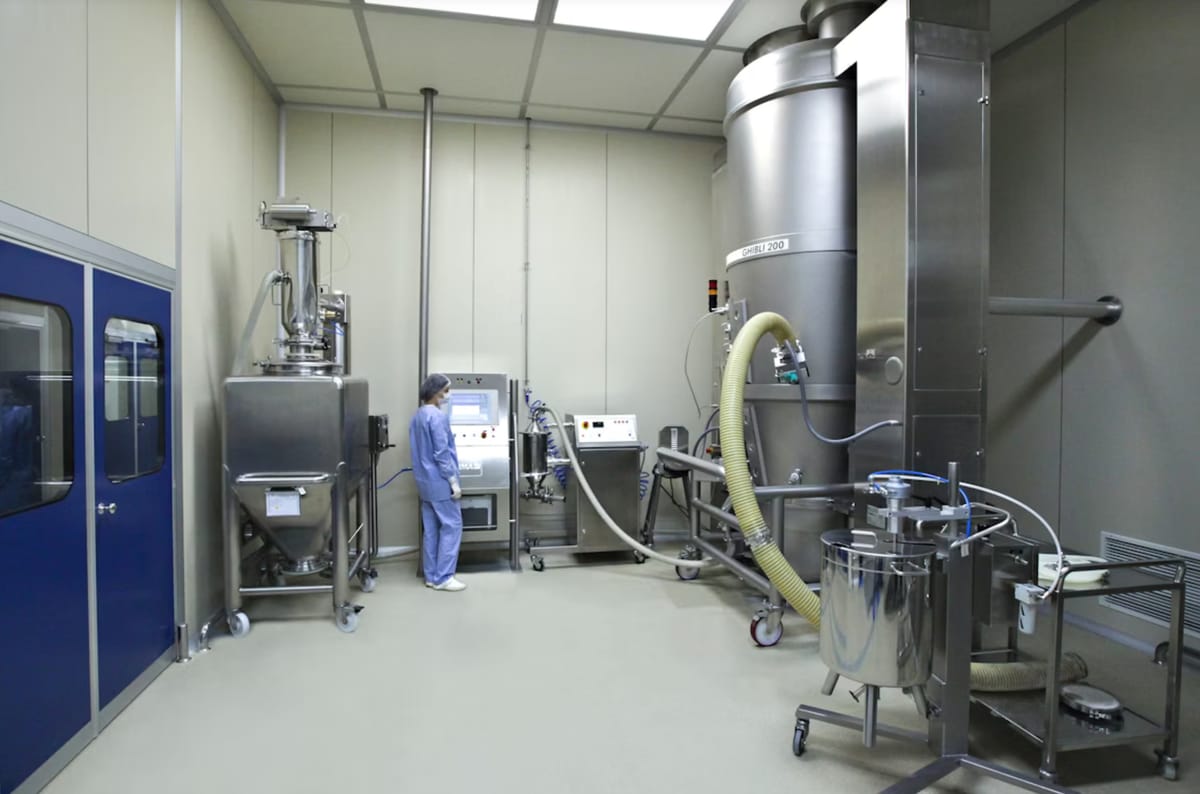
Cryonics often brings to mind science fiction movies like Interstellar and Star Trek. However, it has moved beyond an idea and has become a real procedure. Hundreds of people have already chosen cryonic preservation, indicating increasing participation in this field.
Despite its portrayal in popular media, cryonics is considerably more complex than cinematic representations suggest. The main limitation is the uncertainty regarding its effectiveness, as successful revival depends on upcoming technological developments. This raises the question: is cryonics merely speculative hope, or does it represent a legitimate scientific investment in the potential of future medicine?
Definition and Principles of Cryonics
At first glance, cryonics appears straightforward: freeze a body and revive it at a later date. In practice, the concept is considerably more complex. The Alcor Life Extension Foundation defines cryonics as “the practice of preserving life by pausing the dying process using sub-freezing temperatures with the intent of restoring good health with medical technology in the future."
A fundamental and paradoxical aspect of cryonics is that the patient must be legally declared dead before preservation can commence. This requirement presents limitations in a field where time is critical, as irreversible damage can accumulate rapidly. According to the Alcor Life Extension Foundation, delays do not render cryopreservation impossible, but they greatly diminish the likelihood of preserving the brain’s fine structural information, as progressive damage accumulates before cooling and vitrification begin.
The Process
From the crude freezing of James Bedford in 1967 to modern vitrification techniques pioneered by Gregory Fahy, the process of cryonics has evolved as a series of attempts to overcome the destructive effects of ice on living tissue. Cryonics includes a carefully controlled sequence of procedures designed to minimise structural damage during preservation:
1. Legal death of the Patient and Immediate Cooling
· Cryonics can only start once legal death is declared
· Onset hypoxic brain injury begins within 4–6 minutes without oxygen
· The body is placed in an ice bath
· Mechanical CPR is used to support circulation
· Oxygen is provided
2. Stabilisation and Transport
· The patient is transported to a cryonics facility by plane or car, depending on the distance
· During this process, the patient is packed in dry ice
· The patient is injected with heparin, which prevents blood clotting, allowing the blood vessels to remain open for later perfusion
3. Perfusion
· The blood is gradually removed and replaced with cryoprotectant solutions
· Examples include glycerol and DMSO, which act as a biological antifreeze
· Prevents ice crystal development and protects cell membranes
· Then the tissue is cooled into a glass-like state (amorphous solid)
· This process avoids cell rupture by ice crystals
· It is not perfect as it cuts ice damage by only 80%, and cellular damage may still occur
5. Controlled cooling
· The patient must be cooled from 0 to –120°C during what is known as the slow phase
· This slow sequenced cooling prevents thermal stress on tissues
6. Long-term storage
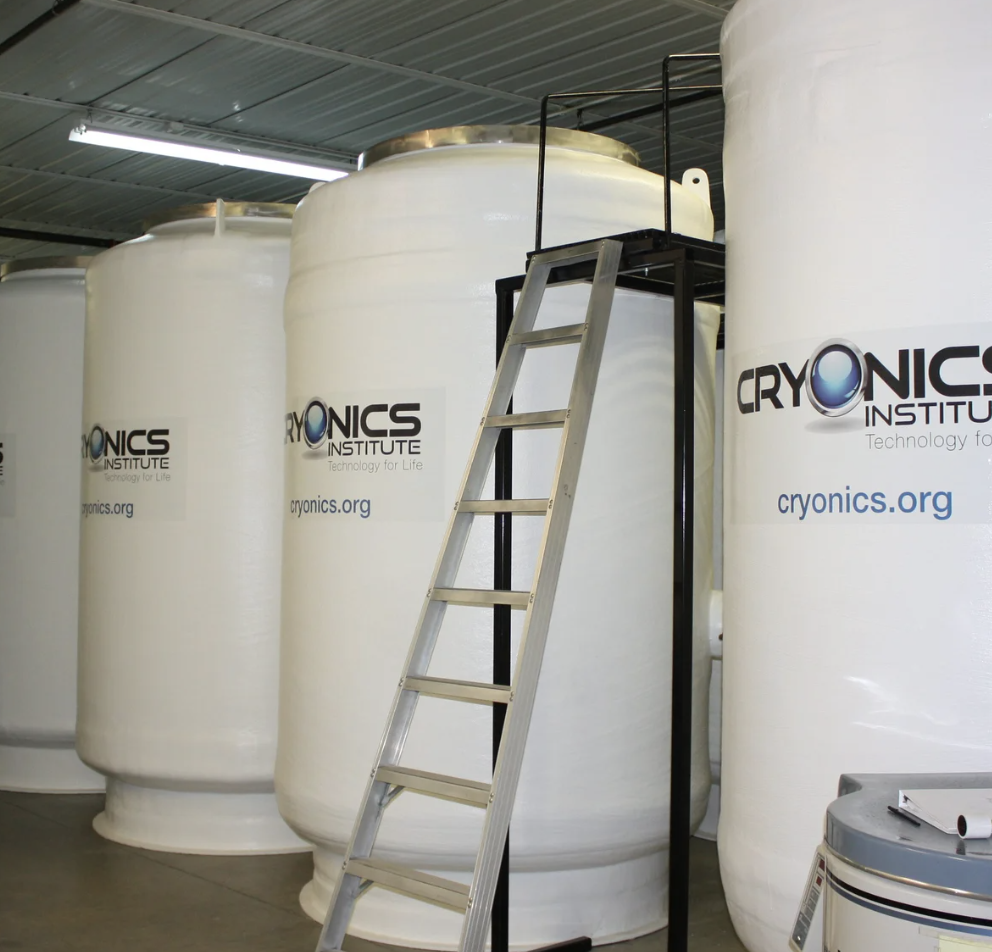
· Patients are then stored in liquid nitrogen tanks at –196°C
Tank features:
· They are vacuum-insulated
· Does not require electricity
· Can last indefinitely, making them arguably future proof
Experimental discoveries that influenced the process
Decades of experimental cryobiological research and development underpin this present methodology. Whereas James Bedford, the first human cryonic suspension, was frozen in a manner that led to extensive ice crystal growth and damage, modern patients are vitrified, with greatly enhanced preservation of cell structures.
Much of this progress doesn’t come directly from human cryonics but rather from broader mainstream scientific activities. The successful cryopreservation of human embryos, stem cells, and reproductive tissues, which is now a routine aspect of medical practice and research, was the first indicator that, with appropriate procedures, biological systems can survive extreme cooling.
Initial breakthroughs came through Jean Rostand’s work, where he successfully froze frog sperm using cryoprotectants and thawed them, allowing them to carry out fertilisation. This breakthrough inspired Robert Ettinger (who is considered “the father of cryonics”) to publish the book that is the foundation of modern-day cryonics “The Prospect of Immortality".
From late 2002 to early 2003, Gregory Fahy, a vitrification pioneer, cryopreserved an entire rabbit kidney, thawed it, and returned it to its donor, fully functional. This was the first cryopreservation of a large-organ and stimulated further large-organ research.
More recently, in 2015, scientists from 21st Century Medicine, including Fahy, the company's chief scientific officer, developed an advanced technique that enabled the vitrification of a whole rabbit brain with minimal observable ultrastructural damage. An electron microscope revealed intact neurons and synaptic connections, suggesting that the brain’s connectome—the physical network believed to encode memory—can survive extreme low temperatures without visible damage.
Following on from this discovery, in the same year experiments were carried out on microscopic worms where organisms were frozen and revived and shown to retain their previously learned behaviours. However, there are clear limitations to this evidence: the neural structure of these worms is far simpler than that of humans, meaning such findings cannot be directly extrapolated to suggest that human revival will be possible. Nevertheless, the results indicate that preservation of memory and function may not be entirely implausible, but rather contingent on the scale of future technological advancements required to achieve it.
Bibliography
Brain Injury Association of America. "Brain Injury Basics." BIAA, www.biausa.org/brain-injury/about-brain-injury.
Cryonics Institute. "Cryonics Institute Member Statistics." The Cryonics Institute, 18 Dec. 2025, www.cryonics.org/resources/member-statistics.
Ettinger, Robert C. The Prospect of Immortality. 1962.
"Intro to Cryonics." Alcor Life Extension Foundation, 20 Jan. 2026, www.alcor.org/what-is-cryonics/.
"Liquid Nitrogen." Encyclopaedia Britannica, www.britannica.com/science/liquid-nitrogen.
McIntyre, Robert L., and Gregory M. Fahy. "Aldehyde-stabilized cryopreservation." Cryobiology, vol. 71, no. 3, 2015, pp. 448-458.
"Persistence of Long-Term Memory in Vitrified and Revived Caenorhabditis Elegans - PMC." PMC Home, https://pmc.ncbi.nlm.nih.gov/articles/PMC4620520/.

![Image via [Adobe Stock]](/content/images/size/w600/2026/03/IMG_0874.jpeg)
